We’ve all seen the commercials for hand sanitizer and medical wipes: alcohol kills 99.9% of germs. Naturally, this leads many to wonder—when you toss back a glass of whiskey or a cold beer, does alcohol kill gut bacteria in the same way? It sounds logical on the surface. If it works on your kitchen counter, why wouldn’t it work in your colon?
However, the human body is far more complex than a granite surface. While alcohol is a powerful antimicrobial agent, your gut is a delicate ecosystem of trillions of microbes. The surprising truth isn’t that alcohol simply “sterilizes” your insides; it’s that it acts more like a disruptive storm, shifting the balance of power within your microbiome. Some bacteria thrive in the chaos, while others—the ones you actually need—start to disappear.

Does Alcohol Kill Gut Bacteria? 🍷
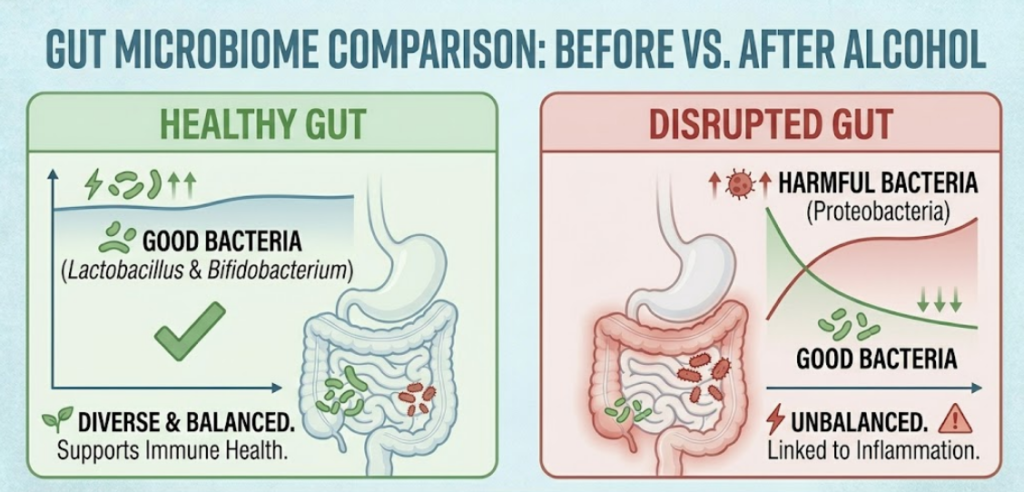
Alcohol does not act as a total disinfectant that kills all gut bacteria, but it significantly disrupts the microbial balance. While moderate drinking may have a negligible impact for some, frequent or heavy alcohol consumption can reduce beneficial bacteria (like Lactobacillus) and allow harmful, pro-inflammatory strains to overgrow. The primary issue isn’t total sterilization; it is gut dysbiosis, a state where the “bad” bacteria outnumber the “good,” leading to inflammation and digestive distress.
What Happens to Your Gut Bacteria When You Drink Alcohol 🍺🌀
When you consume a drink, the ethanol doesn’t just pass through. As it hits the small and large intestines, it interacts directly with your microbes. If you’re asking, “does alcohol kill gut bacteria?”, you have to look at the immediate biological shifts:
- Ethanol as a Stressor: Alcohol can damage the cellular membranes of certain bacteria.
- The Shift in Environment: Alcohol changes the acidity and bile acid levels in your gut, making it a hostile environment for sensitive, beneficial species.
- Fuel for Pathogens: Ironically, while alcohol suppresses good bacteria, the sugars and byproducts of alcohol metabolism can actually feed “opportunistic” bacteria, leading to an unhealthy overgrowth.
Myth vs. Reality: Does Alcohol Kill Good Bacteria or Just Disrupt Balance? ⚖️
There is a common digestion myth that a stiff drink can “clean out” a bad meal or kill off a stomach bug. Let’s separate the facts:
- The “Killing” Myth: You would need to reach a blood alcohol concentration that is literally fatal to humans before you could “sterilize” your gut bacteria.
- The “Disruption” Reality: Alcohol is a selective pressure. It tends to be harder on beneficial strains like Bifidobacterium and Lactobacillus. When these populations drop, the “balance” is lost.
- Dysbiosis Explained: Instead of a clean slate, you end up with gut dysbiosis. This is like a garden where the flowers (good bacteria) are choked out by hardy, invasive weeds (harmful bacteria).
How Alcohol Can Lead to Gut Dysbiosis 📉🦠
Chronic or heavy drinking is one of the fastest ways to trigger alcohol gut dysbiosis. This isn’t just a temporary stomach ache; it’s a fundamental change in your internal chemistry.
- Reduction in Diversity: A healthy gut is a diverse gut. Alcohol acts like a filter, killing off the more “fragile” beneficial species and reducing your overall microbial variety.
- Increase in Inflammatory Bacteria: Strains that produce endotoxins (like Proteobacteria) often increase after drinking. These bacteria trigger the immune system, leading to systemic inflammation.
- Loss of Short-Chain Fatty Acids: Beneficial bacteria produce SCFAs, which protect your gut lining. When alcohol reduces these bacteria, your gut loses its primary source of fuel and protection.
Does Alcohol Cause Leaky Gut? 🧱💧
One of the most significant ways alcohol affects the gut microbiome is by compromising the physical integrity of your intestinal wall. Your gut lining is made of a single layer of cells held together by “tight junctions.” These act as the gatekeepers of your body.
When you drink, the byproduct acetaldehyde can damage these junctions, leading to intestinal permeability, or “leaky gut.” This allows toxins, undigested food particles, and bacteria to “leak” into your bloodstream. This isn’t just a digestive issue; it’s a systemic one, as your immune system reacts to these foreign invaders, potentially causing chronic fatigue and skin flare-ups.
How Alcohol Triggers Inflammation Through the Gut 🛡️🔥
The link between alcohol and inflammation in the gut is driven by a molecule called Lipopolysaccharide (LPS). LPS is an endotoxin found in the cell walls of certain harmful bacteria.
- Bacterial Overgrowth: Alcohol promotes the growth of LPS-producing bacteria.
- The Leak: Because of the increased permeability mentioned above, these endotoxins escape the gut and enter circulation.
- Immune Response: Once in the blood, the liver and immune system treat these toxins as a major threat, triggering a cascade of inflammation throughout the entire body.
Can a Single Night of Drinking Affect Gut Bacteria? 🍹🌓
You don’t have to be a chronic drinker to feel the effects. Research suggests that even a single episode of binge drinking (defined as 4–5 drinks in one sitting) can cause a rapid shift in microbiome diversity.
While your gut is resilient, a heavy night can cause a temporary spike in systemic endotoxins within just a few hours. For a healthy individual, the microbiome may bounce back quickly, but if “one night” happens every weekend, your beneficial bacteria never get the chance to fully repopulate.
How Long Does It Take Gut Bacteria to Recover After Alcohol? ⏳🌱
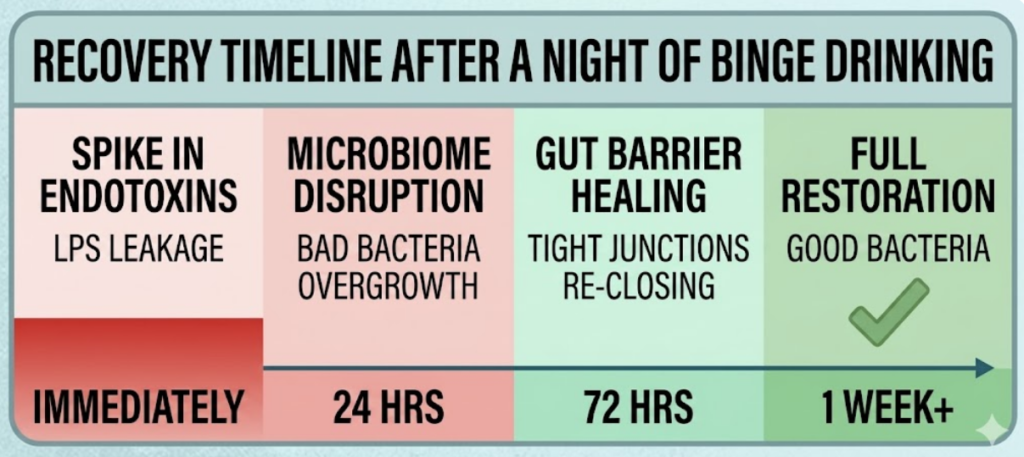
If you’ve overindulged, you’re likely wondering: how long does it take gut bacteria to recover after alcohol? The timeline depends on the severity of the disruption:
- Minor Indulgence: For a single night of moderate drinking, the microbiome often begins to stabilize within 24 to 72 hours.
- Heavy Use: After a period of chronic drinking, it can take two to four weeks of complete abstinence combined with a high-fiber diet to see a significant return of beneficial strains like Lactobacillus.
- The Repair Phase: Gut lining repair usually follows a similar timeline, provided you are supporting the process with the right nutrients.
Is Red Wine Better for Your Gut Than Other Alcohol? 🍷🍇
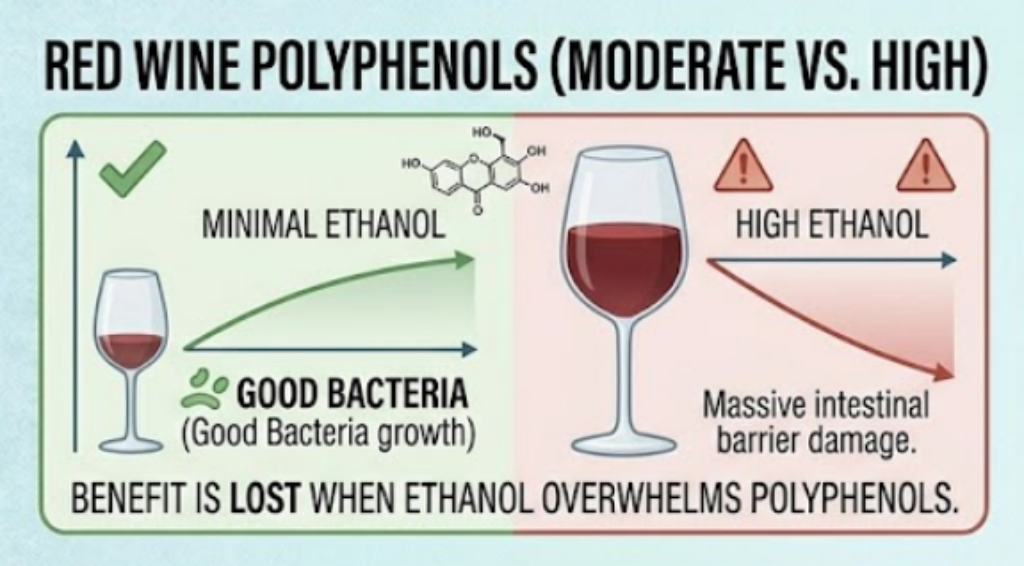
This is where the alcohol and gut health effects get interesting. Red wine is unique because it is rich in polyphenols—antioxidants found in grape skins.
Some studies suggest that the polyphenols in red wine can actually act as “prebiotics,” feeding beneficial bacteria and increasing microbiome diversity. However, there is a catch: the ethanol trade-off. While the polyphenols are “good,” the alcohol itself is still a toxin. To get the gut benefits without the damage, moderation is key—usually defined as one small glass. Any more than that, and the negative effects of the ethanol begin to outweigh the benefits of the antioxidants.
Alcohol and the Gut-Brain Axis: Why “Hangxiety” is Real 🧠🌀
The relationship between alcohol and gut health effects doesn’t stop at your stomach; it travels straight to your brain via the gut-brain axis. Your gut produces about 95% of your body’s serotonin, the “feel-good” hormone.
When alcohol disrupts your microbiome balance, it sends distress signals through the vagus nerve. This can lead to the phenomenon known as “hangxiety” (hanging-anxiety) or intense brain fog the next day. By damaging the bacteria that help produce neurotransmitters, alcohol literally changes the chemical conversation between your gut and your brain, making it harder to regulate your mood and stress levels until your microbiome stabilizes.
Signs Your Gut May Be Struggling Due to Alcohol 🚩
If you’re asking, “does alcohol damage gut bacteria?”, your body might already be trying to give you the answer. Look out for these “red flag” symptoms that suggest your microbiome is in a state of dysbiosis:
- Persistent Bloating: A sign that harmful bacteria are fermenting sugars and producing excess gas.
- Brain Fog: Often caused by endotoxins leaking through a compromised gut barrier and triggering neuro-inflammation.
- Skin Flare-ups: Conditions like rosacea or acne often worsen after drinking because of the “gut-skin axis” connection.
- Lower Immunity: Since 70% of your immune system resides in your gut, a damaged microbiome makes you more susceptible to common colds and infections.
Common Mistakes That Worsen Alcohol’s Gut Impact ❌🍳
Even if you’ve switched to “lighter” drinks, certain habits can accelerate the rate at which alcohol kills beneficial gut bacteria:
- Ignoring Fiber: Fiber is the primary food source for your “good” bacteria. Drinking on a low-fiber diet essentially starves your beneficial microbes while the alcohol actively suppresses them.
- Relying on Sugary Mixers: High-sugar cocktails provide fuel for pathogenic yeast and bacteria overgrowth, worsening the microbial imbalance.
- Chronic Dehydration: Water is essential for maintaining the mucosal layer of the gut. Drinking without hydrating makes the intestinal lining more vulnerable to ethanol damage.
- Back-to-Back Drinking: Not giving your gut at least 48–72 hours of “rest” means the epithelial barrier never has time to stitch itself back together.
Evidence-Based Truths vs. Overstated Claims ⚖️✅
To provide conversion-focused trust, we have to be honest about what the science actually says regarding does alcohol kill gut bacteria.
What Evidence Supports
- Alcohol Shifts the Balance: It significantly favors inflammatory bacteria over beneficial ones.
- It Causes “Leakage”: Chronic and binge drinking increase intestinal permeability.
- Recovery is Possible: The microbiome is resilient and can bounce back with proper nutrition and abstinence.
Claims That May Be Overstated
- “Alcohol Sterilizes the Gut”: It’s a disruptor, not a total cleaner. You will always have bacteria left; the goal is to make sure they are the right ones.
- “Healthy Food Cancels Out Alcohol”: A salad won’t physically prevent ethanol from damaging the gut lining, though it can help the recovery process.
Can Probiotics Help Repair the Gut After Alcohol? 💊🛡️
This is a key question for anyone interested in microbiome restoration. Can a supplement fix the damage?
The research suggests that probiotics, specifically strains like Lactobacillus rhamnosus and Bifidobacterium, can help “crowd out” the harmful bacteria that overgrow after drinking. However, timing is everything. Taking probiotics while drinking is often ineffective as the alcohol can neutralize the supplement. The best approach is to focus on high-potency probiotics and prebiotic fibers during the recovery timeline (the 3–7 days after drinking) to help repopulate the “flowers” in your internal garden.
Who Should Be Most Careful About Alcohol and Gut Health? ⚠️
While everyone’s microbiome is unique, certain groups face a higher risk when it comes to alcohol gut dysbiosis:
- Individuals with IBS or SIBO: If you already struggle with Small Intestinal Bacterial Overgrowth, the sugars and fermentation in many alcoholic drinks can act like fuel for a fire, worsening gas and bloating.
- Those with Chronic Inflammation: If you are managing an autoimmune condition, the intestinal permeability caused by alcohol can trigger systemic flares.
- Frequent Social Drinkers: Even if you never get “drunk,” having 1–2 drinks every single night prevents the epithelial barrier from ever fully repairing itself.
- People with Metabolic Concerns: Alcohol-induced gut leakage can interfere with insulin sensitivity and liver health.
Expert Tips to Protect Your Gut While Drinking 🛡️🍹
If you choose to drink, you can minimize the question of does alcohol kill gut bacteria by using these protective strategies:
- The “Buffer” Method: Never drink on an empty stomach. Eating a meal rich in healthy fats and proteins before your first sip slows alcohol absorption and protects the gut lining.
- Dilute and Hydrate: Follow the “one-for-one” rule—one full glass of water for every alcoholic beverage to maintain the mucosal layer of your intestines.
- Choose “Cleaner” Options: Opt for dry wines or clear spirits with soda water rather than sugary mixers that feed pathogenic yeast.
- Embrace the “Dry Gap”: Give your gut at least 3 to 4 consecutive days of abstinence every week to allow for natural microbiome restoration.
FAQs 🔍
Does alcohol kill all gut bacteria?
No. Alcohol is a disruptor rather than a total sterilizer. It selectively suppresses beneficial bacteria while allowing more resilient, harmful strains to grow.
Can one night of drinking damage your gut?
Yes. Binge drinking can cause immediate, temporary intestinal permeability and a spike in systemic inflammation, though a healthy gut can usually recover if given time.
How long does gut recovery take after alcohol?
Recovery usually starts within 24–72 hours for minor drinking, but it can take up to a month of healthy habits to fully restore microbiome diversity after heavy use.
Is red wine good for gut health?
In strict moderation, yes. The polyphenols in red wine act as prebiotics. However, the benefits are lost if you consume enough ethanol to damage the gut lining.
Should I take probiotics after drinking?
Yes. High-quality probiotics can help “re-seed” your gut garden during the recovery phase, especially when paired with prebiotic fibers.
Final Verdict: Respect the Ecosystem 🏁
So, does alcohol kill gut bacteria? The answer is more nuanced than a simple “yes.” Alcohol is an environmental stressor that reshapes your internal landscape. While it won’t leave your gut “sterile,” it can leave it “unbalanced.”
By understanding the link between alcohol, leaky gut, and inflammation, you can make more informed choices. The goal isn’t necessarily perfection, but protection. Focus on moderation, prioritize fiber, and give your body the “dry” time it needs to keep your microbiome thriving.
References
- Alcohol and the Gut Microbiome
- Alcohol, Intestinal Bacterial Growth, Intestinal Permeability to Endotoxin, and Medical Consequences
- Alcohol Use Disorder and the Gut–Brain Axis