When we feel a surge of nervousness or a sudden cloud of mental fatigue, our first instinct is often to look for a psychological cause. We blame our heavy workloads, our relationships, or perhaps a lack of sleep. However, an increasing body of research suggests that the “trigger” for your tension might not be in your head, but in your glass. If you’ve ever wondered, can dehydration cause anxiety, you are asking a question that sits at the intersection of biology and psychology.
Most people recognize the physical signs of thirst, like a dry mouth or a headache. But the “hidden” signs—such as heart palpitations, irritability, and a debilitating sense of brain fog—are often misidentified as purely emotional issues. In reality, your brain is incredibly sensitive to fluid levels. Even mild dehydration can signal a state of “crisis” to your nervous system, potentially mimicking the symptoms of a stress response. Let’s dive into how staying hydrated might be the most overlooked tool in your mental health toolkit.

Can Dehydration Cause Anxiety and Brain Fog? 💧🧠
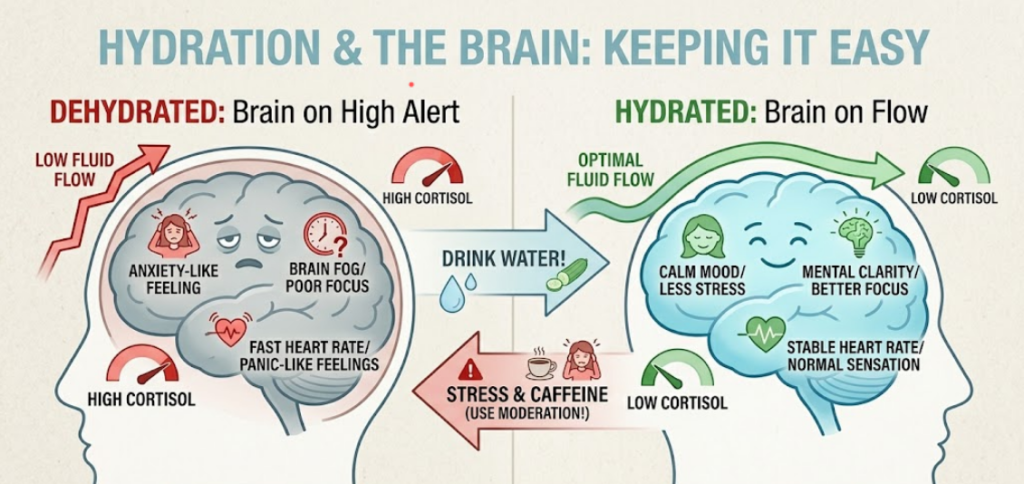
Yes, dehydration can contribute significantly to anxiety-like symptoms and brain fog. While being dehydrated may not “cause” an anxiety disorder in the clinical sense, it can certainly trigger physical sensations—such as increased heart rate, lightheadedness, and fatigue—that feel identical to anxiety or a panic response. Furthermore, because your brain is roughly 75% water, even a 1-2% drop in hydration can impair your concentration and memory, leading to the mental cloudiness known as brain fog. Correcting your fluid balance often provides a noticeable lift in both mood and cognitive clarity.
How Dehydration Can Trigger Anxiety-Like Symptoms 📉
To understand can dehydration cause anxiety, we have to look at the body’s “fight-or-flight” mechanism. When you are low on fluids, your total blood volume decreases. To compensate for this, your heart has to beat faster and harder to pump oxygen to your brain and organs.
This increase in heart rate (tachycardia) and the accompanying release of stress hormones like cortisol can be misinterpreted by the brain. If your heart is racing and your breathing is shallow, your brain assumes you are in danger, even if you’re just sitting at your desk. This creates a feedback loop: your body feels stressed because it’s thirsty, and your mind feels anxious because your body is acting stressed. By maintaining proper hydration, you prevent these false alarms from triggering your nervous system.
Can Dehydration Mimic a Panic Attack? ⚠️
One of the most unsettling aspects of fluid loss is how closely it can resemble a panic attack. This is a high-interest area for many, as the physical crossover is remarkable. When you are severely dehydrated, you may experience:
- Heart Palpitations: A racing or fluttering heart that feels like a sudden spike in adrenaline.
- Dizziness and Vertigo: A “floaty” or unstable feeling that can cause a sense of loss of control.
- Shakiness: Muscle tremors or weakness caused by electrolyte imbalance.
- Shortness of Breath: A feeling of air hunger as the body struggles to maintain circulation.
It is important to note the nuance: mimicking a panic attack is not the same as having a panic disorder. However, if you are already prone to anxiety, these physical sensations can act as a “catalyst,” convincing your mind that a full-blown panic attack is imminent. This “mimicry” is one reason why many people find that a glass of water is surprisingly calming during a moment of high tension.
Why Dehydration Can Cause Brain Fog 🌫️
If you’ve ever felt like you were “thinking through a thick mist,” you’ve experienced brain fog. But why exactly can dehydration cause brain fog? It largely comes down to blood flow and energy production.
Water is essential for maintaining the blood volume necessary to deliver oxygen and nutrients to your neurons. When you’re dehydrated, blood flow to the brain can slightly decrease, leading to mental fatigue and a lack of focus. Furthermore, your brain cells require a delicate balance of electrolytes (like sodium and potassium) to send electrical signals. When that balance is off, your cognitive performance—specifically your short-term memory and “working” focus—takes a direct hit. You aren’t losing your edge; your brain is simply struggling to operate in a low-resource environment.
Hidden Signs Anxiety May Be Linked to Dehydration 🔍
Sometimes, the body doesn’t scream “I’m thirsty”; instead, it whispers through your mood. If you find yourself wondering, can dehydration cause anxiety, look for these specific “hidden” signs that suggest your nervousness is actually a hydration issue:
- Dry Mouth Paired with Nervousness: If your mouth feels like sandpaper and you simultaneously feel a “fluttery” sensation in your chest, your nervous system may be reacting to low fluid volume.
- Headache with Unusual Irritability: Dehydration causes brain tissue to slightly shrink and pull away from the skull, causing pain. This physical discomfort often manifests as “short-fused” anger or emotional volatility.
- Sudden Fatigue and Poor Concentration: If you lose your “train of thought” mid-sentence while feeling a wave of exhaustion, it’s a classic sign of dehydration-induced brain fog.
- Increased Heart Awareness: Being able to “feel” your heartbeat in your throat or ears is often a result of the heart working harder to circulate a lower volume of blood.
- Mood Shifts When Thirsty: Research shows that even mild fluid loss can cause a measurable dip in mood and an increase in perceived task difficulty.
How Fast Can Water Help Anxiety Symptoms? 🌊
If you suspect your stress is water-related, the good news is that relief can be relatively quick—but it isn’t instantaneous. So, how fast can hydration help?
For symptoms like a racing heart or lightheadedness caused by low blood volume, you may feel a sense of relief within 15 to 30 minutes of drinking a large glass of water. This is the time it takes for the fluid to be absorbed and for your blood pressure to stabilize. However, cognitive symptoms like mental fatigue or deep-seated brain fog may take slightly longer—anywhere from one to two hours—as your brain cells re-establish their electrolyte balance. It is important to remember that while water can “calm” a thirst-induced stress response, it is a supportive tool, not a cure for chronic anxiety disorders.
Can Dehydration Raise Cortisol or Stress Hormones? 📈
The relationship between water and cortisol levels is a fascinating area of physiology. Cortisol is our primary stress hormone, and its job is to help the body handle perceived threats.
Studies have shown that being in a state of dehydration is essentially a “physiological stressor.” When the body lacks water, it perceives a threat to its survival. In response, the adrenal glands may increase the production of cortisol to help regulate blood pressure and fluid balance. This means that if you are chronically under-hydrated, you might be walking around with baseline cortisol levels that are higher than they should be. This “simmering” state of stress makes you more reactive to everyday annoyances, potentially turning a minor inconvenience into a major anxiety trigger.
Can Coffee Make Dehydration-Related Anxiety Worse? ☕
Many of us reach for a second or third cup of coffee to fight off the very brain fog that dehydration is causing. Unfortunately, this can create a “perfect storm” for anxiety symptoms.
Caffeine is a stimulant that naturally increases your heart rate and can induce jitters. If you are already dehydrated—meaning your heart is already working hard and your cortisol is elevated—adding caffeine is like pouring gasoline on a small fire. Furthermore, while the “dehydrating” effect of coffee is often overstated, it is a mild diuretic. If you aren’t balancing your coffee intake with water, you may end up in a cycle where you feel both “wired and tired,” a state that is the perfect breeding ground for panic-like symptoms.
Can Dehydration Affect Serotonin or Mood? 🧪
When we explore the question, can dehydration cause anxiety, we eventually have to look at the chemistry of the brain itself. While the “heart rate” explanation is about mechanics, the mood connection is about neurotransmitters.
Some research suggests that being chronically low on fluids can interfere with the production of amino acids, which are the building blocks of serotonin—the “feel-good” hormone. Because water is the medium through which all chemical reactions in the brain occur, a lack of it can theoretically slow down the signaling between your neurons. While we shouldn’t overstate the evidence—drinking water won’t “cure” clinical depression—it is clear that a hydrated brain has a much easier time maintaining mood regulation. When your internal “wiring” is well-lubricated, your resilience to stress naturally increases.

Who Is More Vulnerable to Dehydration Brain Fog? 👥
Not everyone experiences fluid loss in the same way. Certain individuals are much more likely to suffer from mental fatigue and cognitive dips when their water intake drops:
- High-Caffeine Consumers: If your daily routine involves more espresso shots than glasses of water, your nervous system is constantly on high alert, making you more sensitive to the “wired and tired” feeling of dehydration.
- Older Adults: The sensation of thirst naturally diminishes as we age. Many seniors experience dehydration and brain fog simply because their bodies are no longer signaling the need for water as effectively as they once did.
- High-Stress Professionals: When you are in a “flow state” or under heavy deadlines, you often override physical signals like thirst. This leads to an afternoon “crash” that is often mislabeled as burnout.
- Athletes and Active Individuals: Even a small amount of sweat can trigger an electrolyte imbalance that leads to shakiness and irritability, symptoms often confused with post-workout adrenaline.
Common Mistakes That Can Worsen Hydration-Related Symptoms ❌
Are you trying to stay hydrated but still feeling the “brain fog”? You might be making one of these common mistakes that actually fuel dehydration and anxiety symptoms:
- Chugging Water All at Once: If you drink a gallon of water in ten minutes, your body likely won’t absorb it all. It can actually flush out minerals, potentially worsening an electrolyte imbalance. Consistent sipping is better for your brain.
- Ignoring Electrolytes: If you are drinking pure, distilled, or highly filtered water without any minerals, you might be diluting your body’s salt levels. This can lead to the very “shakiness” and “dizziness” that mimic a panic attack.
- Mistaking Thirst for Hunger: The brain uses the same signal for both. Many people eat a salty snack when they are actually thirsty, which further dehydrates the system and spikes stress hormones.
- Relying on “Thirst” as the Only Signal: By the time you actually feel thirsty, you are already about 2% dehydrated—the exact point where cognitive performance begins to decline.
What the Evidence Supports vs. What Gets Overstated ⚖️
To maintain a focus on conversion-focused trust, we have to be honest about what water can and cannot do for your mental health.
What Evidence Supports
- Symptom Mimicry: Mild dehydration creates physical sensations (racing heart, dizziness) that are identical to the physical symptoms of anxiety.
- Cognitive Decline: There is robust evidence that even slight fluid loss impairs short-term memory, attention, and mental clarity.
- Stress Amplification: Dehydration acts as a physiological stressor that can raise baseline cortisol levels.
Claims That May Be Overstated
- “Water Cures Anxiety Disorders”: Clinical anxiety is a complex condition involving genetics, environment, and trauma. Hydration is a supportive habit, not a total solution for a diagnosed disorder.
- “Drinking Water Instantly Stops Panic”: While it can help ground you and lower your heart rate, it is not a replacement for therapeutic techniques or medication during a severe episode.
- “All Brain Fog Is Dehydration”: Brain fog can be caused by dozens of factors, including diet, sleep apnea, or hormonal shifts. Hydration is simply one (very easy) lever to pull.
Can Chronic Dehydration Affect Mental Well-Being Long Term? 🕰️
While we often focus on the immediate “jolt” of dehydration-induced anxiety, we must consider the long-term impact of living in a perpetually thirsty state. If your body is constantly fighting to maintain blood volume and electrolyte balance, your stress resilience—your ability to bounce back from daily challenges—is likely compromised.
Chronic mild dehydration keeps the body in a low-level “emergency mode.” Over months or years, this constant elevation of cortisol levels and heart rate can contribute to feelings of burnout and emotional exhaustion. While the link between habitual under-hydration and clinical mental health disorders is still being studied, it is clear that a well-hydrated brain has a higher “buffer” against the stressors of modern life. Think of hydration as the foundation of your mental health house; without it, even the best psychological tools will struggle to hold up the roof.

Expert Tips to Stay Hydrated for Better Mental Clarity 🚀
Ready to clear the fog? Staying hydrated isn’t just about drinking eight glasses of water; it’s about a strategic approach to fluid management. Follow these expert-backed tips to support your mood regulation:
- Front-Load Your Day: Drink a large glass of water immediately upon waking. Your brain has been “fasting” for 7–9 hours and needs immediate rehydration to kickstart your mental clarity.
- The “One-for-One” Caffeine Rule: For every cup of coffee or tea, drink an equal amount of water. This helps mitigate the jittery effects of caffeine on your heart rate.
- Eat Your Water: Include hydrating foods like cucumbers, watermelon, and celery in your diet. These provide fluids along with essential minerals that support electrolyte balance.
- Monitor Your Signals: Don’t wait for thirst. Check your urine color; if it’s darker than a pale lemonade, your brain is likely struggling with mild mental fatigue.
- Add a Pinch of Sea Salt: If you find yourself drinking plenty of water but still feel “shaky” or dizzy, your electrolytes might be low. Adding a tiny pinch of high-quality sea salt to your water can help with absorption.
FAQs: Your Dehydration and Anxiety Questions 🔍
Can dehydration cause anxiety attacks?
While it may not cause an “attack” in the psychiatric sense, it can cause physical symptoms (racing heart, dizziness, shaking) that feel identical to one, potentially triggering a psychological panic response.
Can dehydration cause brain fog all day?
Yes. If you are habitually under-drinking, your brain stays in a state of low-resource operation, leading to persistent problems with focus and memory.
Does drinking water help calm anxiety?
If the anxiety is being driven or worsened by physical dehydration, drinking water can lower your heart rate and cortisol, providing a noticeable calming effect within 20 minutes.
How do I know if anxiety symptoms are dehydration-related?
If your symptoms improve after drinking a large glass of water and resting for 15 minutes, or if they are accompanied by a dry mouth and dark urine, hydration is a likely factor.
Can dehydration make heart palpitations worse?
Absolutely. Lower blood volume forces the heart to beat more forcefully and rapidly, which is a primary cause of palpitations.
Final Verdict: The Water-Brain Connection 🏁
So, can dehydration cause anxiety? The evidence is clear: while it may not be the sole cause of complex mental health issues, it is a powerful physiological trigger that can mimic, worsen, and prolong feelings of stress and brain fog.
By treating hydration as a non-negotiable part of your mental health routine, you provide your brain with the medium it needs to think clearly, stay calm, and regulate your mood. You don’t need a complex solution to feel better today—sometimes, the most profound shift starts with a single glass of water.
References
- Effects of Changes in Water Intake on Mood of High and Low Drinkers
- Dehydration Influences Mood and Cognition: A Plausible Hypothesis
- Effects of hydration status on cognitive performance and mood
- Hydration And Mental Health: Is There Actually A Link?