When a sudden stomach bug, bout of indigestion, or food poisoning strikes, millions of people reach for the familiar, thick pink liquid known as Pepto-Bismol for fast, effective relief. However, as symptoms begin to shift and digestion alters, one of the most common and urgent questions patients ask is a simple one: does this medicine actually change how my bowels work? More specifically, people want a direct answer to the question: does pepto bismol make you poop?
To provide you with a clear, direct answer right away: Pepto-Bismol usually does not “make you poop” like a laxative. Instead of speeding up your digestive transit time, it is commonly used for diarrhea, nausea, indigestion, and upset stomach. The active medicinal ingredient, bismuth subsalicylate, is specifically designed to soothe and calm an overactive digestive tract, not to stimulate it into emptying.
However, taking this medication can lead to some highly surprising visual changes in the bathroom. Most notably, it can make your stool black or darker, which is a known temporary effect of bismuth subsalicylate. Furthermore, because it slows down the gut to stop diarrhea, in some people it may cause constipation or, less commonly, changes in bowel habits.
In this comprehensive, doctor-reviewed guide, we will explore exactly how this medication affects your gastrointestinal system. We will support this with official guidance demonstrating that Pepto-Bismol helps reduce loose stools and commonly causes temporary black stools. Let’s break down the science of what is happening in your body, what color changes mean, and when you should seek professional medical attention.
Does Pepto-Bismol Make You Poop or Stop Pooping?
When patients are standing in the pharmacy aisle feeling unwell, they often search for terms like does pepto-bismol make you poop, does pepto bismol make you poop or stop pooping, or does pepto bismol make you not poop. It is critical to understand the primary mechanism of the drug to set the right expectations for your recovery.
First and foremost, Pepto-Bismol is not a laxative. It does not contain ingredients like senna or bisacodyl, which irritate the bowel to cause muscle contractions, nor does it contain osmotic agents like polyethylene glycol that draw water into the colon. Because of this, it is more likely to reduce diarrhea than cause more bowel movements.
Often, some people may feel like they need to go because of the illness they’re treating, not because Pepto causes it. If you have a severe stomach bug, your body is naturally trying to expel the pathogens, creating a sense of urgency. The medicine is trying to fight this urgency, but the underlying infection may still force you to the bathroom. Because its primary job is to firm up loose stools, does pepto bismol make you stop pooping? In a way, yes. Constipation can happen in some users, while stool darkening is common.
What Does Pepto-Bismol Actually Do in Your Stomach and Gut?

Many patients, desperate for relief from a gastrointestinal infection, wonder, Does Pepto clean your stomach? or what does pepto bismol make you poop. There is a widespread misconception that taking stomach medicine helps “flush out” the bad food or the virus.
To explain in simple terms, bismuth subsalicylate helps with diarrhea, nausea, indigestion, and upset stomach. It works through two main pathways. First, the bismuth possesses mild antimicrobial properties, which can help bind to the enterotoxins produced by bacteria (such as those that cause traveler’s diarrhea). Second, the subsalicylate acts as a mild anti-inflammatory agent, reducing the severe irritation of your intestinal lining.
Crucially, it does not “clean your stomach” like a detox or purge. It helps coat and soothe the digestive tract and can reduce watery stools. We must clarify that stomach symptoms improving is not the same as “flushing out” the gut. When you ask why does pepto bismol make you poop, the reality is that the illness is causing the pooping, while the medicine is actively trying to stop it.
According to Mayo Clinic guidance on using bismuth subsalicylate, its role is specifically targeted at reducing diarrhea and calming stomach upset, rather than clearing or emptying the digestive system.
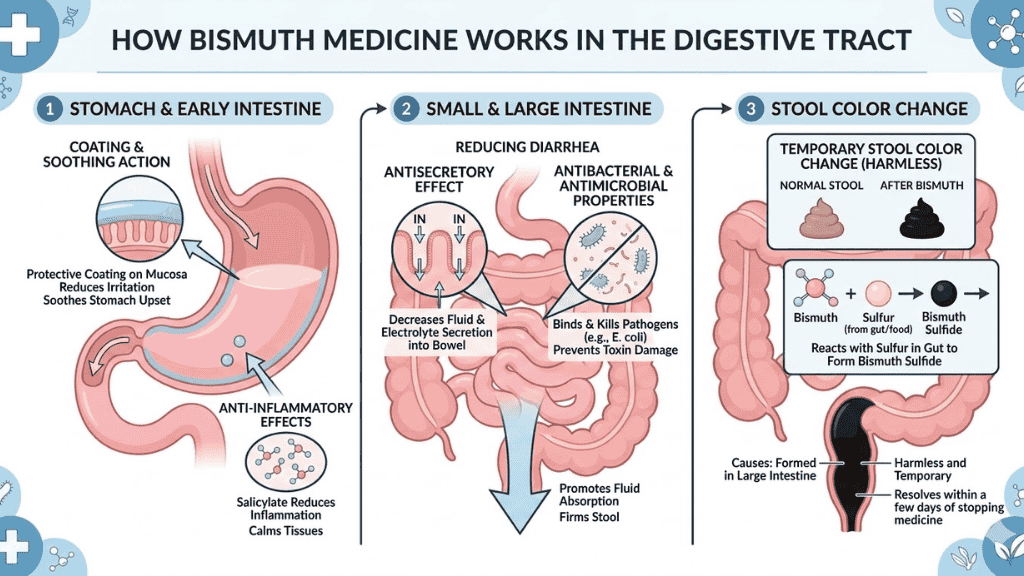
Understanding How Bismuth Medicine Works
Bismuth subsalicylate (BSS) is a compound that breaks down into bismuth and salicylic acid in the stomach, providing relief through several key mechanisms.
- Coating and Soothing (Stomach & Early Intestine) As shown on the left, bismuth forms a protective coating on the mucosal lining, physically shielding it from acid and other irritants. This direct physical barrier helps soothe stomach upset and reduce irritation. The salicylate reduces inflammation in the intestinal tissues, similar to aspirin.
- Reducing Diarrhea (Small & Large Intestine) The graphic in the center illustrates three main ways BSS treats diarrhea:
- Antisecretory Effect: It significantly inhibits fluid accumulation by decreasing the secretion of fluids and electrolytes into the bowel, which firm up the stool.
- Antimicrobial Action: BSS can bind to and kill pathogens (like certain bacteria, including E. coli) that cause infection-related diarrhea and prevent toxin damage.
- Anti-inflammatory: Salicylic acid further calms the intestinal tissues, reducing movement and inflammation.
- Temporary Stool Color Change (Harmless) The right panel explains this common and harmless side effect. The black discoloration is not blood. It results from a chemical reaction in the large intestine, where the bismuth metal reacts with sulfur (from food, bacteria, or saliva) to form bismuth sulfide, which is a black compound that passes with waste. This effect is temporary and benign, and it resolves within a few days of stopping the medicine.
How Long Does It Take for Pepto-Bismol to Make You Poop?
If you find yourself searching for How long does it take for Pepto-Bismol to make you poop? , we must reframe the question entirely: Pepto is not meant to trigger a bowel movement.
Unlike stimulant laxatives which typically work within 6 to 12 hours to force the intestinal muscles to contract, bismuth subsalicylate has no mechanism to initiate a bowel movement. If it changes bowel habits, it is usually because it is treating diarrhea or because stool color changes appear as it passes through your system.
You will likely notice that black stool may appear after taking it and fades after stopping. Because every person’s digestive transit time is different, it may take anywhere from 12 to 48 hours to see this dark stool emerge. We avoid exact timing promises unless specifically sourced, but the safe, medically accurate angle is that it is not a stimulant to make you go, and visible stool color change happens purely as the medicine passes through the gut.
Related: Light Brown and Dark Brown Poop Mixed: What Causes it?
Does Pepto-Bismol Make You Poop Black?
This is perhaps the single most common reason patients panic, step off the toilet, and immediately call their healthcare provider. You may be wondering, does pepto bismol make you poop black, why does pepto bismol make you poop black, or Can one dose of Pepto Bismol cause black stool.
Yes, it commonly can cause black or grayish-black stool. This visually alarming color change can happen even after a short course and is usually temporary.
The Science Behind the Color Change: The explanation for why this happens is pure, simple chemistry occurring inside your digestive tract. When you swallow the pink liquid or chew the tablet, the active ingredient breaks down. The bismuth combines with sulfur to form bismuth sulfide. Sulfur is naturally present in your digestive system, produced by the normal, healthy bacteria breaking down proteins. Bismuth sulfide is a highly pigmented, dark black substance. Because of this reaction, does pepto bismol make you poop dark? Absolutely.
We must emphasize that this is harmless in the usual Pepto context. It is a completely benign chemical reaction that does not damage your intestines, strip your gut lining, or indicate that the medicine is hurting you.
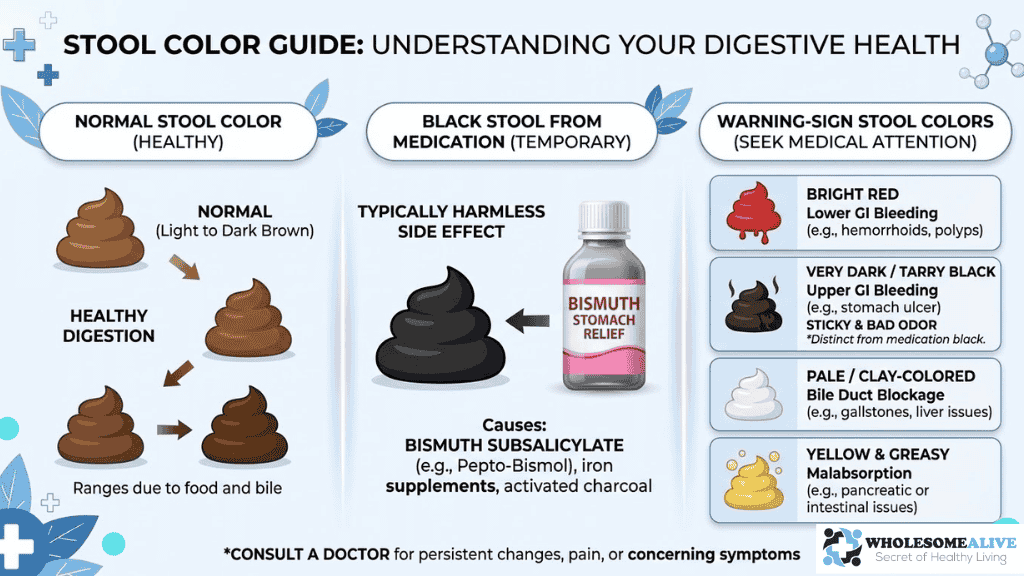
However, we must also explain that black stool can sometimes signal GI bleeding, so context matters. If you have not taken Pepto-Bismol recently and you experience pitch-black, sticky, or foul-smelling stools, this is a medical emergency known as melena, indicating bleeding in the upper digestive tract. The NHS confirms black stools are a common temporary effect of bismuth subsalicylate, but differentiating between the two is vital.
Stool Changes and What They Mean
To help you understand your symptoms, reference the following comparison table for black stool vs bleeding:
| Stool change | Possible meaning |
| Black after Pepto | common medication effect |
| Black without Pepto | could be bleeding, iron, or other causes |
| Dark green | often food/dyes or transit changes, not classic Pepto effect |
| Red or maroon | may indicate bleeding and needs evaluation |
Does Pepto-Bismol Make You Poop Green or Change Color?
If you are looking into the toilet and asking does pepto bismol make you poop green or does pepto bismol make you poop change color, the answer requires looking at your diet and transit time.
The classic color change from Pepto is black/dark, not green. Green stool is more often related to food dyes, bile moving quickly, antibiotics, or diarrhea.
When your liver digests fats, it produces bile, which is naturally bright green. As bile moves slowly through your long intestinal tract, bacteria break it down and turn it into the normal brown color we associate with healthy stool. However, if you have severe diarrhea, the stool moves through the digestive tract so rapidly that the green bile never has time to change color. Therefore, if someone sees green after Pepto, it may be from the illness, diet, or fast transit rather than the medicine itself.
Mayo Clinic’s stool-color guidance supports distinguishing black stool from medication and green stool from other causes.
Can Pepto-Bismol Cause Diarrhea?
Another frequent set of queries involves patients asking Can Pepto-Bismol cause diarrhea?, Does Pepto-Bismol give you diarrhea, or does pepto bismol make you poop more or less.
As a medical professional, I can assure you that the medicine is more commonly taken to reduce diarrhea, not cause it. If diarrhea happens after a dose, the underlying stomach illness is often the more likely explanation.
When you are battling a viral or bacterial gastrointestinal infection, the gut wall is highly inflamed and actively secreting massive amounts of fluid to flush out the invaders. You must discuss that bowel habits can still vary and some people may interpret urgency from the illness as a medicine effect. For instance, if you take the medication and immediately experience watery stools, you might wonder, does pepto bismol make you go poop? The timing is coincidental; the infection was already triggering the bowel movement.
Mayo Clinic notes bismuth subsalicylate is used specifically to help reduce the number of watery stools. It works to slow down the fluid secretion and calm the hyperactive muscle spasms of the gut.
Does Pepto-Bismol Make You Sleepy?
Some patients, feeling exhausted while recovering from a stomach bug, search for Does Pepto-Bismol make you sleepy.
It is important to understand that drowsiness is not one of the best-known hallmark effects in the same way black stool is. If someone feels sleepy, it may be from the illness, dehydration, or other medicines rather than Pepto itself.
Fighting off a viral or bacterial infection takes a massive toll on your body’s energy reserves. Furthermore, the fluid loss from diarrhea rapidly leads to dehydration, and lethargy and sleepiness are primary clinical signs of dehydration. Therefore, we keep the answer cautious and avoid overclaiming. This section should be framed carefully as “not a classic expected effect” rather than making an absolute claim.
How Long Does Pepto-Bismol Stay in Your System?
When asking How long does Pepto-Bismol stay in your system , it is best to explain practically rather than with unsupported exact pharmacokinetics.
Your body processes the two components of the medicine differently. The salicylate is absorbed into your bloodstream and processed by your kidneys, while the bismuth largely stays inside your digestive tract, doing its local soothing work before being excreted in your feces.
Consequently, stool or tongue darkening can persist until the bismuth byproducts pass out of the body. Depending on your bowel motility, this could take anywhere from 24 to 72 hours after your final dose. Bowel habit changes should settle after stopping, but persistent symptoms deserve evaluation. The NHS confirms the black stool effect is temporary and fades after the medicine stops and passes through the system.
When Should You Not Take Pepto-Bismol?
⚠️ SAFETY CALLOUT: When Not to Take Pepto-Bismol
While this medication is available over-the-counter and is generally safe for healthy adults, it is not appropriate for everyone. According to NHS and Mayo-linked guidance, people should avoid or get medical advice before using it if they: * Are pregnant or breastfeeding * Have an aspirin/salicylate allergy * Have certain bleeding disorders * Are children/teens recovering from viral illness because salicylates are not recommended in that context * Take interacting medications, including some painkillers and blood thinners * Have specific medical issues like gout or other listed cautions
The NHS explicitly advises against use in pregnancy and breastfeeding and lists aspirin allergy and blood clotting disorders among concerns. Giving products containing salicylates to children or teenagers recovering from viral infections (like the flu or chickenpox) can trigger Reye’s syndrome, a rare but potentially fatal condition characterized by severe liver and brain damage.
What Side Effects Should You Watch For?
While you are focusing on your bowel habits, you should also be aware of the total clinical picture of potential side effects.
- Common: black stool, dark tongue. (The dark tongue happens for the exact same chemical reason as the dark stool: bismuth reacting with sulfur produced by bacteria in your mouth).
- Possible: stomach upset or constipation depending on the person.
- When to seek help: allergic reaction, ringing in ears, severe ongoing symptoms, signs of bleeding.
Ringing in the ears, known medically as tinnitus, is a classic sign of salicylate toxicity. If you experience this, you should stop taking the medication immediately and contact a healthcare professional. You can review NHS side-effect pages for more comprehensive safety data.
Black Stool From Pepto-Bismol vs Black Stool From Bleeding
This is very important for trust and safety. Understanding the difference between a harmless chemical reaction and a medical emergency could save your life.
As we have covered extensively, medication-related black stool is a known harmless effect. But black stool can also signal bleeding in the upper GI tract.
When blood originates from the stomach or the upper part of the small intestine (such as from a bleeding ulcer), it has to travel through the entire digestive tract before being expelled. As it travels, digestive enzymes and stomach acids oxidize the iron in the blood, turning it dark, black, and tarry by the time it reaches the toilet.
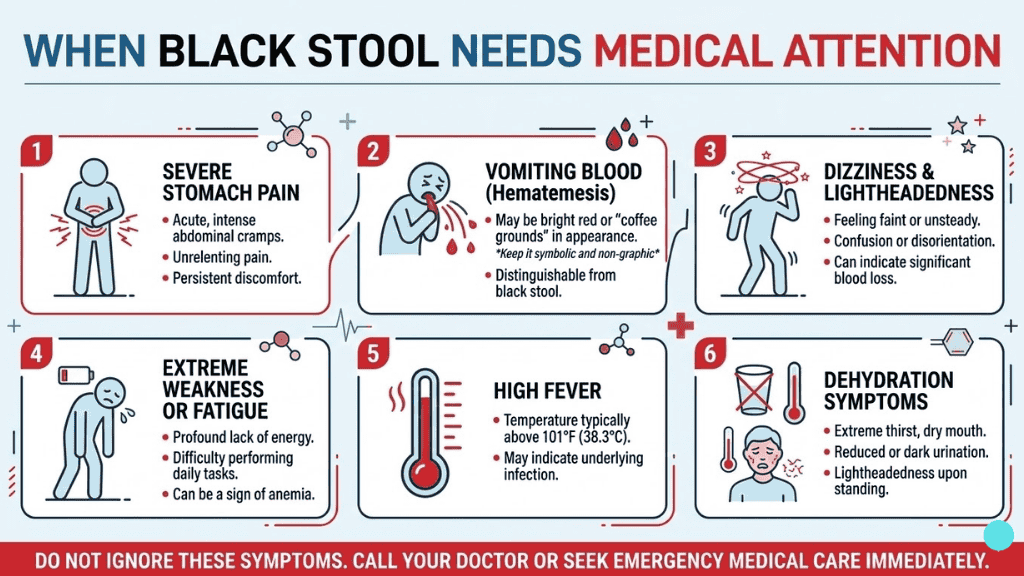
You must seek care if black stool happens without Pepto, or with dizziness, weakness, vomiting blood, severe pain, or ongoing symptoms. Mayo Clinic specifically notes black stool can come from both bismuth subsalicylate and upper GI bleeding.
What Reddit and Yahoo Answers Get Right — and Wrong
When patients are anxious about their symptoms, they frequently turn to internet forums, searching for Does pepto bismol make you poop reddit or does pepto bismol make you poop yahoo.
Social posts are useful for seeing common questions , but they are not a substitute for labeling or medical guidance. The biggest error found on these user-generated platforms is that people often confuse “Pepto made me poop” with “my stomach bug made me poop”. Remember the golden rule of medical statistics: correlation does not equal causation!
Related Article: Is it safe to take expired Pepto Bismol?
Frequently Asked Questions (FAQ)
Does Pepto-Bismol make you poop?
No, Pepto-Bismol does not actively make you poop. It is not formulated as a laxative, meaning it contains no ingredients intended to stimulate bowel contractions or draw water into the colon. Instead, it is commonly used to treat diarrhea, upset stomach, and indigestion. Its primary mechanism is to coat the stomach lining and slow down digestive transit, which typically results in a reduction of bowel movements rather than an increase.
Does Pepto-Bismol make you poop black?
Yes, it is extremely common for Pepto-Bismol to make your stool look black or dark gray. This occurs due to a completely harmless chemical reaction inside your digestive tract. When the active ingredient (bismuth subsalicylate) mixes with sulfur that is naturally produced by your gut bacteria, it forms a highly pigmented substance called bismuth sulfide, which visually darkens the stool as it passes through your system.
Why does Pepto-Bismol make your poop black?
Your poop turns black after taking Pepto-Bismol because of the formation of bismuth sulfide. Your digestive system contains naturally occurring sulfur. When you ingest bismuth (the active coating agent in the medication), it binds with this sulfur. Bismuth sulfide is black in color, and as it mixes with your digestive waste, it dyes the stool a dark, tarry color. This is a benign, expected side effect.
Does Pepto-Bismol make you poop dark?
Yes, taking Pepto-Bismol will frequently cause you to poop dark gray or pitch-black stool. This happens because the bismuth in the medication reacts with digestive sulfur to create a dark byproduct. While this dark stool can look alarming and closely mimic the appearance of digested blood, it is a harmless, temporary side effect that will clear up entirely once the medication has completely exited your gastrointestinal system.
Does Pepto-Bismol make you poop green?
No, Pepto-Bismol does not typically make your poop green. The classic, expected color change associated with bismuth subsalicylate is black or very dark gray. If you are experiencing green stool, it is usually caused by eating foods heavy in green dyes, consuming large amounts of leafy greens, or having a rapid digestive transit time (diarrhea) where your naturally green bile does not have time to break down into a brown color.
Does Pepto-Bismol make you poop more or less?
Pepto-Bismol should make you poop less. Because it is an antidiarrheal medication, its main purpose is to calm inflammation in the gut, bind to bacterial toxins, and slow down the excessive fluid secretion that causes watery bowel movements. Consequently, some people may even experience mild constipation after taking it, as it successfully halts the urgency and frequency of diarrhea.
Can one dose of Pepto-Bismol cause black stool?
Yes, even a single dose of Pepto-Bismol contains enough bismuth to trigger the chemical reaction that causes black stool. Once that single dose travels through your intestines and mixes with the sulfur present in your gut, the resulting bismuth sulfide will pigment the waste. You may notice this dark stool during your next one or two bowel movements, after which your stool should return to its normal color.
Can Pepto-Bismol cause diarrhea?
It is highly unlikely for Pepto-Bismol to cause diarrhea, as it is specifically designed and indicated to treat and stop diarrhea. If you take the medication and subsequently experience more diarrhea, the medication is not to blame. Instead, the ongoing watery stools are the result of the underlying viral, bacterial, or parasitic stomach illness that you are currently trying to treat.
Does Pepto-Bismol make you sleepy?
No, drowsiness is not a classic or expected side effect of Pepto-Bismol. The medication does not contain sedatives or antihistamines that cross the blood-brain barrier to cause sleepiness. If you are feeling excessively tired or lethargic after taking it, this sleepiness is almost certainly a result of your body fighting off a gastrointestinal infection, or a symptom of the dehydration caused by your diarrhea.
How long does Pepto-Bismol stay in your system?
The visual side effects of Pepto-Bismol, such as a darkened tongue or black stool, will persist until the bismuth byproducts have completely passed through your digestive tract. For most people with normal bowel motility, this means the medication will clear your system and your stool will return to its normal color within 24 to 72 hours after you stop taking your final dose.
When should you not take Pepto-Bismol?
You should not take Pepto-Bismol if you are pregnant or breastfeeding, if you have a known allergy to aspirin or salicylates, or if you suffer from certain bleeding disorders or active gastrointestinal ulcers. Furthermore, it should never be given to children or teenagers who are recovering from a viral illness like the flu or chickenpox, due to the severe risk of a life-threatening condition called Reye’s syndrome. Always consult a doctor if you are unsure.
Medical Disclaimer: The information provided in this article is for educational purposes only and does not substitute for professional medical advice, diagnosis, or treatment. Stool color changes after Pepto can be harmless, but black stool can also have serious causes outside this context.