Deciding to quit smoking is one of the most powerful choices you will ever make for your body. But even after the last cigarette is stubbed out, many former smokers are left with a lingering question: how to detox your lungs after smoking? 🚬
You might feel a heavy tightness in your chest or a persistent cough that won’t quit. This is actually your body’s way of trying to repair itself. Your lungs are incredible, self-cleaning organs, but years of smoke and tar can leave them feeling “clogged.” Supporting your respiratory system isn’t about a magic pill; it’s about giving your biological filters the right environment to thrive. 🌬️✨
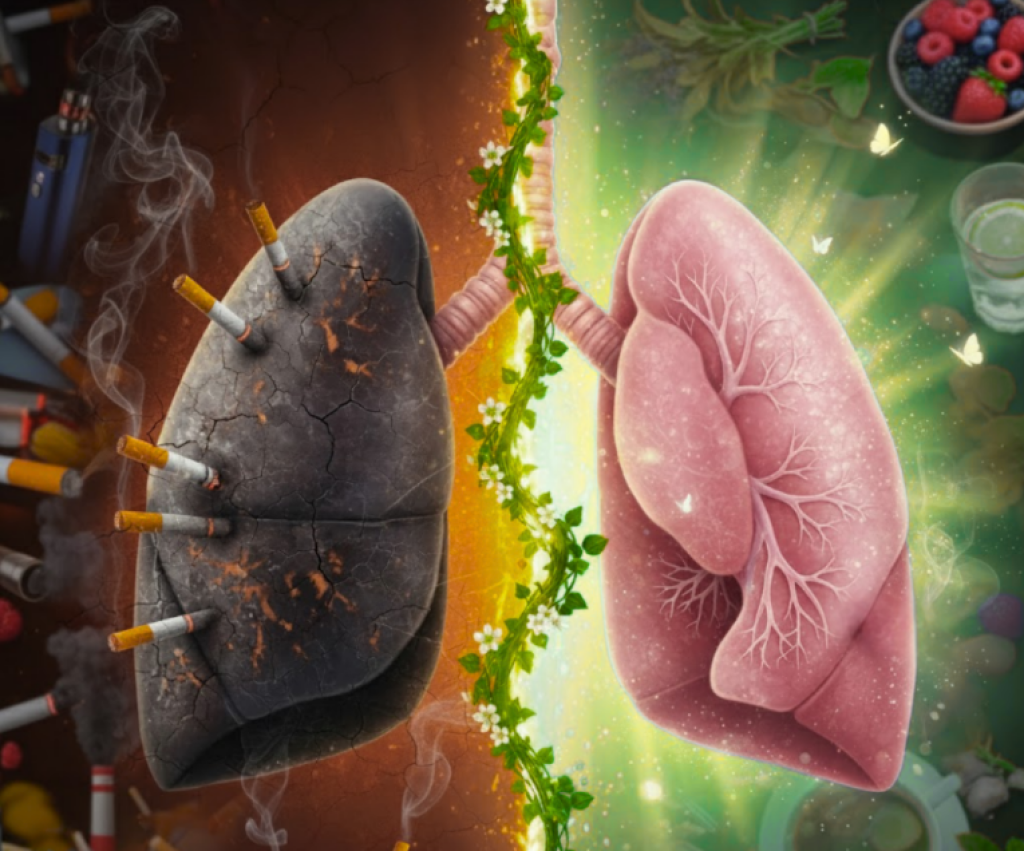
Do Lungs Actually Detox Themselves? 🤔
The short answer? Yes. Your lungs are constantly cleaning themselves, even as you read this. They use a sophisticated two-part system to keep your airways clear:
- The Mucus Trap: Your airways produce mucus to “catch” dust, bacteria, and smoke particles before they reach deep into your lung tissue. 🛡️
- The Cilia Elevator: Millions of tiny, hair-like structures called cilia line your airways. They move in a rhythmic, wave-like motion to “sweep” that dirty mucus up toward your throat so you can cough it out.
When people ask, “can you detox your lungs?” they are really asking if they can speed up this process. While you can’t “scrub” your lungs, you can certainly thin the mucus and support the cilia so the self-cleaning process of human lungs works at its maximum potential. 📈
What Smoking and Vaping Do to Your Lungs ⚠️
To understand how to heal, we have to look at the damage. Smoking and vaping don’t just “stain” the lungs; they cause functional changes that make breathing harder.
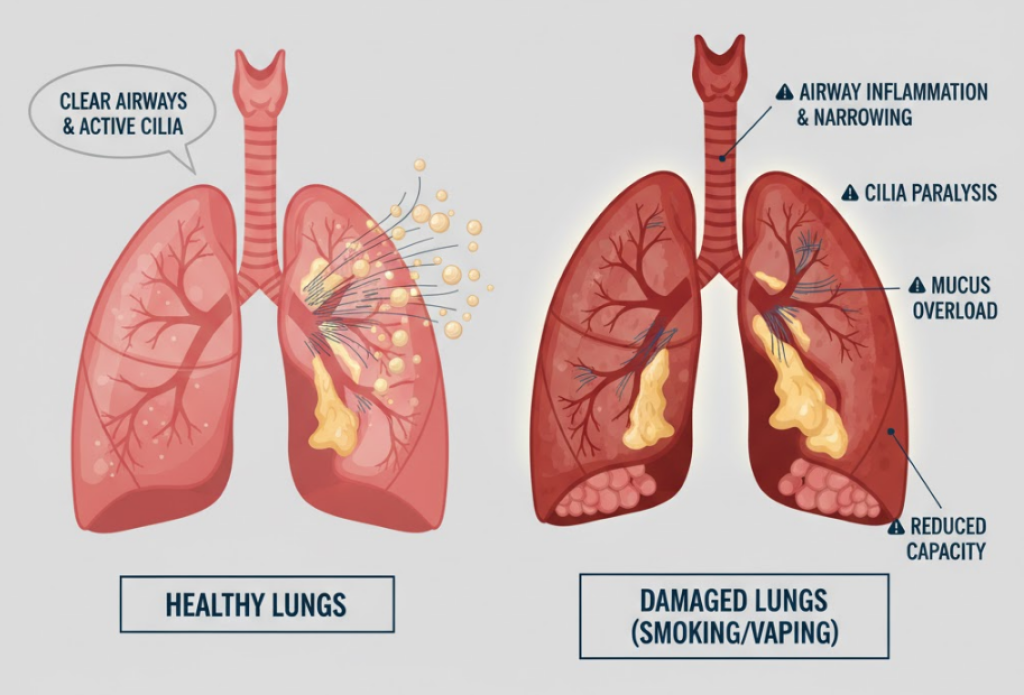
- Airway Inflammation: The heat and chemicals cause your airways to swell and narrow. 🤒
- Cilia Paralysis: Tobacco smoke actually “paralyzes” those tiny sweeping hairs. This is why smokers have more mucus; the “sweepers” aren’t working to move it out.
- Mucus Overload: To protect themselves from the irritation of smoke, your lungs go into overdrive, producing thick, sticky mucus that is hard to clear.
- Reduced Capacity: Over time, the tiny air sacs (alveoli) can lose their elasticity, making it harder to take those deep, satisfying breaths. 📉
Understanding how to detox lungs from smoking or vaping starts with reducing this inflammation so your cilia can “wake up” and get back to work.
How Long It Takes for Lungs to Heal ⏳
The recovery timeline is surprisingly fast once you stop introducing toxins. If you’ve been wondering how long does it take to detox your lungs, the milestones might surprise you:
| Time Since Last Smoke | What Happens Internally |
| 24 Hours | Carbon monoxide levels in your blood drop to normal; oxygen levels rise. ⬆️ |
| 2 Weeks | Circulation improves and lung function begins to increase. |
| 1–9 Months | Cilia regain normal function; coughing and shortness of breath decrease significantly. 🌬️ |
| 1 Year | Your risk of coronary heart disease is half that of a smoker’s. |
| 10 Years | Your risk of lung cancer falls to about half that of a smoker. 🛡️ |
Hydration and Mucus Clearance 💧
If you want to know how to detox your lungs naturally, start with your water intake. When you are dehydrated, the mucus in your lungs becomes thick, sticky, and incredibly difficult for your cilia to move.
- Thinning the “Trap”: Drinking plenty of water acts as a natural expectorant. It thins out the phlegm, making it much easier to cough up and clear out. 🌊
- Soothing Irritation: Constant coughing from smoking can leave your throat and bronchial tubes raw. Proper hydration keeps these tissues moist and resilient.
- The “Clear” Rule: A simple way to check your hydration is by the color of your urine. Aim for a pale, straw-like color to ensure your natural ways to clear mucus from lungs are actually working. 🥤
Breathing Exercises That Improve Lung Capacity 🌬️
Think of these exercises as “gymnastics” for your lungs. After years of shallow breathing caused by smoke irritation, your diaphragm—the main muscle for breathing—can become weak.
- Diaphragmatic Breathing (Belly Breathing): Place one hand on your belly and one on your chest. Inhale through your nose, making sure your belly moves out while your chest stays still. This forces your lungs to fill from the bottom up. 🧘♂️
- Pursed-Lip Breathing: Inhale through your nose and exhale slowly through puckered lips (like you’re about to whistle). The exhale should be twice as long as the inhale. This keeps your airways open longer, helping to release trapped air. 🌬️
These breathing exercises for lung capacity are essential for anyone wondering how to detox your lungs after smoking, as they help re-train your body to use its full respiratory volume.
Physical Activity and Lung Recovery 🏃♀️
You don’t need to run a marathon to see results. The goal of exercise during lung detox is to increase your heart rate, which in turn increases your respiration rate.
- Increased Oxygen Flow: As you move, your lungs work harder to provide oxygen to your muscles. This “workout” strengthens the muscles around your ribs and your diaphragm. ⚡
- Clearing the Debris: Have you ever noticed you cough more during a brisk walk? That’s a good thing! The increased airflow helps loosen deep-seated mucus, allowing you to clear it more effectively.
- Consistency is Key: Even 15–20 minutes of daily movement can significantly speed up how long it takes to detox your lungs. 🚲
Steam Therapy and Airway Moisture 🧖♀️
Steam therapy involves inhaling water vapor to open the airways and help the lungs drain mucus. This is a favorite among former smokers because it provides immediate, soothing relief to the “smoker’s cough.”
- How it Works: The warm, moist air thins the mucus in the nose, throat, and lungs almost instantly. 🌡️
- Using a Humidifier: If you live in a dry climate, using a cool-mist humidifier in your bedroom can prevent your airways from drying out overnight.
- Steam Inhalation: Sitting in a steamy bathroom or using a bowl of hot water (with a towel over your head) for 10 minutes can help open up tight chest passages.
Anti-Inflammatory Foods That Support Lung Healing 🥗

When you smoke, you aren’t just damaging your lungs; you are creating a systemic “wildfire” of inflammation. To heal, you must switch from a pro-inflammatory diet to an anti-inflammatory one. Think of this as internal maintenance for your respiratory infrastructure.
Cruciferous Vegetables (The Enzyme Powerhouses): Broccoli, kale, and cauliflower are essential because they contain sulforaphane. This compound activates the Nrf2 pathway in your lungs—a genetic switch that boosts your body’s natural antioxidant defenses.
Omega-3s as Membrane Repair: Your lung cells are encased in a fatty membrane. Chronic smoke exposure “hardens” these membranes, making them less efficient at gas exchange. High-quality Omega-3 fatty acids (from wild-caught salmon or flax oil) literally help re-fluidize those cell walls, improving your lung’s elasticity.
Berries and Flavonoids: Blueberries and blackberries are dense in anthocyanins. Research suggests that high flavonoid intake is directly correlated with a slower decline in lung function, especially in those with a history of smoking.
The “Whole Food” Rule: You aren’t just looking for vitamins; you are looking for the matrix of the food. Eating a whole bowl of mixed berries provides a synergistic effect that no supplement can replicate.
How to Detox Your Liver Naturally: 15 Powerful Ways That Actually Work
Herbs Traditionally Used for Lung Support 🌿
Herbal support is a long-standing tradition for a reason. These plants don’t just act as placebos; they contain bioactive compounds that target the respiratory tract.
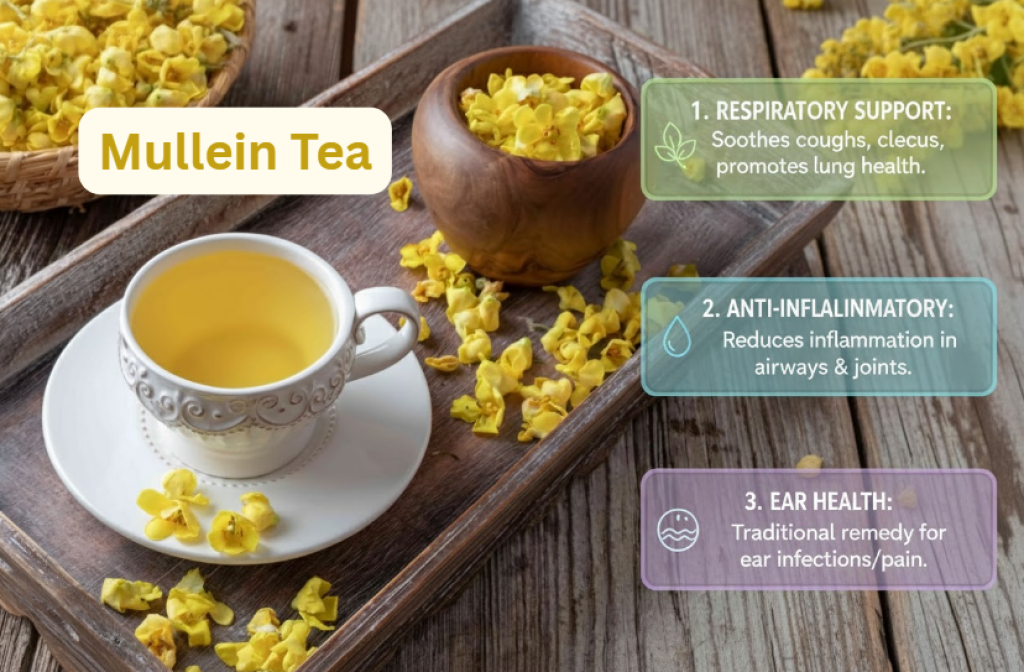
Mullein Leaf (The Expectorant Specialist): Mullein contains high levels of mucilage—a sticky, gelatinous substance that coats the throat and bronchial tubes, soothing inflammation and “calming” a spasmodic cough. When used as a tea, it doesn’t just soothe; it helps the body gently move phlegm up and out. Many often wonder, “does mullein tea help smokers lungs?” The answer is yes—it is one of the few herbs that provides both a cooling effect for hot, irritated airways and a mild expectorant effect to clear debris.
Ginger Root (The Anti-Congestant): Beyond its anti-nausea benefits, ginger is a potent warming herb. It increases blood flow to the lungs, which helps dilate (widen) the small airways and makes it easier for mucus to be dislodged.
Licorice Root (The Bronchial Soother): This herb is famous for its ability to reduce airway spasms. By relaxing the smooth muscles that line your bronchial tubes, it reduces the “tightness” often associated with lingering respiratory irritation. Note: Use with caution if you have high blood pressure.
Antioxidants and Lung Detoxification 🛡️
Your lungs are the most oxygen-exposed organs in your body. This makes them uniquely susceptible to oxidative stress. When you smoke, the inhaled toxins overwhelm your body’s “antioxidant budget.” To restore health, you must intentionally over-supply these molecules.
The Vitamin C/Vitamin E Synergy: Vitamin C works in the water-based fluid lining your lungs, while Vitamin E works within the lipid (fat) membranes of the cells themselves. By taking them together, you create a “biphasic” defense system that protects your lungs from both inside and outside the cell.
Lycopene and Cellular Integrity: Often overlooked, lycopene (found in high concentrations in cooked tomatoes) acts as a powerful protector against the DNA-damaging effects of smoke. Adding a cooked tomato-based sauce to your meals 2–3 times a week is an easy, science-backed way to bolster your lung protection.
Why Supplementation Isn’t Enough: You can’t just take a multivitamin and expect lung repair. Antioxidants work best in the presence of other phytonutrients, which is why your focus should remain on lung detox foods rather than pills.
Air Quality and Lung Health: Engineering Your Environment 🏡
You cannot detox your lungs if your home environment is still a source of respiratory stress. You need to treat your living space like a “clean-air sanctuary.”
The HEPA Filter Revolution: A true HEPA (High-Efficiency Particulate Air) filter captures particles as small as 0.3 microns—the exact size of many smoke residues and combustion byproducts. Running this in your bedroom while you sleep allows your cilia to work in an environment of total purity, which is critical for that vital 8-hour repair cycle.
The Ventilation Paradox: Many people trap pollutants by keeping their homes too airtight. Opening your windows for at least 15 minutes twice a day creates a “pressure flush” that removes stagnant indoor toxins.
The “Silent” Pollutants: Candles with synthetic wicks, standard plug-in air fresheners, and harsh chemical cleaners all release VOCs (Volatile Organic Compounds) that trigger airway constriction. To detoxify lungs from air pollution naturally, you must switch to unscented, non-toxic cleaning agents. The goal is to lower the total “chemical burden” on your airways so your lungs can focus exclusively on clearing the backlog of smoke-related debris.
Postural Drainage and Chest Percussion: The Physics of Clearing Lungs 👐
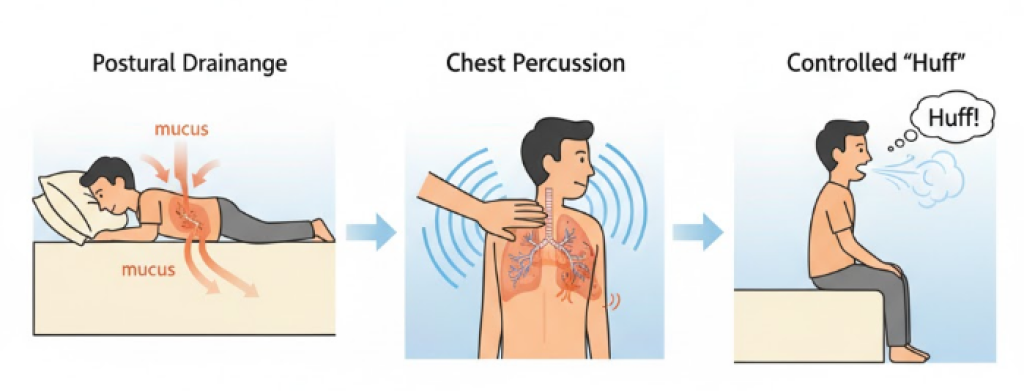
Many people think the only way to clear lungs is through coughing, but gravity is actually a much more powerful tool. Postural drainage leverages your body’s geometry to help mucus flow toward the major airways, where it can be easily cleared.
- The Technique: You want to position yourself so that specific lung segments are angled “downhill.” If you are trying to clear the lower lobes of the lungs, lie on your stomach or sides with your hips elevated by two or three pillows. Stay in each position for 5 to 10 minutes.
- Chest Percussion (Coupage): While in these positions, use a cupped hand—not a flat palm—to rhythmically tap your chest or back. This creates a mechanical wave that travels through your chest wall, loosening thick, stagnant mucus from the walls of your bronchial tubes.
- The Controlled “Huff”: Traditional hacking coughs often cause more inflammation than they are worth. Instead, practice the “huff” maneuver. Take a medium-sized breath, then exhale forcefully with an open mouth, as if you are trying to fog up a mirror. It is far more efficient at moving phlegm upward without exhausting your respiratory muscles. 🌬️
How to Detox Your Body Naturally at Home
Detoxing Your Lungs After Years of Smoking 🕰️
When you ask, “can you clean your lungs after years of smoking?” it’s vital to distinguish between erasing damage and optimizing remaining function. While you cannot undo the permanent structural changes that happen to alveoli (the tiny air sacs), your body has a staggering capacity to pivot toward repair the moment you stop inhaling smoke.
- Shifting Energy: For years, your body’s metabolic “budget” was spent fighting toxic inflammation. Once you quit, that energy is suddenly freed up. Your system begins prioritizing cellular repair, micro-vessel circulation, and immune support.
- The Long-Game of Regeneration: Recovery after decades of smoking isn’t a 30-day process; it’s a lifestyle transition. Over the first year, you will likely notice your chest feels “lighter.” By year five, the chronic inflammation that caused your constant throat-clearing will have significantly subsided, provided you avoid secondary triggers like industrial pollutants or heavy vape usage.
Clearing Lungs After Quitting Smoking: Navigating the “Cilia Wake-Up” 🚭
If you are currently in the early stages of quitting, you might feel like you are coughing more than when you were smoking. Do not be alarmed—this is the most positive sign of healing you could experience.
- The Cilia Wake-Up Call: Smoking effectively “mutes” your cilia, the tiny, hair-like cleaners of your lungs. When you quit, these cilia begin to regenerate and start moving again. They are doing their job, sweeping years of trapped tar and mucus upward. That cough is simply your lungs’ “garbage truck” finally being able to drive out of the terminal.
- Supporting the Process: You can assist this phase by drinking warm liquids consistently throughout the day. If you stop smoking but remain dehydrated, that debris will just get stuck again. Keep the mucus thin, keep the cilia moving, and allow the process to finish naturally. 🏁
Lung Detox for People Exposed to Pollution 🏙️
Even if you aren’t a smoker, living in an urban environment means your lungs are under constant low-level attack. Protecting them is an essential part of your health strategy.
- Strategic Avoidance: Check your local air quality index (AQI) daily. On “high pollution” days, treat it as a medical imperative to stay indoors. Closing your windows and running a HEPA air purifier during peak traffic hours is not just about comfort; it is a vital step in reducing your long-term cumulative toxic load.
- Barrier Protection: If you must exercise outdoors in a city, aim for early morning hours when traffic density is at its lowest.
- Systemic Defense: Environmental pollutants cause oxidative stress. This is where lung detox foods—specifically those high in N-acetylcysteine (like broccoli) and Vitamin E—become your first line of defense, acting as a chemical shield for your lung tissue. 🛡️
Who Should Be Careful With Lung Detox Remedies ⚠️
While natural remedies are effective, they are not “side-effect-free.”
- Herbal Interactions: Mullein and dandelion root are powerful. However, who should not use mullein? Individuals taking diuretics, lithium, or medications for diabetes need to be extremely cautious, as herbal interactions can alter how these drugs are metabolized.
- Underlying Conditions: If you have been diagnosed with asthma, chronic bronchitis, or emphysema, do not start an aggressive “detox” regimen—including steam or heavy percussion—without consulting a pulmonologist. Your airways are delicate, and what helps a healthy lung could potentially trigger an asthma flare in compromised tissue. 🏥
When to See a Doctor About Lung Symptoms 🩺
Distinguishing between “healing cough” and “dangerous symptoms” is critical. If your efforts at natural detoxification are met with the following red flags, stop your regimen and see a doctor immediately:
- Hemoptysis: Coughing up even trace amounts of blood.
- Painful Breathing: Any sharp, stabbing pain in your chest or shoulders during deep inspiration.
- Orthopnea: If you find you cannot breathe comfortably while lying flat and need to prop yourself up with multiple pillows to sleep.
- The Three-Week Rule: If your cough, rattle, or wheeze persists for more than 21 days despite clean air and hydration, it is time for a professional medical evaluation to rule out deeper issues. 🚨
Supporting Your Lungs Naturally for Long-Term Health 🌟
Learning how to detox your lungs after smoking is ultimately about reclaiming your most basic human function: the ability to take a full, deep, and satisfying breath. Your lungs are remarkably resilient, but they require a partner in their repair.
By prioritizing clean air, targeted nutrition, and movement, you aren’t just “detoxing”—you are fundamentally changing the environment of your body so it can heal.
References
- What Happens When You Quit Smoking?
- Health Effects of Cigarettes: Cardiovascular Disease
- Lung Regeneration in Abstaining Smokers
- Will Emphysema Still Progress After I Quit Smoking?