For decades, the beauty industry has been defined by a “war” on aging. We were told to “fight” wrinkles, “erase” fine lines, and “defy” our years. But a fundamental shift is occurring in how we perceive skin health. The era of reactive, fear-based “anti-aging” is being superseded by a more intelligent, proactive philosophy: Skin Longevity.
Skin longevity is not about pretending that time doesn’t pass; it is about ensuring the skin—our body’s largest organ—functions at its peak biological capacity for as long as possible. Rather than chasing a fleeting aesthetic of youth, this movement prioritizes cellular resilience and regenerative health.
By shifting the focus from surface-level corrections to deep-seated vitality, we aren’t just looking better—we are extending the “healthspan” of our skin.

What Is Skin Longevity?
When we ask, “What is skin longevity?”, we are looking at the skin’s ability to maintain its structural integrity and physiological function over the long term.
In traditional dermatology, “aging” was viewed as a series of visible defects to be camouflaged. Skin longevity, however, treats the skin as a vital, living system. It is the science of keeping your “biological skin age” lower than your chronological age.
The Core Pillars of Skin Longevity:
- Cellular Resilience: The ability of skin cells (fibroblasts and keratinocytes) to withstand environmental stressors without falling into a state of “senescence” (where they stop functioning but don’t die).
- Structural Density: Maintaining the thickness of the dermal matrix—specifically collagen and elastin—by protecting the cells responsible for their production.
- Metabolic Energy: Ensuring the mitochondria (the powerhouses of your cells) have enough energy (ATP) to perform essential repair and renewal functions.
Skin Longevity vs. Anti-Aging
While they share the goal of radiant skin, the difference between skin longevity vs. anti-aging is found in the intent. It is the difference between prevention and correction.
| Feature | Anti-Aging (Traditional) | Skin Longevity (Modern) |
| Mindset | Reactive: Fixing damage after it appears. | Proactive: Maintaining function to prevent damage. |
| Goal | Aesthetic: Erasing wrinkles and spots. | Biological: Extending the “skinspan” (healthspan). |
| Primary Actives | High-strength Retinols, harsh peels, fillers. | Exosomes, PDRN, NAD+ precursors, Peptides. |
| Focus Area | Epidermal surface and visible lines. | Cellular health, mitochondria, and DNA repair. |
| Philosophy | “Defying” or “Fighting” age. | “Optimizing” and “Nurturing” biology. |
The skin longevity trend recognizes that a wrinkle is merely a symptom of underlying cellular fatigue. By addressing that fatigue at a molecular level, we create skin that is naturally smoother and more resilient.
- Read More: If you found this helpful, you might also want to read my guide on What You Need to Know About Retinol?
Why the Skin Longevity Trend Is Exploding
This isn’t just a change in terminology; it’s a convergence of scientific breakthrough and a major cultural pivot.
The “Prejuvenation” Revolution
A new generation of skincare consumers has bypassed the “correction” phase entirely. Prejuvenation skincare is about starting regenerative treatments early. These individuals aren’t looking to “fix” anything; they are investing in their skin’s future to ensure it never “breaks” in the first place.
The Biotech Boom
We have moved past simple plant extracts into the era of Biotech Beauty. Lab-grown ingredients that are “bio-identical” to human signaling molecules—like growth factors and exosomes—allow us to “talk” to our cells and trigger natural repair mechanisms.
The “Slow-Aging” Movement
Borrowing from the “Slow Living” philosophy, slow-aging rejects aggressive, “scorched earth” approaches like over-exfoliation. Consumers now realize that a healthy microbiome and a strong barrier are more valuable than a temporary, acid-induced glow.
- Read More: If you found this helpful, you might also want to read my guide on Synevra Anti-Aging Serum and VitaLock Beauty Nutrients
What Is “Skinspan”
A critical concept in this new era is Skinspan.
“Skinspan” is the most important skincare metric today. It measures the quality and functional health of your skin over time, prioritizing long-term resilience over immediate, temporary fixes.
Just as “Healthspan” refers to the years of your life spent in good health, Skinspan is the duration of your life during which your skin remains strong, radiant, and functional.
Why Skinspan is the New Metric:
- Functional Longevity: A long skinspan means your skin effectively regulates temperature, protects against infection, and heals quickly well into later life.
- Biological vs. Chronological Age: Chronological age is fixed, but biological skin age is fluid. Through “bio-hacking” your routine, your skin can act significantly younger than the date on your birth certificate.
- The Cumulative Effect: Longevity science focuses on the “hallmarks of aging”—the biological triggers that cause decline. By focusing on skinspan, you address these triggers (like DNA damage and protein loss) every single day.
The 12 Hallmarks of Skin Aging Explained Simply
In the longevity framework, dermatologists and researchers identify 12 “hallmarks”—the underlying biological processes that dictate how your skin ages. Mastering these is the key to extending your skinspan.
The Core Biological Triggers:
- Genomic Instability: The accumulation of DNA “typos” caused by UV rays and pollution.
- Telomere Attrition: The protective caps on your DNA shorten, eventually signaling cells to stop renewing.
- Epigenetic Alterations: Environmental stress “flipping switches” that turn off youthful gene expression.
- Loss of Proteostasis: The failure of the skin’s “protein recycling” system, leading to damaged collagen buildup.
- Deregulated Nutrient-Sensing: When cells lose the ability to use fuel efficiently.
- Mitochondrial Dysfunction: The “power plants” of your cells losing their ability to generate energy.
- Cellular Senescence: The buildup of “zombie cells” that spread inflammation to healthy neighbors.
- Stem Cell Exhaustion: The depletion of the skin’s internal “repair crew.”
- Altered Intercellular Communication: Cells lose their ability to “talk” to each other, slowing down repair signals.
- Chronic Inflammation (Inflammaging): Constant, low-grade irritation that dissolves the dermal matrix.
- Microbiome Dysbiosis: An imbalance in the skin’s protective bacterial ecosystem.
- Macroautophagy Decline: The slowing of the cell’s internal cleaning and waste-disposal process.
Cellular Skin Health: The New Foundation of Beauty
Traditional skincare focuses on the Extracellular Matrix (ECM)—the collagen and elastin outside the cells. The longevity approach, however, focuses on the cell itself.
Cellular skin health is the belief that if the cell is energized and healthy, it will naturally produce high-quality collagen. If the cell is “fatigued” or damaged, no amount of external stimulation (like harsh chemical peels) will yield long-term results.
The Cellular Health Checklist:
- ATP Maintenance: Does the cell have the energy to repair itself?
- DNA Repair Support: Are we using ingredients that help fix genetic “typos”?
- Redox Balance: Maintaining a healthy internal environment to neutralize oxidative stress before it causes damage.
Epigenetic Skincare & Gene Expression
If your DNA is the “hardware” of your skin, epigenetics is the “software.” You cannot change your DNA sequence, but epigenetic skincare aims to influence how your skin reads those instructions.
We now know that up to 80% of skin aging is determined by the Exposome (lifestyle, diet, and environment). These factors create “epigenetic tags” that can silence your “youth genes” (like those for collagen production).
- The “Reset” Effect: Modern epigenetic serums act as a “switch,” reminding older cells how to function like their younger selves.
- Core Actives: Peptides, plant-derived microRNAs, and specific polyphenols are the primary tools used to support healthy gene expression.
NAD+ Precursors & Mitochondrial Skin Support
The final frontier of skin longevity is the Mitochondria—the power plant inside every skin cell. Without cellular energy (ATP), repair stops and aging accelerates.
Mitochondrial skin support centers on boosting levels of NAD+ (Nicotinamide Adenine Dinucleotide). This coenzyme is essential for energy production, but its levels naturally decline as we age.
The Power Players:
- NAD+ Precursors: Ingredients like NMN and Niacinamide help “recharge” the cellular batteries.
- CoQ10 & PQQ: CoQ10 protects existing mitochondria, while PQQ is studied for its ability to encourage “mitochondrial biogenesis”—the creation of new cellular power plants.
- L-Carnosine: An amino acid derivative that protects proteins from glycation and supports mitochondrial efficiency.
PDRN / Salmon DNA Regeneration & Exosome Therapy
The biggest leap in regenerative skincare involves the use of biomolecules that don’t just coat the skin but actively signal it to repair itself.
What is PDRN?
PDRN (Polydeoxyribonucleotide) is a DNA fragment derived from salmon sperm cells. While that may sound unusual, salmon DNA is remarkably similar to human DNA (95% homology).
- The Mechanism: PDRN acts as a “cellular wake-up call.” It binds to specific receptors (Adenosine A2A) on your skin cells, triggering a cascade of repair, boosting collagen synthesis, and reducing inflammation.
- The “Salvage Pathway”: When skin is damaged, it struggles to build new DNA from scratch. PDRN provides the “raw materials” (nucleotides) that your cells can “salvage” to speed up the healing process.
The Rise of Exosomes
If PDRN is the raw material, Exosomes are the “postal service.” These tiny, bubble-like vesicles are released by cells to carry “messages”—proteins, lipids, and growth factors—to other cells.
- Precision Signaling: Exosome therapy tells aged cells to act like young ones. In longevity routines, they are used to “reprogram” the skin’s environment, making it more fertile for regeneration.
- Why They Matter: Unlike traditional “stem cell” creams (which contain no living cells), exosomes are stable, potent, and capable of penetrating deep into the dermis to deliver their regenerative cargo.
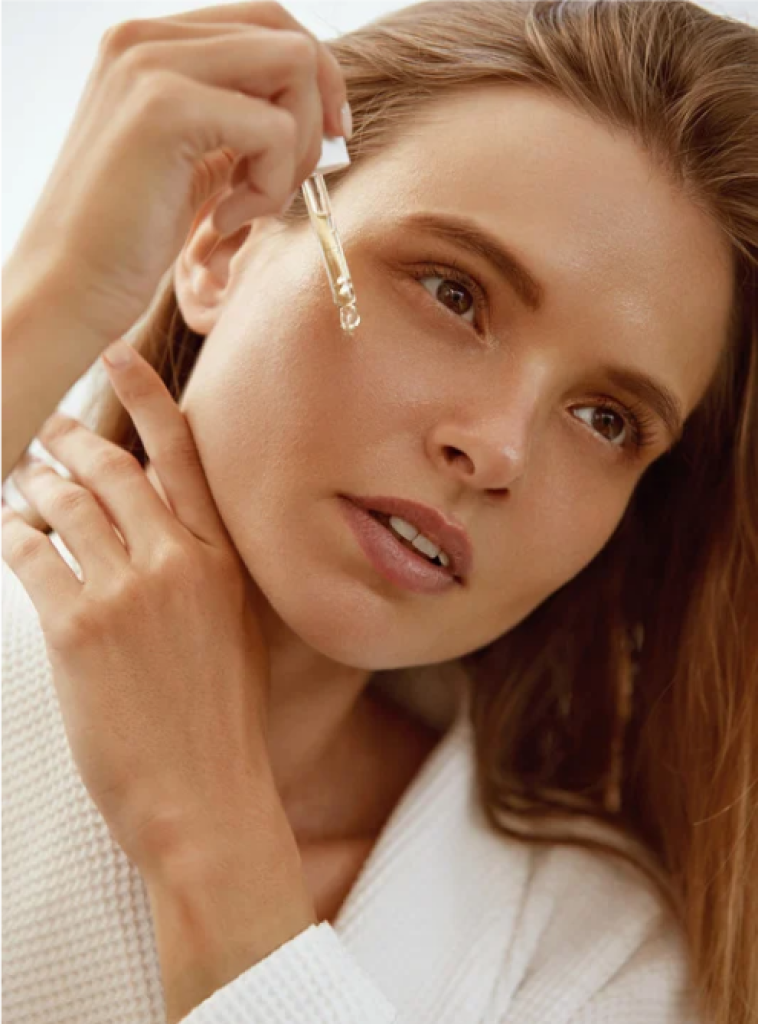
Products for Skin Longevity Besides Sunscreen
While SPF is the non-negotiable “shield,” a longevity routine requires active “mechanics” to maintain the skin’s engine. If you want to lower your skin’s biological age, look for these three categories:
DNA Repair Enzymes
Sunscreen only blocks 55–60% of the free radicals produced by UV rays. DNA Repair Enzymes (like Photolyase or Endonuclease) go a step further: they identify and “snip out” the damage that has already occurred in your genetic code before it becomes a permanent mutation.
- Read More: If you found this helpful, you might also want to read my guide on The Collagen Myth: Does Eating Collagen Actually Build Skin?
Growth Factors & Peptides
These are the “directors” of the skin. As we age, our natural production of growth factors drops. Supplementing with bio-identical growth factors helps maintain the thickness and elasticity of the skin by keeping the “production line” of collagen running.
High-Performance Humectants
Longevity isn’t just about water; it’s about osmotic balance. Ingredients like Polyglutamic Acid and Ectoin protect cells from dehydration and environmental “shocks,” ensuring the cellular environment remains stable enough for repair to happen.
Circadian Rhythm Skincare & Cortisol-Conscious Routines
Your skin follows a strict 24-hour biological clock. It has a “Day Mode” (Defense) and a “Night Mode” (Repair). Ignoring this rhythm is one of the fastest ways to shorten your skinspan.
The “Day-Night” Cycle:
- Daytime (Protect): The skin focuses on neutralizing UV rays and pollution. Use Antioxidants (Vitamin C, Ferulic Acid) and Barrier Protectors (Ectoin).
- Nighttime (Regenerate): Cell division accelerates by up to 30 times, and DNA repair mechanisms intensify. This is the optimal window for Retinoids, Peptides, and PDRN.
Cortisol & “Inflammaging”
High stress levels release Cortisol, which breaks down collagen and weakens the skin barrier. Cortisol-conscious skincare uses “neuro-peptides” and adaptogens (like Ashwagandha or Tephrosia Purpurea) to calm the skin’s “nervous system,” preventing stress-induced aging.
- Read More: If you found this helpful, you might also want to read my guide on Barrier Repair Basics: How to Fix “Over- Exfoliated” Skin
Dermatological Nutrition: Inside-Out Skin Longevity
True longevity is systemic. You cannot achieve peak skin health if your internal “terrain” is inflamed.
- The Collagen Synthesis Diet: To build collagen, your body needs more than just a cream. It requires Vitamin C, Amino Acids (Proline/Glycine), and Zinc.
- Antioxidant Density: Consuming “color-rich” polyphenols (from berries, green tea, and dark leafy greens) provides a systemic shield against oxidative stress.
- Advanced Glycation End-products (AGEs): High sugar intake leads to “glycation”—a process where sugar molecules “caramelize” your collagen, making it stiff and brittle. A low-glycemic diet is a foundational “anti-aging” strategy.
Is Skin Longevity Worth the Investment?
The shift toward longevity requires a different financial mindset.
- The Economy of Prevention: Investing in DNA repair enzymes and PDRN today is significantly cheaper than the laser treatments and surgical “corrections” required 20 years from now.
- Quality over Quantity: The “Skinimalism” movement proves that three high-potency, biotech-backed products are more effective than a 10-step routine of “filler” ingredients.
- The Long Game: Skin longevity is an investment in your future self. It’s about ensuring that when you are 70, your skin remains a functional, healthy, and radiant shield.
The Future of Skin Longevity
As biotechnology and digital health converge, the way we manage our skin is becoming increasingly precise and data-driven. We are moving away from “one-size-fits-all” products toward a future of biological personalization.
AI Skin Diagnostics & Real-Time Monitoring
The future of longevity lies in your pocket. AI-driven platforms can now analyze hydration levels, pigmentation depth, and collagen density through a smartphone camera. Soon, wearable sensors will monitor your skin’s “real-time” biological age, adjusting your product recommendations based on your sleep quality, stress levels, and local pollution index.
Personalized Epigenetic Skincare
We are entering an era where skincare is formulated based on your specific genetic expression. By testing biomarkers in the skin, scientists can identify exactly which of your “aging hallmarks” are most active and provide a bespoke serum designed to silence those specific triggers.
The Rise of Regenerative Dermatology
The boundary between “skincare” and “medicine” is blurring. Future treatments will focus on bio-remodeling—using non-invasive ultrasound, light-based therapies, and “bio-stimulators” to physically restructure the skin’s foundation from the inside out, rather than just treating the surface.
🗓️ 30-Day “Skinspan” Kickstart Routine
This routine is designed to “reset” cellular communication and recharge mitochondrial energy.
Weeks 1–2: The Barrier & Energy Reset
Focus: Repairing the microbiome and boosting ATP (energy) levels.
- Morning: * Gentle non-foaming cleanser (Microbiome-friendly).
- NAD+ Precursor Serum (NMN or High-dose Niacinamide).
- SPF 50+ with DNA Repair Enzymes (Photolyase).
- Evening:
- Double cleanse to remove pollutants.
- Barrier Support Cream with Ceramides and Ectoin.
- Lifestyle: Limit refined sugar to reduce Glycation (AGEs).
Weeks 3–4: The Regenerative Push
Focus: Introducing “Biostimulators” to signal collagen synthesis.
- Morning: * Vitamin C + Ferulic Acid (Antioxidant shield).
- Hyaluronic Acid/Polyglutamic Acid (Osmotic balance).
- SPF 50+.
- Evening:
- PDRN (Salmon DNA) Serum or Exosome Therapy (Apply 3x per week).
- Alternating nights: Low-dose Retinoid or Copper Peptides (to avoid irritation).
- Lifestyle: Ensure 8 hours of sleep to align with Circadian Repair windows.
🥗 The “Longevity Plate” (Nutritional Support)
- Morning: Green Tea (Polyphenols) + Omega-3 Supplement.
- Lunch/Dinner: Focus on “Sulfur-rich” veggies (Broccoli, Kale) to support Autophagy.
- Snack: Walnuts or Berries (Anthocyanins for DNA protection).
❓ FAQ Section
What is the difference between skin longevity and anti-aging?
Traditional anti-aging is reactive; it focuses on correcting visible damage like wrinkles and dark spots after they appear. Skin longevity is proactive and biological; it targets the root causes of aging—such as cellular senescence and mitochondrial decline—to preserve the skin’s healthy function and extend its “skinspan.”
What are the 12 hallmarks of skin aging?
These are the foundational biological drivers of skin decline: genomic instability, telomere attrition, epigenetic alterations, loss of proteostasis, deregulated nutrient-sensing, mitochondrial dysfunction, cellular senescence, stem cell exhaustion, altered intercellular communication, chronic inflammation (inflammaging), microbiome dysbiosis, and disabled macroautophagy.
How can I lower my skin’s biological age?
Lowering your skin’s biological age requires a multi-pillar approach:
- Protect: Use daily broad-spectrum SPF and DNA repair enzymes.
- Energize: Incorporate NAD+ precursors (like NMN) to support mitochondria.
- Repair: Use PDRN or growth factors to signal cellular regeneration.
- Lifestyle: Prioritize 7–9 hours of sleep, manage cortisol through mindfulness, and eat a low-glycemic, antioxidant-rich diet.
Is “Skin Longevity” just a marketing buzzword?
No. While the term is trendy, it is rooted in longevity science—a rigorous field of biology. Unlike vague “anti-aging” claims, skin longevity is measurable through biomarkers such as collagen density, inflammatory markers, and epigenetic clocks.
What is “Skinspan” and why does it matter?
Skinspan is the period of your life during which your skin remains healthy, resilient, and fully functional. It matters because it shifts the focus from “looking young” to “staying healthy,” ensuring your skin can protect you and heal effectively throughout your entire life.
What is prejuvenation skincare?
Prejuvenation is a preventative strategy typically started in one’s 20s or 30s. It involves using medical-grade skincare and non-invasive treatments to maintain the skin’s structural integrity before significant signs of aging occur, effectively “banking” collagen for the future.
Are NAD+ products effective for skin?
Research indicates that topical and systemic NAD+ boosters (like Niacinamide, NMN, and NR) can help “recharge” the cellular batteries (mitochondria). This provides cells with the energy needed for DNA repair and collagen production, making them a powerful tool in a longevity-focused routine.
Final Thought: Invest in Your Future Skin
Skin longevity is the ultimate act of self-care. It is an acknowledgment that your skin is more than a reflection in the mirror; it is a vital organ that deserves a lifetime of health. By moving from a mindset of “fighting time” to one of “optimizing biology,” you aren’t just delaying the inevitable—you are ensuring your skin remains a radiant, strong, and healthy shield for decades to come.
📚 Scientific References & Clinical Resources
- The Hallmarks of Aging: Expanded Perspectives
- Pharmacological Activity and Clinical Use of PDRN
- Role of Nicotinamide Adenine Dinucleotide in Skin Aging
- Exosomes: The Future of Regenerative Medicine in Aesthetics
- DNA Repair Enzymes in Photoprotection