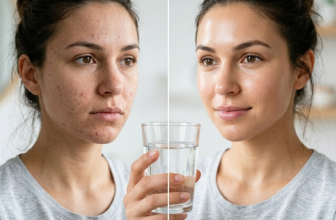
Has your skin suddenly started acting out? Perhaps that once-radiant complexion now feels perpetually tight, stings when you apply moisturizer, or even exhibits an unexpected, almost “plastic” shine rather than a healthy glow. If these symptoms resonate, you might be experiencing a damaged skin barrier. In the pursuit of flawless skin, many of us, often unknowingly, push our skin’s protective capabilities to the brink through over-exfoliation or excessive use of harsh actives.
This isn’t just about surface irritation; it’s a fundamental breakdown of your skin’s first line of defense. Think of your skin as a finely tuned ecosystem, meticulously designed to shield you from environmental stressors while keeping essential hydration locked in. When this intricate system is compromised, a cascade of issues can emerge—from persistent redness and flakiness to heightened sensitivity and even sudden breakouts.
The good news? Your skin is incredibly resilient. Understanding the basics of how to fix over-exfoliated skin and restore its natural strength is entirely within your grasp. This comprehensive guide will walk you through the diagnostic signs, the immediate steps to take, and the essential ingredients and lifestyle changes to heal your damaged skin barrier repair for long-term health and radiance. Let’s get your skin back to its strong, comfortable best.
What Exactly is a Skin Barrier?
To understand how to fix your skin, you first need to understand its architecture. Scientifically known as the stratum corneum, the skin barrier is the outermost layer of the epidermis. Dermatologists frequently use the “Brick and Mortar” analogy to explain its function:
- The Bricks (Corneocytes): These are tough, flat skin cells that provide structure.
- The Mortar (Lipid Matrix): This is a “glue” made of ceramides, cholesterol, and fatty acids.
When this matrix is intact, it performs two critical functions: it keeps moisture in (preventing Transepidermal Water Loss) and keeps irritants, pathogens, and pollutants out.
Many people confuse a damaged barrier with skin purging. While purging is a temporary reaction to increased cell turnover (common with new retinol or AHA use), a damaged barrier is a structural failure. If your skin feels raw, reactive, and stings even with “neutral” products, you aren’t purging—you are compromised.
The “Plastic Glow”: Identifying Over-Exfoliated Skin
In 2026, the “glass skin” trend has led to a common diagnostic mistake: mistaking a damaged barrier for a healthy radiance. There is a fine line between a dewy glow and the over-exfoliated “plastic” sheen.
How to tell the difference:
- Healthy Glow: The skin looks plump, bouncy, and light reflects evenly off a hydrated surface.
- The Plastic Sheen: The skin looks unnaturally tight, thin, and shiny, but feels dry or “parched” to the touch. This shine is caused by the skin being stripped of its natural texture, leaving it so smooth it reflects light like a sheet of plastic.
Common Signs of Over-Exfoliation:
- The Stinging Test: Your “holy grail” moisturizer suddenly burns upon application.
- Texture Paradox: Your skin looks oily or shiny but feels tight and “crackly” when you smile.
- Sudden Sensitivity: Products you’ve used for years are suddenly causing redness or itching.
- Micro-flaking: Small, sandpaper-like patches around the nose or mouth.
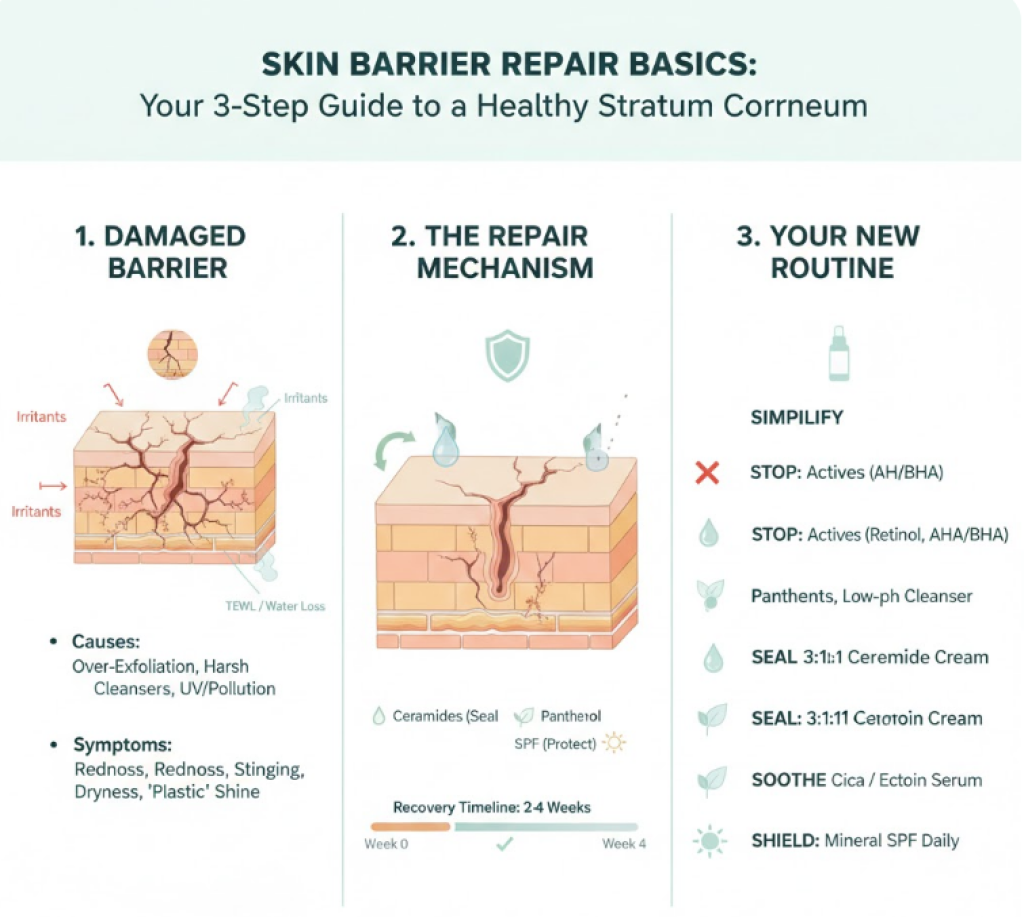
Common Causes of Barrier Damage: The Usual Suspects
How did we get here? Barrier damage is rarely the result of one product; it’s usually a “perfect storm” of cumulative stressors.
- The “Actives” Overload: Using a high-percentage AHA (like Glycolic Acid) alongside a prescription Retinoid and Vitamin C. These are all powerful, but using them simultaneously can thin the stratum corneum faster than it can regenerate.
- Disrupting the Acid Mantle: Your skin’s ideal pH is roughly 4.7 to 5.5. Using alkaline bar soaps or harsh foaming cleansers “strips” the acid mantle, the protective film that houses your skin’s microbiome.
- Physical Friction: Even in 2026, over-use of sonic cleansing brushes or rough washcloths can create micro-tears in the lipid matrix.
- Environmental Stress: Central heating, low humidity, and high pollution levels act as a vacuum, sucking moisture out of the skin and weakening the lipid bonds.
Skin Barrier vs. Sensitivity: A Cycle of Inflammation
When your barrier is down, your skin is “leaky.” This leads to a state of chronic low-grade inflammation.
When the barrier is compromised, environmental triggers that would normally be blocked—like fragrance molecules, preservatives, or even dust—penetrate into the deeper layers of the dermis. This triggers an immune response, leading to the “suddenly sensitive skin” many people experience in their late 30s and 40s.
If you find yourself reacting to every new product, the problem likely isn’t the products themselves—it’s that your “security system” (the barrier) has left the front door wide open. Healing the barrier is the only way to lower your skin’s “reactivity threshold.”
Immediate “Stop & Simplify” Protocol: The Skin Fast
If your skin is stinging, the most important thing you can do is nothing. At least, nothing aggressive. You need to implement what dermatologists call a “Skin Fast” to stop the inflammatory cascade.
The 3-Step Rescue Plan
- The “Active” Embargo: Immediately stop all AHAs (Glycolic, Lactic), BHAs (Salicylic), Vitamin C (L-Ascorbic Acid), and Retinoids. Even if they are your favorites, they are currently perceived as “invaders” by your compromised dermis.
- The Gentle Cleanse: Switch to a non-foaming, sulfate-free milk or cream cleanser. If even water stings, consider a “no-rinse” micellar water designed for ultra-sensitive skin.
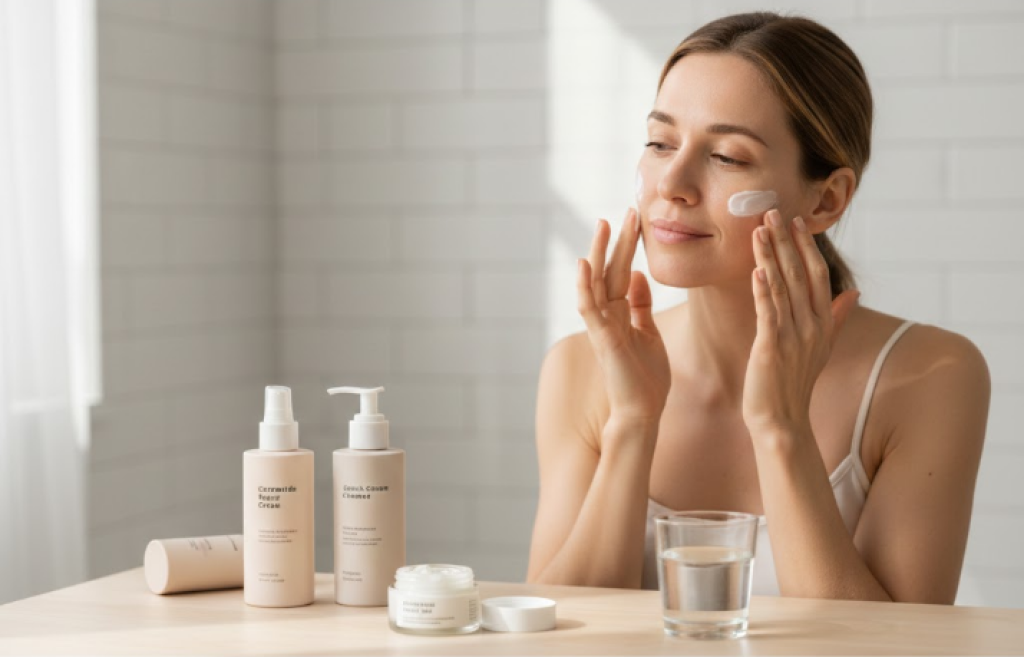
- The Occlusive Seal: Apply a barrier-focused moisturizer while the skin is still slightly damp to trap existing hydration before it can evaporate via TEWL.
Pro Tip: In 2026, the “less is more” approach is king. During this phase, your routine should consist of only three items: a gentle cleanser, a lipid-rich moisturizer, and a mineral-based SPF.
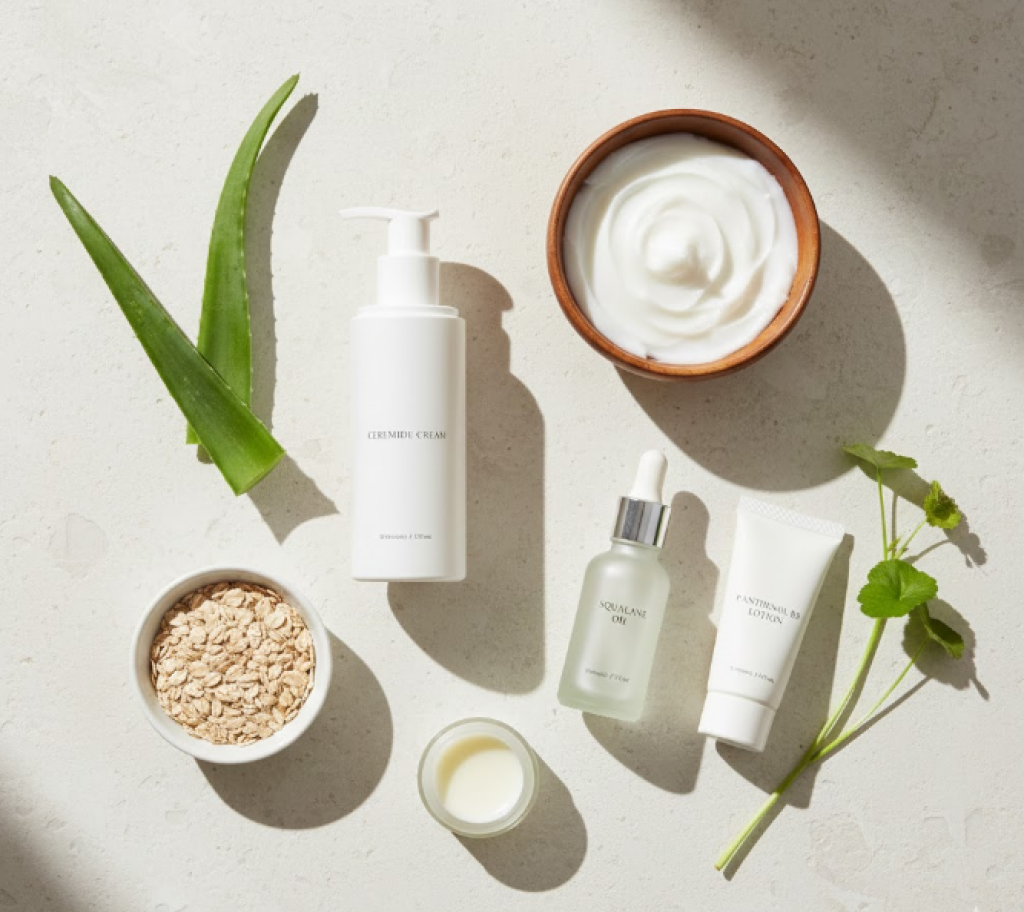
Core Barrier Repair Ingredients: The 3:1:1 Ratio
Not all moisturizers are created equal. When your barrier is “leaky,” you need bio-identical lipids that the skin recognizes as its own. Science has shown that the most effective repair occurs when products mimic the skin’s natural lipid ratio.
The Golden Ratio: 3:1:1
For optimal recovery, look for formulas that prioritize a 3:1:1 ratio of Ceramides to Cholesterol to Fatty Acids. This specific balance has been clinically proven to accelerate the movement of lipids into the stratum corneum.
- Ceramides: Think of these as the “rebar” in your cement. They are long-chain lipids that hold skin cells together.
- Panthenol (Pro-Vitamin B5): This is a superstar for barrier repair. It is a humectant that attracts water while acting as a soothing agent to downregulate the “stinging” sensation.
- Squalane: A stable, skin-identical oil that mimics your natural sebum. It provides an emollient “shield” without feeling heavy or clogging pores.
Modern Actives for Redness & Repair: Beyond the Basics
While we’ve cut out the “aggressive” actives, we can introduce “supportive” actives. In 2026, we are seeing a shift toward ingredients that don’t just moisturize, but actively calm the skin’s nervous system.
The Repair All-Stars
- Centella Asiatica (Cica): Often called “Tiger Grass,” this botanical contains madecassoside, which is world-renowned for its ability to suppress redness and speed up wound healing.
- Ectoin: A relatively “new” favorite in 2026 skincare. Ectoin is an extremolyte (found in bacteria that survive in salt lakes) that creates a “hydration shell” around cells, protecting them from environmental stress and pollution while they heal.
- Low-Concentration Niacinamide (2–5%): While 10% or 20% niacinamide can actually irritate a broken barrier, a low dose of 2-5% stimulates your skin’s own natural ceramide production. It’s the “personal trainer” for your barrier.
- Allantoin & Bisabolol: Derived from chamomile and comfrey, these are the “ice packs” of skincare, instantly reducing the heat and itching associated with over-exfoliation.
Cleansers and pH: Protecting the Acid Mantle
If your face feels “squeaky clean” or tight after washing, you haven’t just cleaned your skin—you’ve likely assaulted its chemical defense system. Your skin barrier is protected by the acid mantle, a thin, slightly acidic film of sebum and sweat that maintains an ideal pH between 4.7 and 5.5.
In 2026, we understand that pH is the “gatekeeper” of barrier health. Most traditional bar soaps and “squeaky” foaming cleansers are alkaline (pH 8-10). When you apply an alkaline substance to acidic skin, you cause the corneocytes (the “bricks”) to swell. This swelling creates microscopic gaps in the lipid matrix, allowing your natural oils to be washed down the drain.
Choosing the Right 2026 Cleanser:
- The Soap-Free Rule: Look for “syndet” (synthetic detergent) bars or liquid cleansers that specifically state they are pH-balanced.
- Non-Ionic Surfactants: Seek out ingredients like Decyl Glucoside or Lauryl Glucoside. These are significantly gentler than the sulfates (SLS/SLES) common in cheaper formulas.
- The Morning Routine Shift: If your barrier is severely compromised, the best cleanser might be no cleanser at all. Many dermatologists now recommend a “lukewarm water only” rinse in the morning to preserve the reparative lipids your skin produced while you slept.
Moisturizers & Occlusives: The Art of “Slugging”
When the barrier is down, your skin is a “leaky bucket.” You can pour in all the hydration you want, but it will evaporate through Transepidermal Water Loss (TEWL) unless you put a lid on the bucket. This is where the distinction between moisturizing and occluding becomes vital.
The “Slugging” Phenomenon
In 2026, “Slugging” has evolved from a social media trend into a clinically backed recovery method. Slugging involves applying a thin layer of a petrolatum-based occlusive (like Aquaphor or a CeraVe Healing Ointment) as the final step of your nighttime routine.
- How it works: Petrolatum is the most effective occlusive known to science, sitting on top of the skin to create a physical barrier that prevents 99% of water loss.
- The Benefit: This “false barrier” gives your underlying skin cells a humid, protected environment to focus entirely on structural repair rather than constantly fighting dehydration.
Barrier-Focused Moisturizers
For daytime, look for emollient-rich creams rather than thin lotions. A “barrier-first” moisturizer should feel slightly “cushiony.” In 2026, the gold standard is a formula that doesn’t just sit on top but mimics the skin’s natural bilayer, often utilizing “lamellar” technology to deliver lipids deep into the cracks of the stratum corneum.
Recovery Timeline: How Long Does It Take to Heal?
One of the biggest reasons barrier repair “fails” is that users give up too soon. Skin cells follow a circadian and regenerative cycle; you cannot rush biology.
The Realistic Recovery Stages:
- Days 1–3 (The Calm Phase): Stinging subsides as you stop using irritating actives. Redness begins to fade.
- Week 1–2 (The Structural Phase): The skin starts to feel less “paper-thin.” The “plastic shine” begins to normalize into a natural, soft texture.
- Week 3–4 (The Full Cycle): Most healthy adults (under 40) complete a full skin cell turnover in about 28 days. By the end of a month, the barrier is usually resilient enough to handle “normal” environmental stressors.
- 6+ Weeks (Deep Repair): For those over 40 or those who have used high-strength prescription retinoids for years, the deep “mortar” may take two full skin cycles to completely solidify.
Can You Use Actives During Repair?
The short answer is: Usually, no. However, as your skin begins to heal, you may wonder when you can re-invite your favorite anti-aging ingredients back to the party.
The “Stinging Test”
Before reintroducing any active, your skin must pass the “Stinging Test.” If a basic, fragrance-free moisturizer still causes a “tingle” or warmth upon application, your barrier is still too “leaky” for actives.
The Reintroduction Hierarchy:
- Green Light (Safe During Repair): Hyaluronic acid (low molecular weight), Panthenol (B5), Centella Asiatica, and Squalane.
- Yellow Light (Proceed with Caution after 2 Weeks): Low-concentration Niacinamide (3%) and PHAs (Polyhydroxy Acids). PHAs are the “gentle cousins” of AHAs; they have a larger molecular size that prevents them from penetrating too deeply, making them the only “safe” way to exfoliate during the tail-end of recovery.
- Red Light (Avoid until 100% Healed): L-Ascorbic Acid (Vitamin C), Glycolic Acid, Salicylic Acid, and all forms of Retinoids (Retinol, Tretinoin, Adapalene).
Moving into the final segments of our guide, we look beyond the bathroom cabinet. In 2026, we recognize that the skin is a living, breathing organ influenced by its environment and its invisible residents—the microbiome.
Lifestyle & Environmental Support: The External Barrier
Your skincare products don’t exist in a vacuum. The air you breathe and the water you splash on your face are the first things your barrier interacts with. To heal a compromised barrier, you must control your “micro-environment.”
The Hard Water Factor
In many urban areas, “hard water” contains high concentrations of calcium and magnesium. These minerals can bind to the surfactants in your cleanser, creating a “scum” that sits in your pores and further degrades the lipid matrix.
- The 2026 Solution: If you suspect hard water is stalling your recovery, use a filtered shower head or perform your final rinse with distilled or thermal water.
Humidity and Temperature
Low humidity acts as a “moisture vacuum,” literally pulling water out of your skin.
- The Humidifier Hack: If you work in an air-conditioned office or sleep with the heater on, a small humidifier can reduce TEWL by maintaining an ambient moisture level of at least 40-50%.
- Luke-warm is King: Hot water is a solvent; it melts the very lipids you are trying to replenish. Always wash with water that is “room temperature” or slightly cool.
Microbiome & Skin-Minimalism: The 2026 Shift
The most significant shift in 2026 dermatology is the move away from “sterilizing” the skin and toward “Microbiome Stewardship.” Your skin barrier isn’t just a physical wall of lipids; it’s a biological shield populated by billions of beneficial bacteria.
Prebiotics, Probiotics, and Postbiotics
When you over-exfoliate, you don’t just strip oil; you wipe out the “good” bacteria that help regulate your skin’s pH and immune response.
- Microbiome-Friendly Care: Look for products containing Lactobacillus ferment or Inulin. These act as “food” for your skin’s flora, encouraging a diverse ecosystem that can naturally fight off the pathogens that cause redness and acne.
The Rise of “Skin-Minimalism”
The 2026 “Skin-minimalist” movement is a direct response to the “barrier burnout” of previous years. Rather than a 10-step routine, high-authority regimens now focus on “Anchor Products.” This means finding one high-performance, multi-tasking barrier cream and using it consistently, rather than rotating five different serums that might conflict with one another.
FAQs: Quick Answers for Immediate Relief
To win the Featured Snippet for common “People Also Ask” (PAA) queries, we’ve synthesized the most urgent questions below:
- “Should I stop washing my face if my barrier is damaged?” No, but you should skip the morning cleanse. Wash only at night with a non-foaming, pH-balanced cleanser to remove sunscreen and urban pollution.
- “Is Niacinamide good for a damaged skin barrier?” Yes, but only at concentrations of 2–5%. High-strength (10%+) niacinamide can actually be an irritant to a compromised barrier.
- “Can I use Vitamin C while my skin is peeling?” Pause your L-ascorbic acid. Once the stinging stops, reintroduce Vitamin C via a gentle, oil-soluble derivative like Tetrahexyldecyl Ascorbate (THD).
- “How do I tell if it’s a damaged barrier or just purging?” Purging typically only happens where you usually break out and doesn’t usually “sting.” If your skin is red, hot, and reactive in areas where you never have issues, your barrier is likely damaged.
Conclusion: The Long Game of Barrier Health
A damaged skin barrier is a loud signal from your body to slow down. In our quest for “glass skin” or “instant anti-aging,” we often forget that the skin is a protective organ first and an aesthetic canvas second.
By implementing the “Stop & Simplify” protocol, prioritizing the 3:1:1 lipid ratio, and respecting the 4-week recovery timeline, you aren’t just fixing a temporary irritation—you are investing in the long-term resilience of your dermis. Moving forward into 2026, let your routine be guided by “support” rather than “subtraction.” When you treat your skin barrier like the vital protective shield it is, the “glow” follows naturally.
📚 References
- The Skin Barrier and Moisturization: Function, Disruption, and Mechanisms of Repair — Review on how barrier disruption affects skin and how moisturization supports repair.
https://pubmed.ncbi.nlm.nih.gov/37717558/ - Skin 101: Understanding the Fundamentals of Skin Barrier Physiology — Peer‑reviewed review of epidermal barrier dysfunction and self‑repair mechanisms.
https://pubmed.ncbi.nlm.nih.gov/40078856/ - The Role of Ceramides in Skin Barrier Function — Scientific overview of ceramide lipids and their essential role in barrier integrity.
https://pubmed.ncbi.nlm.nih.gov/39113291/ - Reinforcement of Barrier Function: Formulations Delivering Physiological Lipids — Study on topical formulations designed to deliver lipids to repair barrier function.
https://pubmed.ncbi.nlm.nih.gov/30171630/ - Ceramides and Skin Health: New Insights — Recent review on ceramide importance in skin hydration, pH regulation, inflammation control, and barrier repair.
https://pubmed.ncbi.nlm.nih.gov/39912256/