If you’ve struggled with breakouts for more than five minutes, you’ve heard the classic refrain: “Just drink more water!” It’s the ultimate unsolicited skincare advice. From celebrities claiming their glow is purely due to three liters of Voss to well-meaning relatives pointing at your soda, the pressure to hydrate your way to clear skin is everywhere.
But does it actually work? Most people start chugging water expecting a miracle, only to find themselves frustrated when new pimples still appear. The truth is that while hydration is a foundational pillar of health, the answer to does hydration help with acne is more nuanced than a simple “yes” or “no.” It’s time to separate the influencer hype from the biological reality of how your skin actually functions.
Quick Answer: Does Hydration Actually Help Acne? ⚡
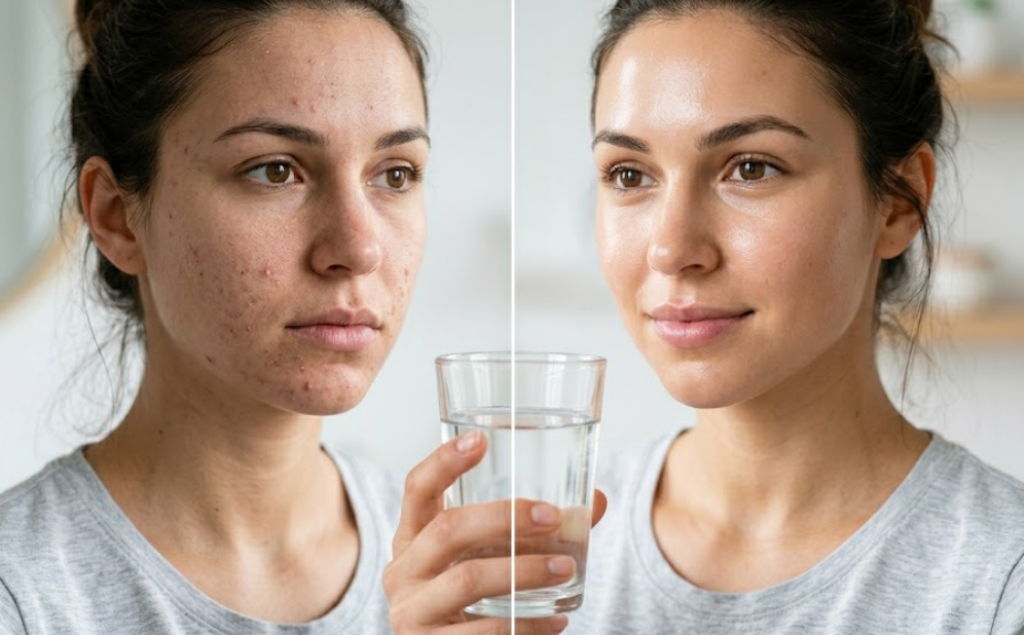
If you’re looking for a straight answer, here it is: Drinking water does not cure acne directly, but staying hydrated provides the essential foundation your skin needs to heal itself. Acne is a complex inflammatory condition driven by hormones, bacteria, and oil production. While water won’t “wash away” a cystic breakout overnight, it helps in three critical ways:
- Regulates Oil: Prevents your skin from overproducing sebum due to dryness.
- Supports Healing: Proper hydration speeds up the skin’s natural repair process.
- Reduces Irritation: Well-hydrated skin is less prone to the redness and inflammation that makes acne look worse.
Think of water as the “infrastructure” for clear skin—it doesn’t do the work alone, but nothing works without it.
How Acne Really Forms 🔬
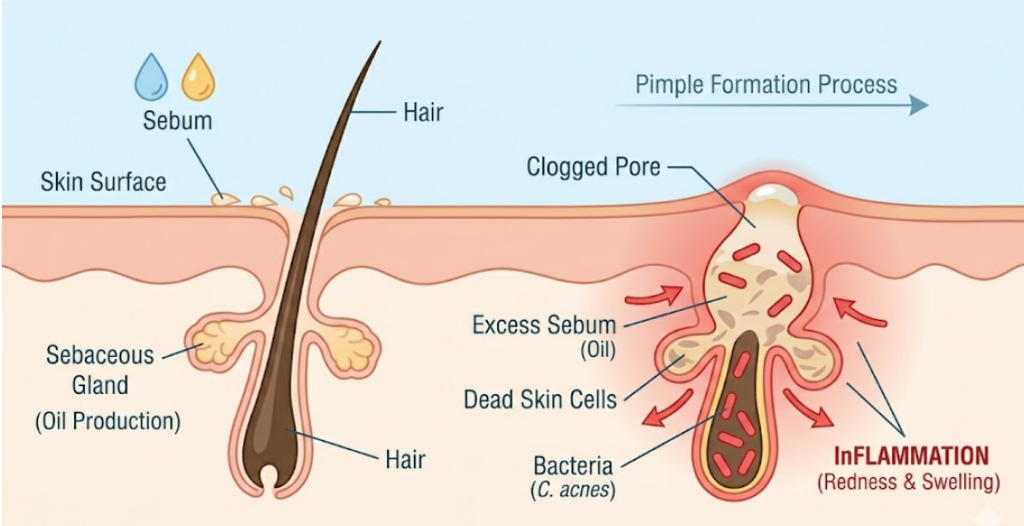
To understand the hydration and acne link, we first need to look at the “big three” causes of a breakout. Acne isn’t just about dirt; it’s a metabolic and hormonal process:
- Excess Sebum: Your sebaceous glands produce oil to keep skin supple. When these go into overdrive, things get messy.
- Clogged Pores: Dead skin cells mix with that excess oil, creating a “plug” (comedone).
- Bacteria & Inflammation: A specific bacteria called Cutibacterium acnes thrives in these plugged pores, leading to the redness, swelling, and pus we recognize as a pimple.
Hydration plays a role in how your skin handles these three factors, particularly when it comes to the quality of your skin’s oil and how easily your pores become blocked.

What Happens to Your Skin When You’re Dehydrated 🏜️
When you don’t drink enough water, your body prioritizes your vital organs, leaving your skin—the largest organ—to fend for itself. Dehydration and breakouts go hand-in-hand because of how the skin’s texture changes when it’s thirsty.
Dehydrated skin becomes tight, dull, and inelastic. This leads to a buildup of dry, “sticky” dead skin cells on the surface. Instead of shedding naturally, these cells sit over your pores, acting like a lid on a jar. This trapped environment is exactly where bacteria love to grow. If you’ve ever had skin that feels both “dry” and “oily” at the same time, you are likely seeing the primary side effect of chronic dehydration.
The Oil Production Link: Why Dry Skin Can Trigger Acne 🛢️
This is the most surprising part of the does hydration help with acne debate. You might think oily skin is the enemy, but dehydrated skin can actually become more oily.
When your skin’s moisture barrier is compromised due to low water levels, your brain receives a signal that the skin is too dry. In a desperate attempt to protect itself, your skin triggers a “compensatory” surge in sebum production. It tries to replace missing water with excess oil.
The result? You end up with a slick surface over a dehydrated base, which is the perfect recipe for excess oil production and deep, painful clogs. Keeping your internal hydration levels high tells your skin it doesn’t need to “flood the engine” with oil to stay protected.
Hydration and the Skin Barrier 🛡️
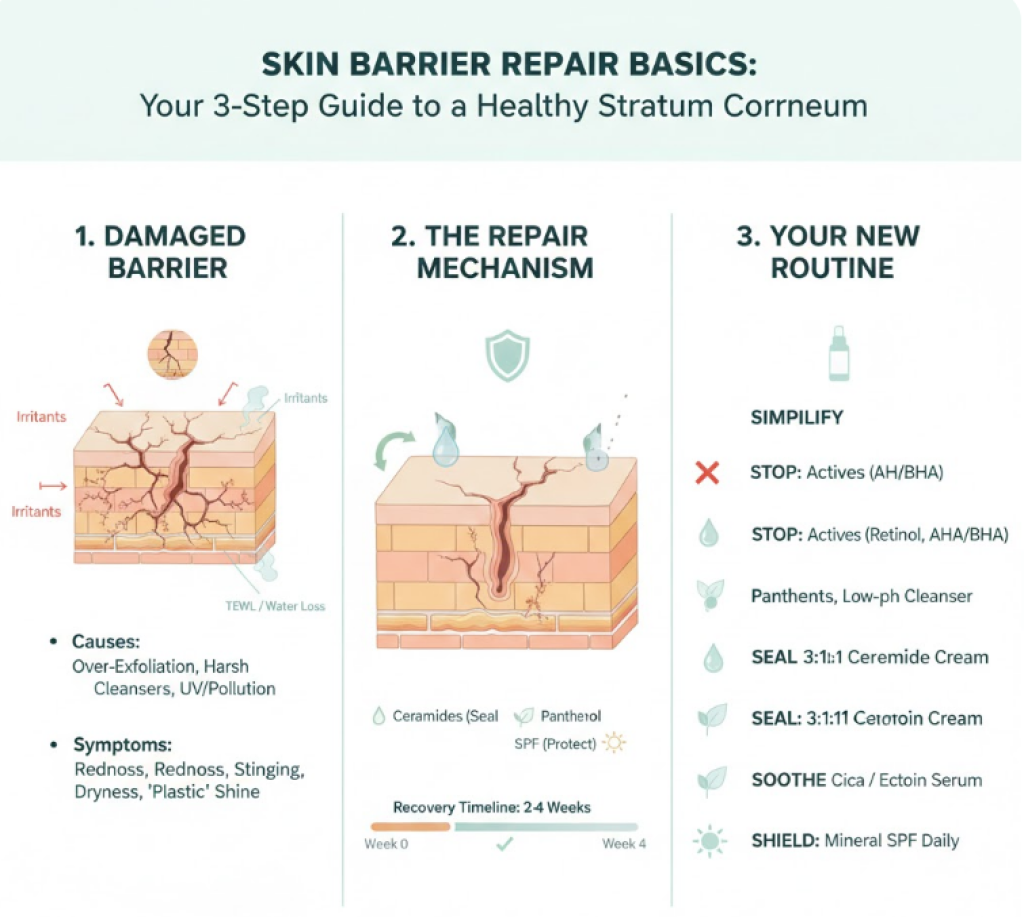
When we discuss the skin hydration and acne connection, we have to talk about the stratum corneum. This is the outermost layer of your skin, often called the “moisture barrier.” Its primary job is to act as a security guard, keeping moisture in and harmful irritants—like pollutants and Cutibacterium acnes—out.
When you are chronically dehydrated, this barrier develops microscopic cracks. Imagine a brick wall where the mortar has dried up and crumbled; that is your skin without enough water. These gaps allow bacteria to penetrate deeper into the dermis, causing inflammatory responses that lead to papules and pustules. By maintaining high internal hydration, you ensure that the “mortar” of your skin remains plump and resilient. A healthy barrier doesn’t just look better; it actively prevents the environmental triggers that make acne worse.
Does Water Flush Out Acne-Causing Toxins? 🧼
You’ve likely seen the social media posts claiming that drinking a gallon of water will “flush the toxins” right out of your pores. This is one of the most persistent myths in the beauty industry. The honest truth is that your skin does not have a “flush” valve. Your pores are not connected to your digestive system in a way that allows water to push out waste like a high-pressure hose.
The real heavy lifting of natural detoxification is done by your liver and kidneys. Water supports these organs so they can filter your blood efficiently. If your kidneys are struggling because you’re dehydrated, your body may look for alternative ways to expel waste, which can sometimes manifest as skin inflammation. So, while water doesn’t “flush” acne out of your skin directly, it keeps your internal filtration system running so your skin doesn’t have to pick up the slack.
Hydration and the Immune System 🧬
Acne is, at its core, an inflammatory disease. When bacteria get trapped in a pore, your immune response is what determines if that pore becomes a tiny blackhead or a giant, painful cyst. Staying hydrated is essential for a balanced immune system. Water is the primary component of lymph, the fluid that carries white blood cells throughout your body to fight infections.
If you are dehydrated, your lymphatic system becomes sluggish. This slows down your body’s ability to send “repair crews” to a localized infection in a pore. Furthermore, dehydration increases levels of cortisol, the stress hormone, which is known to flare up hormonal acne. By drinking enough water, you are essentially providing your immune system with the transportation network it needs to move in, neutralize bacteria, and dampen inflammation before a blemish turns into a permanent scar.
Blood Sugar, Insulin & Breakouts: The Hidden Link 🩸
One of the most overlooked aspects of water intake for clear skin is how it affects your hormones, specifically insulin. There is a strong scientific link between high-glycemic diets and acne. When you eat sugar, your insulin spikes, which triggers your sebaceous glands to pump out more oil.
How does water help? It improves insulin sensitivity. When you are well-hydrated, your blood volume is optimal, which helps your body manage blood sugar levels more effectively. More importantly, drinking water often replaces sugary drinks like soda or processed juices. By swapping a high-sugar latte for a glass of water, you are removing the very fuel that many acne flare-ups thrive on. It’s not just about what the water adds to your body, but what it replaces in your daily routine that saves your skin from insulin-driven oil surges.
Can Drinking Water Help Hormonal Acne? 🧬
If you’ve ever dealt with deep, painful cysts along your jawline right before your cycle, you’ve dealt with hormonal acne. The honest truth is that no amount of water will “wash away” a hormonal imbalance. These breakouts are driven by fluctuations in androgens, which tell your oil glands to go into overdrive. Since water isn’t a hormone, it cannot stop the root cause of these specific flares.
However, that doesn’t mean hydration is useless here. Does drinking water help clear hormonal acne indirectly? Yes, by managing the severity of the flare. When you are hydrated, your skin is more resilient and less prone to the extreme inflammation that makes hormonal cysts so painful and slow to heal. Furthermore, proper hydration supports the liver in metabolizing and excreting excess hormones. Think of water as the “damage control” team; it won’t stop the storm, but it will help your skin survive it with less permanent scarring and shorter recovery times.
Water vs. Sugary Drinks: A Huge Difference for Skin 🥤
When people ask, “does hydration help with acne,” they are often really asking about the impact of their total liquid intake. There is a massive difference between hydrating with pure water and “hydrating” with soda, sweetened teas, or energy drinks. Sugary beverages are essentially liquid acne fuel. They cause a rapid spike in blood sugar, which leads to a surge in insulin and a subsequent explosion of oil production.
By making a conscious switch to water, you are performing a double-action “clear skin” move. First, you are providing the hydration your cells need to function. Second, you are removing the glycemic index triggers that cause systemic inflammation. Many people who claim that “water cleared my skin” are actually seeing the benefits of removing the sugar and dairy from their high-calorie drinks rather than a magical property of the water itself. If you want clear skin, the best thing you can do is make water your primary beverage and save the sugary treats for rare occasions.
How Much Water Should You Drink for Clear Skin? 💧
We’ve all heard the “eight glasses a day” rule, but is there a specific water intake for clear skin? While there is no universal “magic number,” most dermatologists and nutritionists suggest a baseline of 2 to 3 liters (roughly 70–100 ounces) for the average adult. If you are active, live in a dry climate, or drink a lot of caffeine, you may need even more to keep your skin cells plump.
The key isn’t just quantity, but consistency. Gulping a gallon of water in the evening won’t make up for being “parched” all day. Your body can only absorb so much fluid at once; the rest is simply flushed out. To see a real difference in your skin texture, try the “30-Day Hydration Challenge.” Carry a reusable bottle and take small sips throughout the day. By keeping your levels steady, you prevent the “dehydration-rehydration” stress cycle that can trigger compensatory oil production.
Does Sweating Help Detox Your Skin? 🏃♀️
There is a common belief that you can “sweat out” acne during a hard workout or a sauna session. While sweat does contain trace amounts of waste products, its primary purpose is temperature regulation, not natural detoxification. However, sweating does help clear out the “pipes” of your skin by pushing out some of the liquid debris trapped in your pores.
The danger lies in what happens after you sweat. If you let sweat dry on your face, the salt and minerals can mix with existing oil and bacteria to create a “film” that actually causes more breakouts. To turn sweat into a benefit rather than a risk:
- Always cleanse immediately after sweating to remove the excreted salt and bacteria.
- Hydrate before and after your workout to ensure the sweat is “thin” and moves easily through the pores.
When done correctly, the increased circulation from exercise combined with hydration gives your skin a healthy, oxygenated glow that no topical cream can replicate.
Real Benefits of Staying Hydrated for Skin ✨
While we’ve established that water isn’t a “magic bullet” for pimples, the skin hydration benefits are undeniable. When your cells are fully saturated, your face undergoes a visible transformation that topical products struggle to achieve. Staying on top of your water intake leads to:
- Improved Skin Texture: Hydrated skin is “plump.” This fills in fine lines and makes the surface look smoother, reducing the appearance of pitted acne scars.
- Natural Glow: Water improves blood flow to the surface of the skin, giving you that sought-after “lit from within” look.
- Reduced Sensitivity: Well-hydrated skin is less reactive. You’ll find that your acne treatments (like benzoyl peroxide) cause less stinging and peeling when your internal moisture levels are high.
- Faster Recovery: Your body needs water to produce collagen and repair tissues. If you pick at a blemish (we’ve all been there), hydration helps that spot heal in days rather than weeks.
Limitations: Why Water Alone Won’t Clear Acne 🛑
Here is the honest truth that most influencers won’t tell you: You cannot drink your way out of a poor skincare routine or a high-stress lifestyle. Acne treatment limitations exist because water only addresses the environment of the skin, not the source of the inflammation.
If your acne is caused by polycystic ovary syndrome (PCOS), a specific food allergy, or a bacterial infection that requires antibiotics, drinking five liters of water will only make you go to the bathroom more often. It won’t kill the bacteria or balance your androgens. To see real results, you must view hydration as a “support player” in a larger team that includes professional-grade skincare, stress management, and a balanced diet.
Best Skincare + Hydration Combo for Acne 🧴
To get the most out of your water intake, you need to lock it in from the outside. This is the acne routine hydration secret. Drinking water puts moisture into the cells, but a good moisturizer keeps it from evaporating into the air (a process called transepidermal water loss).
For an acne-prone routine, look for “humectants” like hyaluronic acid or glycerin. These ingredients act like magnets, pulling the water you drink from your bloodstream and holding it in the upper layers of your skin. Follow this with a “non-comedogenic” (pore-cleansing safe) moisturizer. This dual-action approach ensures that your hard work in staying hydrated actually shows up on your face.
Signs You’re Not Drinking Enough Water 🚩
How do you know if your skin is suffering from a lack of fluid? Your body provides clear dehydration symptoms on the skin long before you feel thirsty. Look for these red flags:
- The “Pinch Test”: Gently pinch the skin on the back of your hand. If it takes more than a second to snap back into place, you are dehydrated.
- Dark Under-Eye Circles: When you’re low on water, the skin under your eyes becomes thinner, making the blood vessels beneath more visible.
- Flaky but Oily: If your skin is peeling but you can still blot oil off your forehead, your moisture barrier is likely broken due to dehydration.
- Exaggerated Pores: Dehydrated skin loses its “plumpness,” which can make your pores look much larger and more “stretched out” than they actually are.
FAQs 🔍
How much water should I drink to clear acne?
Aim for 2–3 liters per day. While it won’t cure acne instantly, it prevents the dry-skin-oil-spike cycle that makes breakouts worse.
Does water flush acne bacteria?
No. Bacteria live inside the pore and on the skin’s surface. Water supports your immune system in fighting the bacteria, but it doesn’t “wash” it out of your pores.
Can dehydration cause acne?
Indirectly, yes. Dehydration leads to dry skin, which triggers your body to produce excess oil (sebum) to compensate. This extra oil can then clog your pores.
Can I replace acne treatments with water?
Absolutely not. Water is a foundation, not a treatment. You should continue using your dermatologist-recommended products alongside your hydration goals.
Is sweating good for acne?
It can be! It helps clear out pores, but you must wash your face immediately afterward to prevent salt and bacteria from sitting on the skin.
Final Verdict: Is Hydration Worth It for Acne? 🏁
So, does hydration help with acne? The answer is a resounding “Yes, but with conditions.” Water is the foundation of a healthy metabolism, a strong immune system, and a resilient skin barrier. Without it, your acne treatments will be less effective, and your skin will be more prone to scarring and inflammation.
The honest truth is that hydration is a “force multiplier.” It makes every other good habit you have—from eating greens to using retinoids—work significantly better. Don’t expect a glass of water to be a miracle cure, but don’t expect your skin to clear up without it. Drink up, lock that moisture in with a good cream, and be patient. Your skin’s “glow-up” is a marathon, not a sprint. 💧✨
References
- Moisturizers for Acne
- Do You Need Moisturizer If You Have Acne?
- Moisturizer: Why you may need it if you have acne