In the world of viral skincare trends and “glass skin” goals, it is easy to get caught up in the idea that more is always better. We have been told repeatedly that UV rays are the enemy of youth. Naturally, this has led to a bizarre new question trending in beauty forums: “do you need to wear sunscreen at night?”
Some influencers suggest that because UV rays are so damaging, we should never leave our skin “unprotected,” even while we sleep. Others worry about the glow of their smartphone or the LED bulbs in their bedroom. This has created a wave of fear that skipping SPF before bed is a cardinal sin of anti-aging. But here is the truth: your skin has a very different job to do once the sun goes down, and wearing sunscreen to bed might actually be the very thing standing in the way of your “morning glow.”
Quick Answer: Do You Need Sunscreen at Night? 🌙
The short and definitive answer is no. You do not need to wear sunscreen at night.
Sunscreen is a functional product designed specifically to filter or reflect ultraviolet (UV) radiation from the sun. Since the moon does not emit skin-damaging UV rays and your bedroom lights aren’t powerful enough to cause photoaging, SPF has no purpose after dark. In fact, keeping sunscreen on your face overnight does more harm than good by interfering with your skin’s natural recovery cycle. 🛑
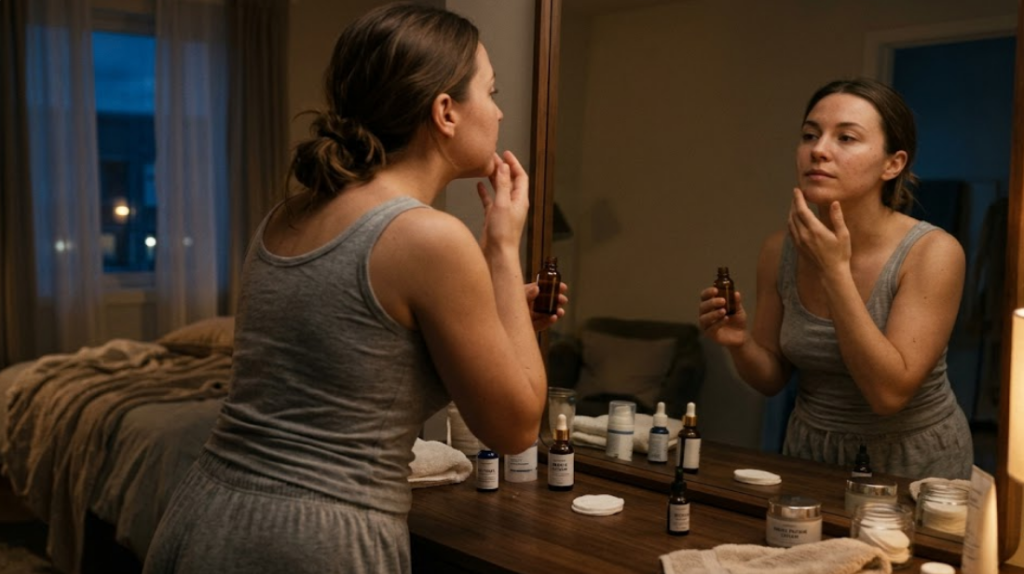
What Your Skin Actually Does at Night
To understand why sunscreen at night is unnecessary, we have to look at your skin’s circadian rhythm. Your skin isn’t just a static shield; it changes its behavior based on the time of day.
- The Daytime Shield: During the day, your skin is in “protect mode.” It thickens its barrier and produces antioxidants to fight off UV rays and pollution.
- The Nighttime Repair: When you sleep, your skin switches to “repair mode.” Blood flow to the skin increases, collagen production ramps up, and cell turnover accelerates.
- Melatonin and Regeneration: Your body releases melatonin at night, which acts as a powerful internal antioxidant that helps repair the damage done during the day. This is the time when your skin needs to “breathe” and absorb healing ingredients, not be smothered by a protective film. 😴✨
Why Sunscreen Has No Role at Night 🌑
The primary active ingredients in sunscreen—whether they are chemical filters like avobenzone or physical blockers like zinc oxide—are “expensive” for your skin to carry.
- No UV Exposure: Without the sun, there is no UV radiation to neutralize. Applying SPF at 10 PM is like wearing an umbrella to bed because it might rain tomorrow.
- Wasted Ingredients: Sunscreen formulas are often heavy and occlusive. While this is great for staying on during a sweaty hike, it serves no purpose when you are lying on a pillow.
- Focus on Repair: By wearing UV protection when it isn’t needed, you are taking up “space” in your routine that should be reserved for reparative ingredients like retinoids, peptides, and deep moisturizers.
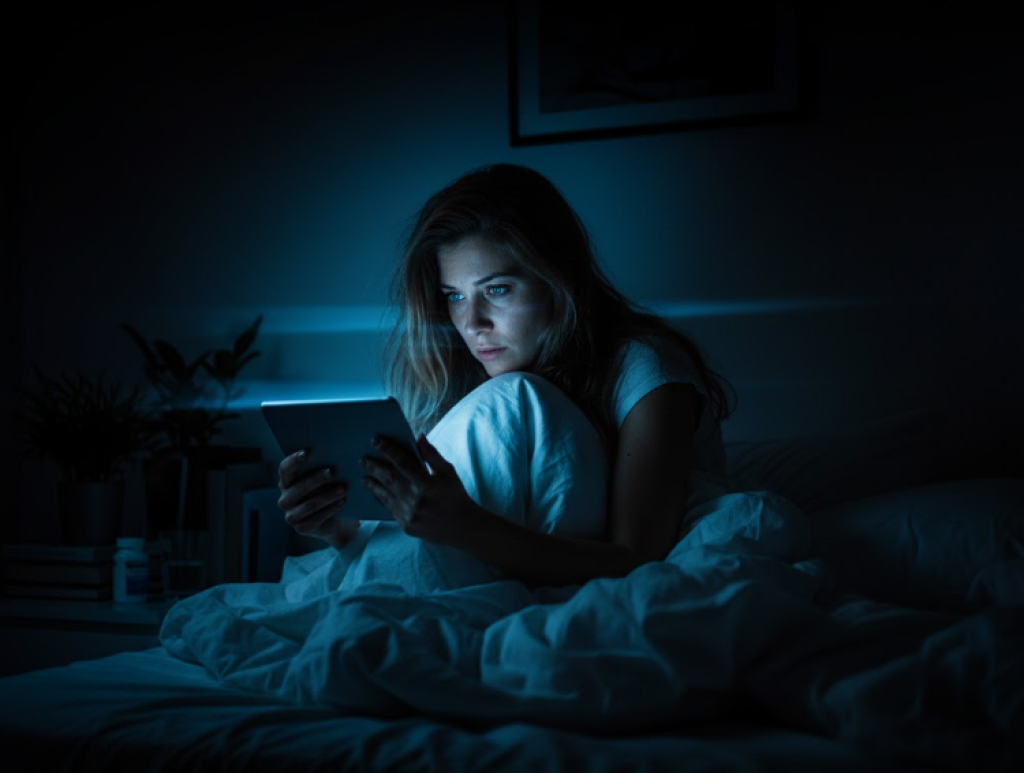
Does Blue Light at Night Require Sunscreen? 📱
A common justification for wearing nighttime sunscreen is the blue light emitted from our phones and tablets. If blue light causes hyperpigmentation during the day, shouldn’t we block it at night?
The reality is a matter of scale. While High-Energy Visible (HEV) light can cause oxidative stress, the amount coming from your phone at 11 PM is negligible compared to the sun. Furthermore, most modern smartphones have “Night Shift” modes that shift the display to warmer tones, effectively removing the blue light component. Instead of wearing a heavy SPF to bed, you are much better off using an antioxidant serum (like Vitamin C or Niacinamide) which neutralizes free radicals without the risk of clogged pores.
5 Dangerous Mistakes of Wearing Sunscreen at Night 🚩
While the intention behind wearing sunscreen at night might be protection, the biological reality is often a recipe for disaster. Here are the five most significant ways this habit can damage your complexion while you sleep.
Mistake #1: Clogging Your Pores Overnight
Sunscreen is designed to sit on top of the skin to create a protective film. Many formulas, especially those containing physical blockers like zinc oxide or heavy silicones, are inherently comedogenic when left on for too long. During the night, your skin produces sebum (natural oil). If that oil is trapped under a layer of SPF, it has nowhere to go. This leads to clogged pores and those stubborn, tiny whiteheads that seem to appear out of nowhere. 🧴🚫
Mistake #2: Blocking the Skin’s Natural Repair Process
As we discussed, your skin enters a regenerative state at night. It needs to shed dead cells and absorb reparative nutrients. Sunscreen acts as a barrier—not just to UV rays, but to the environment. By keeping that shield on, you are essentially “suffocating” the skin. This can lead to a dull, congested look because you are preventing the natural skin regeneration process from occurring efficiently.
Mistake #3: Increasing the Risk of Breakouts
Sleeping in sunscreen isn’t just about the product itself; it’s about what the product has collected. By the end of the day, your sunscreen is a magnet for pollution, dust, and sweat. If you don’t wash it off, you are pressing a day’s worth of free radicals and bacteria into your pores for eight hours. This is a primary trigger for inflammatory acne and “maskne”-style irritation. 🌋
Mistake #4: Causing Unnecessary Irritation
Many chemical sunscreen filters are designed to be active for only a few hours of sun exposure. When left on the skin for 12 to 16 hours straight (including sleep time), these chemicals can begin to break down or cause sensitivity. This often results in skin barrier redness or a stinging sensation when you apply your morning products. Your skin needs a “break” from active filters to maintain its pH balance.
Mistake #5: Skipping Proper Cleansing
The biggest mistake of all is the “lazy” approach to nighttime skincare. If you assume you can just “keep your morning SPF on” through the night, you are skipping the most important step: the double cleanse. Without removing the grime of the day, your expensive nighttime serums and moisturizers cannot penetrate the skin. You are essentially wasting your entire nighttime skincare routine by building it on a dirty foundation. 🧼
Is It Bad to Sleep with Sunscreen On? 🛌
We’ve all been there. You come home exhausted, collapse onto the bed, and wake up eight hours later with your full face of makeup and SPF still intact. So, is it bad to wear sunscreen to sleep as a one-time occurrence?
The short answer is: don’t panic, but don’t make it a habit. Doing this once won’t cause permanent aging, but it will almost certainly lead to a “congested” morning. Because sunscreen is designed to be water-resistant and long-wearing, it binds to the oils and dirt on your skin. When you sleep in it, you are essentially marinating your skin in the day’s pollution. If you wake up with a “greasy” film or a few new whiteheads, that is your skin’s way of telling you it’s struggling to breathe.
Can Sunscreen Cause Acne or Clogged Pores? 🌋
When it comes to sunscreen at night, the risk of “acne cosmetica” (acne caused by products) is significantly higher.
- Comedogenic Ingredients: Many sunscreens use thickeners like isopropyl palmitate or heavy silicones to ensure the SPF stays even on the skin. While these are safe during the day, they become “pore-clogging” when pressed into a pillowcase for hours.
- Trapped Sebum: Your skin’s natural oil production doesn’t stop just because you’re asleep. Sunscreen creates a “seal.” This trapped oil, combined with dead skin cells, creates the perfect breeding ground for acne-causing bacteria. This is why a sunscreen clogged pores situation is so common for those who skip their nightly cleanse.
Should You Use Moisturizer with SPF at Night? 🧴❌
Many “day creams” come with a built-in SPF 15 or 30. You might think, “It’s just a moisturizer, so I can wear it to bed, right?” Actually, you should avoid this. Even if the product feels like a lotion, it still contains active UV filters. These filters provide zero benefit at 2 AM but continue to add a “chemical load” to your skin.
- The “Dilution” Problem: SPF moisturizers often skip the heavy-duty repairing ingredients (like ceramides or fatty acids) found in dedicated night creams to make room for the sun filters.
- The Better Move: Use a dedicated, fragrance-free night moisturizer. This ensures your skin gets the hydration it needs for the skin repair process without the unnecessary weight of sun protection.
Why Washing Off Sunscreen Before Bed Is Essential 🧼
If you want to master your nighttime skincare, you have to view your evening cleanse as a non-negotiable health habit, much like brushing your teeth. When you fail to remove sunscreen at night, you aren’t just leaving a cream on your face; you are leaving a layer of “spent” chemicals and environmental debris.
Throughout the day, your SPF traps microscopic particles of urban pollution, car exhaust, and pollen. If these remain on your skin for an extra eight hours while you sleep, they trigger oxidative stress. This stress breaks down collagen—the very thing you were trying to protect by wearing sunscreen in the first place! Washing it off allows your skin to lower its “defenses” and enter a state of pure recovery.
How to Properly Remove Sunscreen 💦
Because broad-spectrum sunscreen is engineered to stay put through sweat and humidity, a quick splash of water won’t cut it. To truly clear your pores, you should utilize the “Double Cleanse” method. This is the gold standard for anyone wearing SPF or makeup.
- The Oil-Based Cleanse: Apply a cleansing oil or balm to dry skin. Massage it in for 60 seconds. Since “oil dissolves oil,” this step breaks down the stubborn waxes and filters in your sunscreen that a water-based soap can’t touch.
- The Water-Based Cleanse: Rinse the oil away and follow up with a gentle, pH-balanced foaming or cream cleanser. This removes any remaining residue and deep-cleans the pores.
- Pat Dry: Use a clean, soft towel to pat (never rub) your face dry. Your skin is now a clean canvas, ready to absorb your expensive nighttime treatments. 🧖♀️
What to Use Instead at Night (Better Alternatives) 🌙
Now that your skin is clean, what should replace that daytime SPF? To maximize the skin repair process, look for ingredients that “feed” the skin rather than shield it.
- Retinoids: Night is the only time to use these powerful Vitamin A derivatives. They accelerate cell turnover and repair the sun damage you may have incurred during the day.
- Ceramides: These lipids act as the “mortar” between your skin cells. Using a ceramide-rich cream at night helps stop trans-epidermal water loss, keeping your skin plump and hydrated.
- Hyaluronic Acid: Since your skin loses more moisture while you sleep, a hydrating serum can help lock in water without the heavy, occlusive feel of a sunscreen.
- Peptides: These amino acids send signals to your skin to produce more collagen, taking full advantage of the body’s natural nighttime repair signals. 🧪
Honest Truth: More Skincare Isn’t Always Better 🧘♂️
In the quest for perfect skin, we often fall into the trap of “maximalism.” We think if SPF 30 is good, SPF 100 is better; if sunscreen is good for the day, it must be good for the night. But the honest truth is that your skin thrives on balance, not constant intervention.
Overloading your skin with unnecessary products like sunscreen at night actually weakens your moisture barrier over time. It can lead to “perioral dermatitis” or chronic sensitivity. Sometimes, the most powerful thing you can do for your complexion is to give it a clean, hydrated environment and let your body’s biology do the heavy lifting. Simplicity is often the highest form of skincare.
Morning vs Night Skincare Routine 🔄
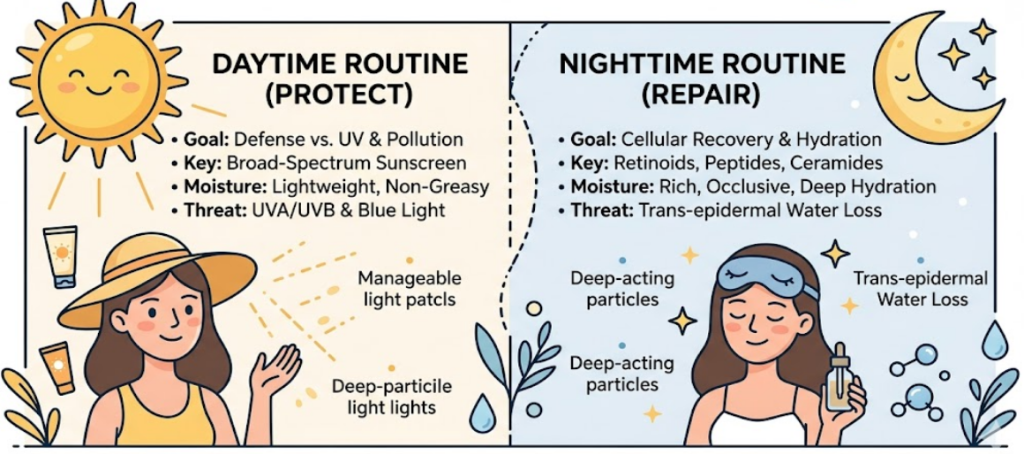
To keep your skin healthy, you have to respect the “Shift Change.” Think of your skin like a high-end retail store: during the day, the security guards (SPF) are at the door; at night, the cleaning and restocking crew (serums and creams) takes over.
| Feature | Daytime Routine (Protect) | Nighttime Routine (Repair) |
| Primary Goal | Defense against UV & Pollution | Cellular recovery & Hydration |
| Key Player | Broad-spectrum sunscreen | Retinoids, Peptides, Ceramides |
| Moisture Needs | Lightweight, non-greasy | Rich, occlusive, deep hydration |
| Environmental Threat | UVA/UVB rays and Blue Light | Trans-epidermal water loss |
Common Skincare Mistakes People Make at Night 🌙🚫
Beyond the question of “do you need to wear sunscreen at night,” there are a few other nighttime habits that could be sabotaging your results. Are you guilty of these?
- Using “Day” Products for Bed: If your night cream contains citrus oils or light-reflecting particles, it isn’t designed for repair.
- Sleeping on a Dirty Pillowcase: If you didn’t wash your face the night before, your pillow is now a repository for old SPF and oil. Change your case weekly!
- Over-Exfoliating: Doing a chemical peel every night prevents the skin barrier from actually healing. Limit “actives” to 3-4 times a week.
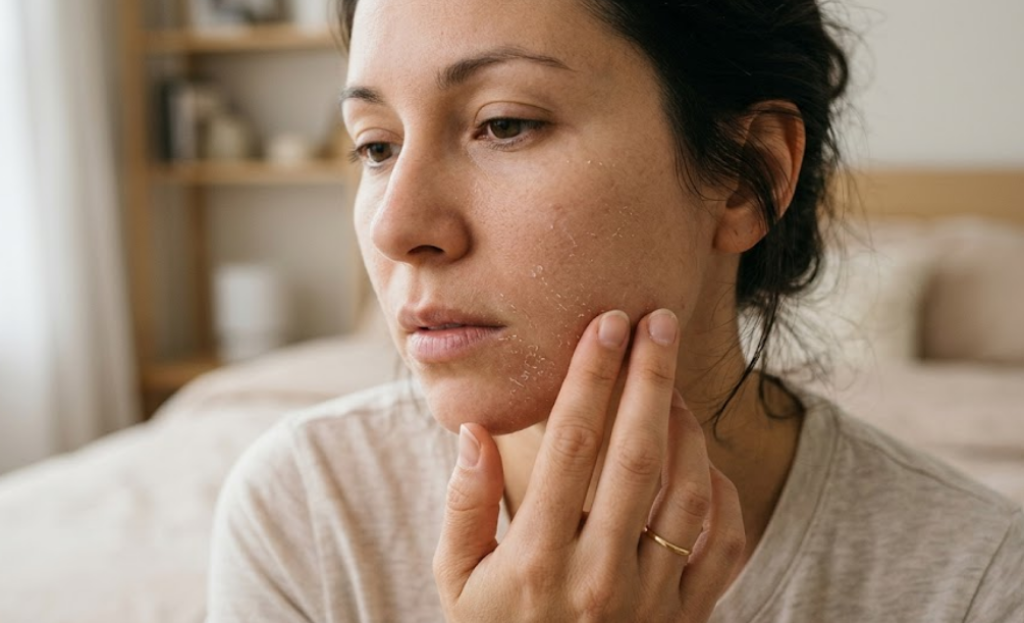
Special Case: Falling Asleep Without Washing Your Face 😴
We’ve all had those “oops” moments. Maybe it was a long flight or an accidental nap on the couch. If you wake up and realize you’ve been sleeping with sunscreen on, don’t panic.
- The Immediate Fix: Do a deep double cleanse as soon as you wake up. Use a gentle exfoliating toner to help clear out any sebum that was trapped by the SPF.
- The “Recovery” Day: Skip the heavy makeup for the day. Give your skin extra hydration and a soothing cica-cream to calm any minor irritation caused by the overnight congestion.
FAQs: Nighttime SPF Myths vs. Facts 🔍
Should you wear sunscreen to bed?
No. There is no UV light to protect against, and the ingredients can cause breakouts and irritation.
Is it bad to sleep with sunscreen on?
Occasionally, no, but as a habit, yes. It leads to clogged pores and interferes with your skin’s natural “repair mode.”
Does sunscreen clog pores overnight?
Yes. Sunscreens are formulated to be long-wearing and occlusive, which traps oil and bacteria against your skin during your 8-hour sleep cycle.
Do indoor lights require sunscreen at night?
No. Standard household LED or incandescent bulbs do not emit enough UV radiation to cause skin damage or require protection. 💡
Final Verdict: Should You Wear Sunscreen at Night or Not? 🏁
The “skincare maximalist” trend might make you feel like you need to be protected 24 hours a day, but the science is clear: do you need to wear sunscreen at night? Absolutely not.
Your skin is a living, breathing organ that requires a period of rest and recovery to stay youthful. By washing off your SPF and replacing it with nourishing, restorative ingredients, you are working with your biology instead of against it. Save the sunscreen for the sunrise, and let your skin dream in peace. 🌙✨
References
- Tapping into the body’s master clock could re-energize skin cell repair
- What Order Should I Follow for My Skin Care Routine?
- Circadian Rhythms in the Skin and the Biology of the Night