Have you ever found yourself staring at the ceiling at 3 AM, your mind racing through a relentless to-do list while your body feels like lead? It is a frustrating, exhausting cycle. Anxiety keeps you awake, and the resulting lack of sleep makes your anxiety even more jagged the next day. If you are searching for a natural way to break this loop, you have likely heard of one specific mineral: magnesium. But with over a dozen versions sitting on drugstore shelves, how do you actually identify the best kind of magnesium for sleep and anxiety? 🌙
Magnesium is often called “nature’s Valium.” This isn’t just marketing fluff; it’s a reflection of the mineral’s power to soothe a frayed nervous system. However, not all magnesium is created equal. Some forms are great for digestion, while others are specifically engineered to cross the blood-brain barrier to quiet a restless mind. In this guide, we will cut through the noise to find the high-bioavailability forms that actually work for your brain and body.
Why Magnesium Is Essential for Sleep and Anxiety
To understand why you need magnesium for sleep, you have to look at how your nervous system handles a “threat.” In our modern world, that “threat” isn’t a predator—it’s an overflowing inbox or a looming deadline. Magnesium acts as a critical “gatekeeper” for your NMDA receptors. These receptors are responsible for excitatory signaling in the brain. When your magnesium levels are low, these gates stay open, leaving your brain in a constant state of “alert.”
By increasing your intake of magnesium for anxiety, you are essentially telling your nervous system it is safe to downshift. Magnesium helps regulate the body’s stress response by suppressing the release of cortisol—the “stress hormone.” It also prevents these hormones from entering the brain in excessive amounts. Without enough of this mineral, your body stays physically tense, your heart rate remains slightly elevated, and deep, restorative sleep becomes a distant memory. 📉
How Magnesium Works in the Brain: The GABA Connection
How exactly does a simple mineral change your mood? It all comes down to a powerful neurotransmitter called GABA (Gamma-Aminobutyric Acid). Think of GABA as your brain’s primary “inhibitory” messenger. Its sole job is to slow down nerve activity and induce a sense of calm. It is the “brake pedal” for your thoughts.
Magnesium binds to and stimulates GABA receptors in the brain. This biological process does three key things:
- Blocks Excitatory Signals: It prevents “loud” brain signals (glutamate) from overstimulating your neurons.
- Promotes Physical Relaxation: It helps your muscles lose their “armored” tension and allows your heart rate to steady. 🧘♂️
- Supports Mood Balance: By regulating the hypothalamic-pituitary-adrenal (HPA) axis, it prevents the overreaction to daily stressors that leads to feelings of panic or impending dread.
When you take the best kind of magnesium for sleep and anxiety, you are providing the raw materials your brain needs to maintain this delicate chemical balance.
Signs You May Have a Magnesium Deficiency
Could a simple deficiency be the root of your restlessness? It is highly likely. Modern intensive farming has depleted much of the magnesium from our soil, meaning the “magnesium-rich” spinach you eat today isn’t as potent as it was fifty years ago. Furthermore, high-stress lifestyles act as a “magnesium drain.” When you are stressed, your body excretes magnesium through your urine at an accelerated rate.
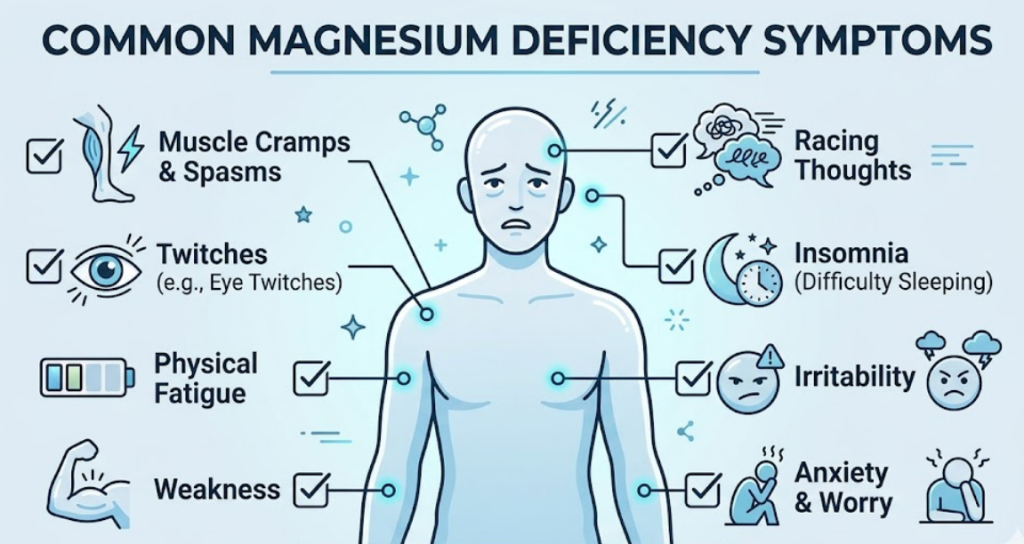
If you aren’t sure if you need a supplement, look for these common magnesium deficiency symptoms:
- Physical Tension: Persistent muscle cramps, “eye twitches,” or a constant tight feeling in your jaw and shoulders.
- Sleep Disruptions: Difficulty falling asleep (sleep onset insomnia) or waking up at 4 AM unable to drift back off. 💤
- Mental Fatigue: The “tired but wired” phenomenon, where you are physically exhausted but your brain feels like it’s running a marathon.
- Emotional Irritability: An increased sensitivity to noise, sudden feelings of panic, or a general sense of irrational worry.
Why Different Forms of Magnesium Matter: The Bioavailability Factor
Before we reveal the top seven list, we must discuss bioavailability. This is a term that describes how much of the mineral actually survives the trip through your digestive system and enters your bloodstream. Not all magnesium supplements are absorbed the same way.
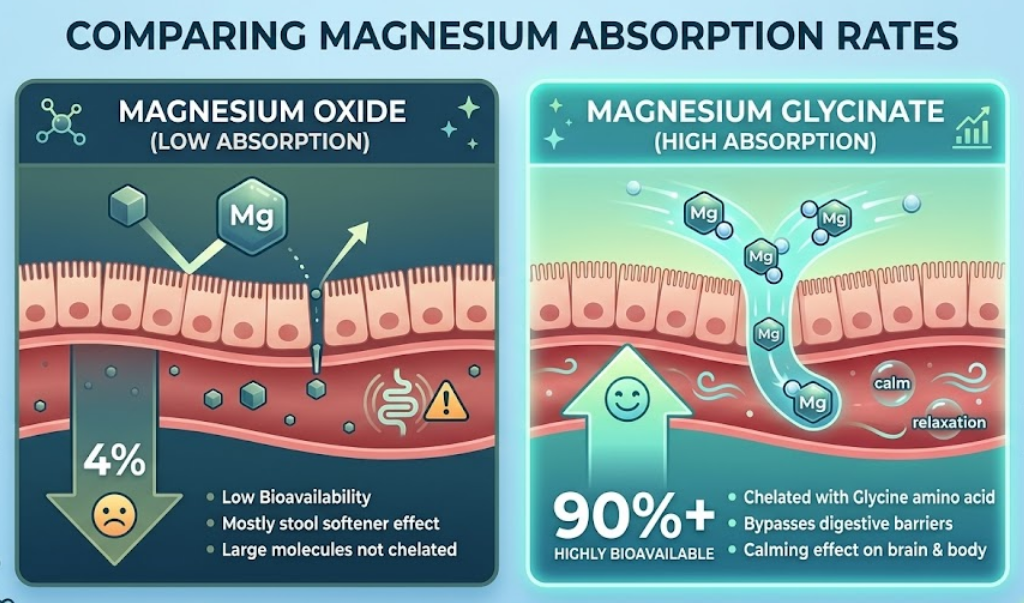
- The Absorption Gap: Cheap, low-grade forms like magnesium oxide have an absorption rate as low as 4%. This means 96% of the pill stays in your intestines, which is why it often causes an unwanted laxative effect.
- Chelation is Key: The most effective supplements for mental health are “chelated.” This means the magnesium is chemically bound to an amino acid (like glycine) or an organic acid (like malic acid). This “hides” the magnesium, allowing it to bypass the usual digestive hurdles and get straight to your cells.
- Targeted Delivery: Certain forms are better at crossing the blood-brain barrier. If your goal is to stop a racing mind, you need a form that can actually reach the brain tissue, rather than just relaxing your leg muscles. 🧠
Understanding these differences is the first step in finding the best kind of magnesium for sleep and anxiety that fits your unique biological needs.
What Is the Best Kind of Magnesium for Sleep and Anxiety? 🏆
If you walk into a supplement store today, you will see a dizzying array of labels. Some promise “maximum absorption,” while others claim to be “doctor-recommended.” But for those struggling with a racing mind or chronic insomnia, the choices narrow down significantly. The best kind of magnesium for sleep and anxiety is almost always a “chelated” form.
Chelation is a process where magnesium is bound to an amino acid. This makes the mineral stable and allows it to pass through the intestinal wall more efficiently. While there are at least eleven common types of magnesium, only four or five are truly effective for neurological support. In the following sections, we will break down the top three “brain-first” forms: Magnesium Glycinate, L-Threonate, and Taurate. 🧬
Magnesium Glycinate for Sleep and Anxiety: The Gold Standard 🥇
When experts discuss the best kind of magnesium for sleep and anxiety, Magnesium Glycinate is usually at the top of the list. This form is created by binding magnesium to glycine, an amino acid known for its own independent calming effects on the brain.
- The Power of Glycine: Glycine is an inhibitory neurotransmitter. It works synergistically with magnesium to lower your core body temperature and prepare your brain for deep sleep. 💤
- Maximum Bioavailability: Unlike cheaper salts, magnesium glycinate for sleep is highly absorbable. Because the body recognizes glycine as a nutrient, it “pulls” the magnesium along with it into the bloodstream, bypassing the digestive distress associated with other forms.
- The Anxiety Buffer: If you suffer from social anxiety or generalized “dread,” glycinate provides a steady, grounding effect. It doesn’t make you feel “drugged”; instead, it takes the sharp edges off your stress response.
- Who it’s for: This is the ideal “all-rounder” for anyone who needs both physical muscle relaxation and a quiet mind at night. 🧘♂️
Magnesium L-Threonate for Brain and Deep Sleep
While Glycinate is great for overall relaxation, Magnesium L-Threonate is the only form specifically designed to master the “blood-brain barrier.” This barrier is a protective shield that prevents most substances from entering the central nervous system.
- Synaptic Density: Developed by researchers at MIT, L-Threonate has been shown to increase “synaptic density.” This means it helps the neurons in your brain communicate more effectively, which is vital for regulating mood and memory. 📈
- Targeting the “Source”: If your anxiety feels like a physical “fog” or if you struggle with “brain-tiredness,” this is likely the best kind of magnesium for sleep and anxiety for you. It increases magnesium levels in the cerebrospinal fluid more effectively than any other form.
- Deep Sleep Architecture: Users often report that magnesium threonate for sleep doesn’t just help them fall asleep—it improves the quality of their REM and deep sleep cycles. You wake up feeling cognitively “sharp” rather than groggy.
- Note on Cost: Because it is a patented form (often sold under the name Magtein), it is usually more expensive, but for cognitive anxiety, the investment is often worth it.
Magnesium Taurate for Stress and Heart Health 🫀
Anxiety isn’t just in your head; it lives in your chest. If your stress manifests as a racing heart, palpitations, or “chest tightness,” Magnesium Taurate is a powerful ally. This form is bound to taurine, an amino acid that plays a massive role in cardiovascular health.
- Calming the Heart: Taurine and magnesium both help regulate blood pressure and stabilize the heart’s electrical activity. If your “nighttime anxiety” involves feeling your pulse thumping in your ears, this form can help “quiet” the physical symptoms of stress. 💓
- Synergistic Stress Relief: Taurine acts similarly to GABA in the brain. When combined with magnesium, it creates a “double-down” effect on the nervous system, making it one of the most effective magnesium supplements for high-stress individuals.
- Vasodilation: It helps relax the blood vessels, which can reduce the physical “pressure” associated with chronic anxiety and tension headaches.
Magnesium Malate for Fatigue and Muscle Relaxation
While our primary focus is the best kind of magnesium for sleep and anxiety, we cannot ignore the “tired but wired” state that many anxiety sufferers experience. If your anxiety leaves you feeling physically exhausted during the day but restless at night, Magnesium Malate may be the missing piece.
- The Krebs Cycle Connection: Malate is bound to malic acid, a key player in the Krebs cycle (the process your cells use to create energy). This makes it the preferred form for people struggling with fibromyalgia or chronic fatigue syndrome. 🔋
- Muscle Tension Release: Unlike the “brain-focused” L-Threonate, Malate is exceptionally good at relaxing the large muscle groups. If your anxiety manifests as physical “armoring”—tight shoulders, a locked jaw, or restless legs—this form provides systemic relief.
- Why it Matters for Sleep: By reducing physical pain and muscle soreness during the day, you lower the “stress load” your body carries into the evening. A body that isn’t in pain is a body that can actually drift into deep sleep. 🛌
- Timing Tip: Because of its energy-supporting properties, many users find it best to take Malate in the morning or early afternoon to combat daytime fatigue, leaving the “calming” glycinate for the evening.
Magnesium Citrate vs Glycinate for Stress and Sleep: The Great Debate 🤔
This is one of the most common questions in the supplement world: “Should I buy the cheap bottle of Citrate or the premium Glycinate?” To find the best kind of magnesium for sleep and anxiety, you must understand the trade-offs.
| Feature | Magnesium Citrate | Magnesium Glycinate |
| Primary Use | Digestion & Constipation 🚽 | Calm, Sleep, & Anxiety 🌙 |
| Absorption | Moderate (Osmotic) | Very High (Chelated) |
| Brain Impact | Minimal | Significant (via Glycine) |
| Side Effects | Loose stools / Laxative effect | Very gentle on the stomach |
- The Citrate Trap: Magnesium Citrate is an “osmotic” laxative. It pulls water into the intestines. While it is better absorbed than oxide, its primary effect is digestive. If you take enough to help your anxiety, you might end up with an upset stomach that keeps you awake for a different reason! 🚫
- The Glycinate Advantage: If your goal is neurological, magnesium glycinate for sleep wins every time. It is “bufferred” and doesn’t rely on the osmotic effect, meaning you can take therapeutic doses (400mg+) without worrying about a midnight run to the bathroom.
- Cost vs. Value: Citrate is cheaper, but since you lose more of it through digestion, you actually end up paying more per absorbed milligram. For mental health, the investment in Glycinate or Threonate is scientifically superior.
Magnesium Oxide: Is It Actually Worth It? 📉
You will find Magnesium Oxide in almost every “Value Size” bottle at big-box retailers. It is the most common form of magnesium supplements simply because it is the cheapest to manufacture. But is it effective for anxiety?
- The 4% Problem: Scientific studies have shown that the bioavailability of magnesium oxide is roughly 4%. That means if you take a 500mg pill, your body may only utilize 20mg of actual magnesium. The rest stays in your gut.
- The “Laxative” Label: Because so much of it stays unabsorbed, oxide is primarily used as a stool softener. If you are looking for the best kind of magnesium for sleep and anxiety, this is almost never the right choice. It can cause cramping and bloating, which are the last things an anxious person needs when trying to relax. 🛑
- When to Use It: Unless you are specifically treating chronic constipation under a doctor’s guidance, avoid Oxide. It does not cross the blood-brain barrier effectively and offers very little “calm” for the nervous system.
How Much Magnesium Should You Take for Sleep and Anxiety?
Finding the right dose is just as important as finding the right form. If you take too little, you won’t feel the calming effects; if you take too much too fast, you might experience digestive upset.
- The RDA vs. Therapeutic Doses: The Recommended Dietary Allowance (RDA) for magnesium is roughly 310–420 mg per day for adults. However, this is the minimum amount to avoid a deficiency—not necessarily the amount needed to treat high-stress levels or chronic insomnia. 📊
- Finding Your “Sweet Spot”: Most functional medicine practitioners suggest starting with 200 mg of a high-quality form like Magnesium Glycinate and slowly increasing by 50–100 mg every few days until you feel a noticeable shift in your sleep quality.
- The Upper Limit: The official “tolerable upper intake level” for supplemental magnesium is 350 mg for adults, though many people safely take more under medical supervision. If you are using the best kind of magnesium for sleep and anxiety, like L-Threonate, follow the specific “Magtein” dosing on the label, which often equals about 144 mg of elemental magnesium.
Best Time to Take Magnesium for Sleep ⏰
Timing is everything when you are trying to reset your circadian rhythm. While you can take magnesium at any time, certain windows offer a biological advantage.
- The Evening Window: For sleep, the goal is to have magnesium levels peaking in your bloodstream just as your natural melatonin production begins. Aim to take your supplement 30 to 60 minutes before bed. 🌙
- Consistency Matters: Magnesium isn’t a “one-and-done” sedative like a sleeping pill. It works by building up your internal stores and regulating your nervous system over time. Take it at the same time every night to help your body recognize the “wind-down” signal. 🔄
- Split Dosing for Anxiety: If your anxiety is high during the day, you might consider splitting your dose: take half with breakfast to stay grounded during work, and the other half before bed to ensure a deep rest.
Magnesium-Rich Foods That Support Sleep and Calm 🥑

While supplements are powerful, they should always be supported by a “magnesium-first” diet. Nature provides this mineral in a variety of delicious ways that also offer fiber and healthy fats.
- Pumpkin Seeds (Pepitas): One of the most concentrated sources on earth. Just a small handful provides nearly 40% of your daily needs. 🎃
- Dark Chocolate (70%+): Yes, chocolate can be a health food! It’s high in magnesium and antioxidants, though eat it earlier in the day if you are sensitive to caffeine. 🍫
- Leafy Greens: Spinach and Swiss chard are magnesium powerhouses. When you cook them, they shrink, allowing you to eat a much higher dose in one serving. 🥬
- Almonds and Cashews: These nuts are excellent for on-the-go stress management.
- Bananas: Not just for potassium—bananas contain magnesium and Vitamin B6, which helps the brain produce calming serotonin. 🍌
Side Effects and Safety of Magnesium Supplements ⚠️
Even the best kind of magnesium for sleep and anxiety can cause issues if not used correctly. Magnesium is generally very safe because the kidneys are excellent at filtering out excess, but there are a few things to watch for:
- Digestive Distress: Diarrhea and cramping are the most common side effects, especially with Citrate or Oxide. If this happens, switch to a chelated Glycinate or lower your dose. 🚽
- Interactions: Magnesium can interfere with certain antibiotics and blood pressure medications. Always take magnesium at least 2 hours apart from other meds.
- The “Magnesium Flush”: In very high doses, magnesium acts as a natural laxative. While some use this intentionally, it can lead to dehydration if you aren’t careful. 💧
Who Should Avoid Magnesium Supplements? 🚫
Magnesium is a mineral, not a drug, but it is powerful. Certain groups should skip the supplement aisle until they speak with a specialist:
- Kidney Disease Patients: Because the kidneys process magnesium, those with impaired kidney function can end up with dangerously high levels in the blood (hypermagnesemia). 🏥
- Those with Myasthenia Gravis: Magnesium can increase muscle weakness in people with this specific autoimmune condition.
- Heart Block Patients: Because magnesium affects the heart’s electrical signals, people with certain heart rhythm disorders must be monitored closely by a cardiologist.
FAQs: Your Magnesium Questions Answered 💡
What is the best form of magnesium for anxiety?
Magnesium Glycinate is widely considered the best for general anxiety because the magnesium is bound to glycine, an amino acid that has its own calming effect on the brain. If your anxiety is strictly “brain fog” or cognitive in nature, Magnesium L-Threonate is an excellent secondary choice.
Which magnesium is best for sleep?
Magnesium Glycinate is the gold standard for sleep. It helps lower core body temperature and relaxes muscles without causing the digestive urgency that other forms might trigger.
How long does magnesium take to work for anxiety?
While some people feel a “softening” of their anxiety within an hour of taking a highly absorbable form, the most significant neurological benefits usually appear after 2 to 4 weeks of consistent daily use. Your body needs time to replenish its cellular stores.
Can magnesium help with insomnia?
Yes. Magnesium helps regulate the hormone melatonin, which guides sleep-wake cycles in your body. It also binds to GABA receptors, which helps quiet the racing thoughts that often cause insomnia.
Is it safe to take magnesium daily?
For most healthy adults, daily magnesium supplementation is very safe. The kidneys efficiently filter out any excess. However, if you have kidney disease or are on specific heart medications, you must consult a doctor first.
Does magnesium help with panic attacks?
Magnesium can help reduce the severity and frequency of panic attacks by preventing the nervous system from staying in a “hyper-aroused” state. However, it is a supportive tool, not a replacement for emergency medical care or therapy.
Final Verdict: Which Magnesium Should You Choose? 🏁
Navigating the world of minerals doesn’t have to be complicated. If you are overwhelmed by the options, here is a quick cheat sheet to help you pick the best kind of magnesium for sleep and anxiety based on your primary struggle:
🛏️ Best for Overall Anxiety & Insomnia: Choose Magnesium Glycinate. It is the most balanced, affordable, and effective form for most people.
🧠 Best for Brain Power & Memory: Choose Magnesium L-Threonate. If your anxiety is paired with a “cloudy” brain or you want to support long-term cognitive health, this is your winner.
🧘♀️ Best for Stress-Related Heart Palpitations: Choose Magnesium Taurate. Its unique affinity for the cardiovascular system makes it a specialized tool for physical stress symptoms.
🏃 Best for Physical Tension & Pain: Choose Magnesium Malate. It’s the top choice for those whose anxiety lives in their muscles and leaves them feeling chronically sore.
By matching the form of magnesium to your specific symptoms, you aren’t just taking a pill—you are giving your body the exact biochemical key it needs to unlock relaxation.
Reference
- Magnesium Fact Sheet for Health Professionals
- Magnesium Status and Stress
- The Best Way to Take Magnesium Supplements
- How Magnesium Helps You Sleep