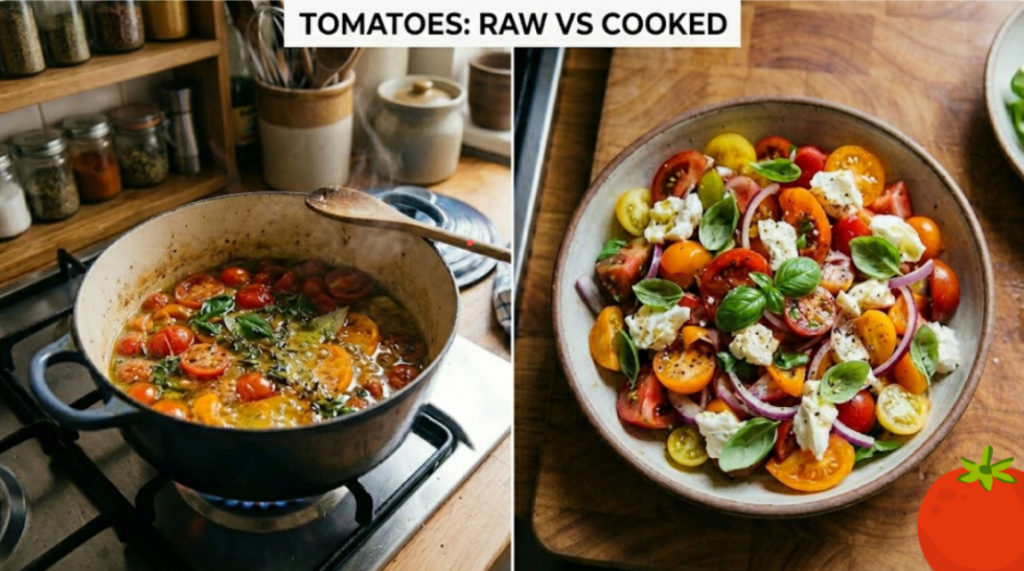
Most of us have been taught that raw is best. We imagine that the moment a vegetable hits a hot pan, its vitamins begin to evaporate, leaving behind a depleted version of its former self. While that is often true for delicate greens, the tomato is a fascinating rebel in the world of nutrition. If you’ve ever wondered, are cooked tomatoes healthier than raw, you aren’t just overthinking your pasta sauce—you’re tapping into a major scientific debate.
Recent studies suggest that cooking tomatoes might not just preserve their benefits, but actually “unlock” them. There is a growing claim that heat can effectively double the antioxidant power of a tomato, specifically by making a potent compound called lycopene more accessible to your body. Is it possible that your slow-simmered marinara is actually a better health tool than a fresh garden salad? Let’s break down the “double antioxidant” theory and see what really happens when the heat turns up.
Quick Answer: Are Cooked Tomatoes Healthier Than Raw? 🍅
The short answer is: It depends on which nutrients you prioritize, but for antioxidant absorption, cooked tomatoes often win.
Cooking tomatoes significantly increases the bioavailability of lycopene, the primary antioxidant responsible for the tomato’s red color and heart-healthy reputation. Heat breaks down the tough plant cell walls, allowing your body to absorb this compound much more efficiently. However, there is a trade-off. While lycopene levels soar, heat-sensitive nutrients like vitamin C and certain flavonoids can decrease during the cooking process. Therefore, cooked tomatoes are “healthier” for antioxidant intake, while raw tomatoes remain superior for vitamin C.
Why Cooking Can Increase Tomato Antioxidant Power 🔬
To understand does cooking tomatoes increase antioxidants, we have to look at the microscopic structure of the fruit. Lycopene is tightly bound within the tomato’s cellular fibers and crystalline structures. When you eat a raw tomato, your digestive enzymes struggle to break through these “walls,” meaning a large portion of the lycopene passes through your system unabsorbed.
Heat acts as a mechanical key. It softens the plant’s tissues and dissolves the cellular membranes, releasing the trapped lycopene. Furthermore, cooking changes the chemical shape of the lycopene molecule from a “trans-isomer” to a “cis-isomer.” Don’t let the chemistry jargon scare you—it simply means the molecule becomes a shape that your body finds much easier to transport into the bloodstream. In this case, the bioavailability (what you actually use) is far more important than the raw nutrient count.
Does Cooking Really Double Lycopene Availability? 📈
The claim that cooking “doubles” antioxidant power is a popular headline, but is it accurate? The “double” figure usually refers to specific laboratory findings regarding lycopene bioavailability.
One famous study published in the Journal of Agriculture and Food Chemistry found that after heating tomatoes for 30 minutes at 190°F (88°C), the amount of absorbable lycopene rose by 35%, and after 30 minutes, the total antioxidant activity significantly increased. While “doubling” might be a slight exaggeration for every cooking method, the increase in absorption is massive compared to raw consumption. However, it is a myth that cooking creates more antioxidants; it simply makes the ones already there much more “available” for your cells to use for free radical protection.
What Nutrients Decrease When Tomatoes Are Heated? 📉
To be fair and balanced, we must acknowledge that heat isn’t a total win for every nutrient. If you are eating tomatoes specifically for your daily dose of vitamin C, you might want to keep the oven off.
Vitamin C is highly unstable and water-soluble; it begins to degrade the moment it is exposed to high heat and oxygen. Studies show that cooking tomatoes can reduce vitamin C content by 10% to 30% depending on the duration of the heat. Some delicate flavonoids, which help with oxidative stress, may also diminish. This creates a nutritional “trade-off”: you are essentially sacrificing a bit of vitamin C to gain a massive surge in lycopene. Understanding this balance is key to deciding whether to slice your tomatoes for a sandwich or simmer them into a rich, thick sauce.

Cooked vs. Raw Tomatoes: Which Is Actually Healthier? 🥊
If you’re standing in your kitchen holding a punnet of Romas, you might feel torn. Should you toss them in a salad or roast them in the oven? When we ask, are cooked tomatoes better for you, the answer depends on your personal health goals for that specific meal.
- For Antioxidant Power: Cooked tomatoes are the undisputed heavyweights. If you are looking to flood your system with carotenoids and lycopene to fight long-term cellular damage, the stovetop is your friend.
- For Vitamin Content: Raw tomatoes take the lead. They preserve 100% of their natural vitamin C and folate, which are essential for immune function and skin health.
- For Digestion: Some people find that the skin and seeds of raw tomatoes are harder to digest. Lightly cooking or stewing them breaks down these fibers, often making them gentler on sensitive stomachs.
Ultimately, “healthier” is a relative term. A raw tomato provides a refreshing, low-calorie crunch with high vitamin C, while a cooked tomato provides a concentrated, heart-protective dose of lycopene bioavailability.
Why Olive Oil Can Boost Tomato Benefits Even More 🫒
If cooking is the “key” that unlocks the tomato’s nutrients, then olive oil is the “vehicle” that carries them into your bloodstream. Lycopene is fat-soluble, meaning it needs to be dissolved in fat to be absorbed by your digestive tract.
When you cook tomatoes with a healthy fat like extra virgin olive oil, you create a powerful synergy. The oil helps extract the lycopene from the tomato’s pulp and carries it through the intestinal wall. Research shows that olive oil increases lycopene absorption significantly more than eating tomatoes alone. This is likely why the Mediterranean diet, which relies heavily on tomato-and-olive-oil sauces, is consistently linked to longevity and reduced oxidative stress. If you’re skipping the oil in your sauce to save calories, you might actually be missing out on the primary reason to eat the sauce in the first place.

Can Cooked Tomatoes Support Heart Health? ❤️
The link between tomatoes and cardiovascular wellness is one of the most well-documented areas of nutritional science. Lycopene is a powerful ally for heart health because it helps inhibit the oxidation of LDL (the “bad”) cholesterol. When LDL cholesterol oxidizes, it is much more likely to contribute to plaque buildup in the arteries.
By increasing your intake of cooked tomatoes—and thus your absorbable lycopene—you are providing your body with a natural defense against this process. Some studies have suggested that regular consumption of tomato paste can improve the “flexibility” of blood vessels, supporting healthy blood pressure levels. While a raw tomato is a great snack, a concentrated tomato sauce provides the therapeutic levels of antioxidants needed to make a measurable difference in your cardiovascular profile.
Can Tomatoes Help Lower Inflammation? 🔥
Inflammation is the “silent” driver behind many chronic health issues, from joint pain to metabolic syndrome. Tomatoes contain a cocktail of anti-inflammatory compounds, including beta-carotene and flavonoids, that work together to dampen the body’s inflammatory response.
Interestingly, some researchers are looking at the role of tomato juice in exercise recovery. Because intense exercise creates a temporary spike in oxidative stress and muscle inflammation, the lycopene in cooked or processed tomato juice may help speed up the “cleanup” process in the body. Whether you are dealing with minor arthritis discomfort or just trying to bounce back from a heavy gym session, the free radical protection offered by heated tomatoes can be a delicious part of your recovery toolkit.
Are Cooked Tomatoes Better for Cancer-Protective Benefits? 🛡️
When discussing are cooked tomatoes better for you, one of the most researched areas is their potential role in cancer prevention. The focus is almost entirely on lycopene. Because lycopene is a potent antioxidant that seeks out and neutralizes free radicals, it has been a major subject in studies regarding prostate, lung, and stomach health.
The evidence is particularly interesting regarding prostate health. Several large-scale observational studies have suggested that men who consume high amounts of cooked tomato products—think tomato sauce, paste, and roasted tomatoes—tend to have a lower risk of developing prostate issues compared to those who don’t. Why cooked? Again, it comes down to bioavailability. Since your body can actually absorb the lycopene from a sauce but struggles with a raw slice, the protective “shield” is much stronger when heat is involved. While tomatoes are not a “cure,” they are a powerful, evidence-based addition to a preventative diet.
Tomato Juice for Recovery: Hype or Real Benefit? 🥤
You might see athletes reaching for tomato juice instead of a neon-colored sports drink lately. This isn’t just a quirky preference; it’s backed by fascinating research into exercise recovery. Intense physical activity creates a temporary surge in oxidative stress, which can lead to muscle damage and delayed-onset muscle soreness (DOMS).
A study published in the British Journal of Nutrition found that athletes who drank tomato juice for several weeks saw a significant reduction in blood markers for oxidative damage after exercise. The heat-treated juice provides a concentrated hit of lycopene that helps “mop up” the free radicals produced during a workout. Unlike many sugary recovery drinks, tomato juice provides these benefits alongside potassium and electrolytes, making it a functional, whole-food alternative for post-gym inflammation support.

Best Ways to Cook Tomatoes Without Losing Benefits 👨🍳
To get the most out of your tomatoes, you don’t need to boil them into oblivion. In fact, a “light and slow” approach is usually best. Here is how to maximize your lycopene bioavailability while preserving as many other nutrients as possible:
- Light Simmering: Making a quick homemade sauce by simmering crushed tomatoes for 15–20 minutes is the “sweet spot.” It’s long enough to break down cell walls but short enough to keep some vitamins intact.
- Roasting: Tossing cherry tomatoes in the oven at a moderate temperature until they “pop” is an excellent way to concentrate flavor and antioxidants.
- Tomato Paste: This is the secret weapon of nutrition. Because it is highly concentrated and has been heated during processing, a single tablespoon contains more absorbable lycopene than several raw tomatoes.
- The Sauté: A quick sauté with garlic and oil for your morning eggs is a fast way to activate those carotenoids before you start your day.
Common Mistakes That Reduce Tomato Nutrition ❌
Are you accidentally sabotaging your superfood? Even the best tomatoes can lose their “punch” if handled incorrectly. Avoid these common pitfalls:
- Refrigerating Ripe Tomatoes: This is a culinary and nutritional crime. Cold temperatures stop the ripening process and actually break down the membranes that hold the flavor and some antioxidants. Keep them on the counter!
- Skipping the Fat: As we’ve learned, eating cooked tomatoes without a healthy fat is like having a car with no gas. You need that olive oil or avocado to transport the lycopene.
- Over-Processing: While some heat is good, “ultra-processing” (like in some cheap, sugary ketchups) can involve high-heat methods that eventually destroy even the sturdy lycopene.
- Peeling Before Cooking: The skin of the tomato is actually the most concentrated source of flavonoids and lycopene. Whenever possible, cook them with the skins on to keep the nutrients where they belong.
What the Evidence Suggests vs. What’s Often Overstated 🧐
When we ask, does cooking tomatoes increase antioxidants, we have to separate the marketing hype from the hard science. It’s easy to get lost in sensational headlines, so let’s set the record straight on lycopene absorption.
What Evidence Supports
- Bioavailability Boost: Research consistently shows that heating tomatoes improves the body’s ability to absorb lycopene. You aren’t necessarily creating more total antioxidants, but you are making the existing ones much more “useful.”
- Synergy with Fats: The science is clear that pairing tomatoes with lipids (fats) dramatically amplifies the health benefits.
- Concentration: Processed products like tomato paste are objectively higher in absorbable lycopene than the same weight of fresh tomatoes.
Claims That May Be Overstated
- “Cooking doubles benefits in every case”: While some studies show a 30% to 50% increase in absorbable lycopene, “doubling” is a best-case scenario that depends heavily on the cooking time and temperature.
- “Raw tomatoes are useless”: Far from it! Raw tomatoes are nutritional powerhouses for vitamin C, fiber, and hydration.
- “Cooked is always better”: “Better” depends on what your body needs. If you’re fighting a cold, the vitamin C in a raw tomato might be exactly what you need.
Are Raw and Cooked Tomatoes Better Together? 🥗🥘
The most important takeaway for your health isn’t that you must choose between a raw salad and a warm sauce. In fact, the most robust health benefits come from rotating both. By including a mix of raw and cooked tomatoes in your weekly meal plan, you ensure you’re getting a full spectrum of nutrients.
Think of it as a “multi-vitamin” strategy. The raw tomatoes give you the heat-sensitive vitamins and fresh enzymes your body craves, while the cooked tomatoes provide the deep-tissue free radical protection that comes from high lycopene levels. Why settle for half the benefits when you can have the whole garden?
Expert Tips to Maximize Lycopene Absorption 🚀
Want to turn your kitchen into a nutritional laboratory? Follow these simple, expert-backed tips to get every bit of power out of your tomatoes:
- The “Oil Rule”: Never eat a cooked tomato dish without at least a drizzle of extra virgin olive oil.
- Go Deep Red: The redder the tomato, the higher the initial lycopene content. Look for “vine-ripened” varieties.
- Don’t Fear the Can: High-quality canned tomatoes are often processed at the peak of ripeness and heated immediately, making them a fantastic source of bioavailable lycopene.
- Add a Pepper: Pairing tomatoes with black pepper can sometimes help with the absorption of other plant compounds, further reducing oxidative stress.
FAQs 🔍
Does cooking tomatoes destroy nutrients?
It reduces heat-sensitive vitamins like Vitamin C but increases the bioavailability of antioxidants like lycopene. It’s a nutritional trade-off, not a total loss.
Are cooked tomatoes healthier than raw?
They are healthier for heart health and antioxidant absorption. Raw tomatoes are healthier for vitamin C and immune support. Both have a place in a balanced diet.
Does olive oil increase lycopene absorption?
Yes! Because lycopene is fat-soluble, it requires a healthy fat to be transported across the intestinal wall.
Is tomato sauce healthier than fresh tomatoes?
In terms of lycopene concentration, yes. One serving of tomato sauce can provide significantly more absorbable antioxidants than several whole raw tomatoes.
Do cooked tomatoes really double antioxidant power?
In specific laboratory settings, the “usable” antioxidant activity can nearly double, but in a standard kitchen, a 30-50% increase is a more realistic expectation.
The Final Truth About Heat and Health 🏁
So, are cooked tomatoes healthier than raw? The science tells us that heat is a powerful ally that transforms the tomato into a cardiovascular superfood. While you might lose a bit of Vitamin C along the way, the massive boost in lycopene bioavailability and free radical protection makes the stove worth the effort.
The real secret to health isn’t found in a single cooking method, but in diversity. Savor your fresh summer Caprese salads, but don’t feel guilty about that long-simmered Sunday gravy. Your heart, your skin, and your cells will thank you for both.
References
- Thermal Processing Enhances the Nutritional Value of Tomatoes by Increasing Total Antioxidant Activity
- Lycopene and Cardiovascular Diseases
- Vitamin C in fruits and vegetables: stability, processing effects