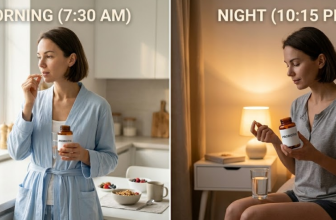
Every evening, millions of people scroll through smartphones, tablets, and laptops, unknowingly exposing themselves to blue light that can disrupt sleep.
This specific wavelength, especially between 460–480 nm, affects the brain’s suprachiasmatic nucleus (SCN) and the release of melatonin, the hormone that signals your body it’s time to rest. Over time, poor circadian light hygiene can lead to delayed sleep onset, daytime fatigue, and even hormonal imbalances.
A digital detox for sleep quality isn’t just trendy—it’s becoming a scientifically recognized strategy to restore natural sleep rhythms. From activating melanopsin in the eyes to managing exposure with virtual darkness techniques and blue light–blocking glasses, there are practical ways to protect your mental clarity while supporting healthy sleep.
In this guide, we’ll explore the biological effects of screen time, actionable detox strategies, and how to optimize your evenings for better rest, focus, and overall well-being in 2026.
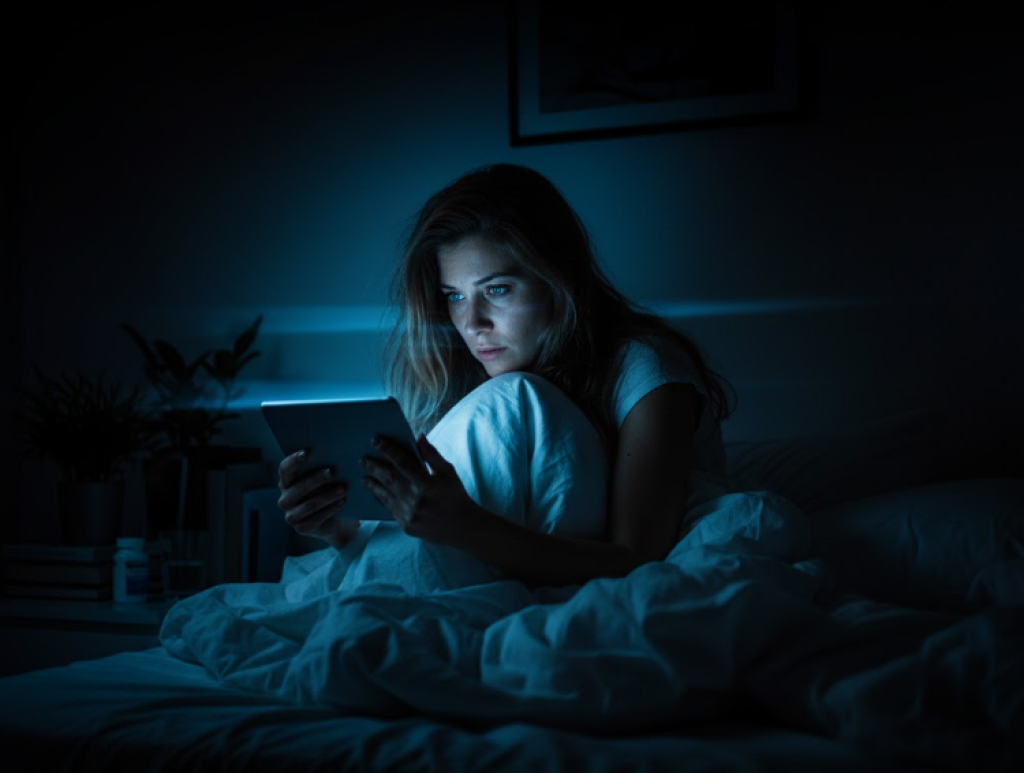
How Blue Light Affects the Body: The Biology of Sleep
Your body doesn’t “know” what time it is by looking at a clock; it knows by looking at the sky. Specifically, your eyes are evolved to detect the presence of short-wavelength blue light (around 460–480 nm), which is abundant in midday sunlight.
The Suprachiasmatic Nucleus (SCN): The Master Clock
Deep within the hypothalamus sits the Suprachiasmatic Nucleus (SCN). This tiny cluster of cells acts as the CEO of your biological rhythms. It coordinates everything from body temperature to the release of metabolic hormones. The SCN is “programmed” by light signals sent directly from your eyes.
Melanopsin Activation & ipRGCs
The eye contains more than just rods and cones for vision. It also houses Intrinsically Photosensitive Retinal Ganglion Cells (ipRGCs). These cells contain melanopsin, a photopigment that is hyper-sensitive to blue light.
- The Mechanism: When blue light from your phone hits these cells, they send a “High Alert” signal to the SCN.
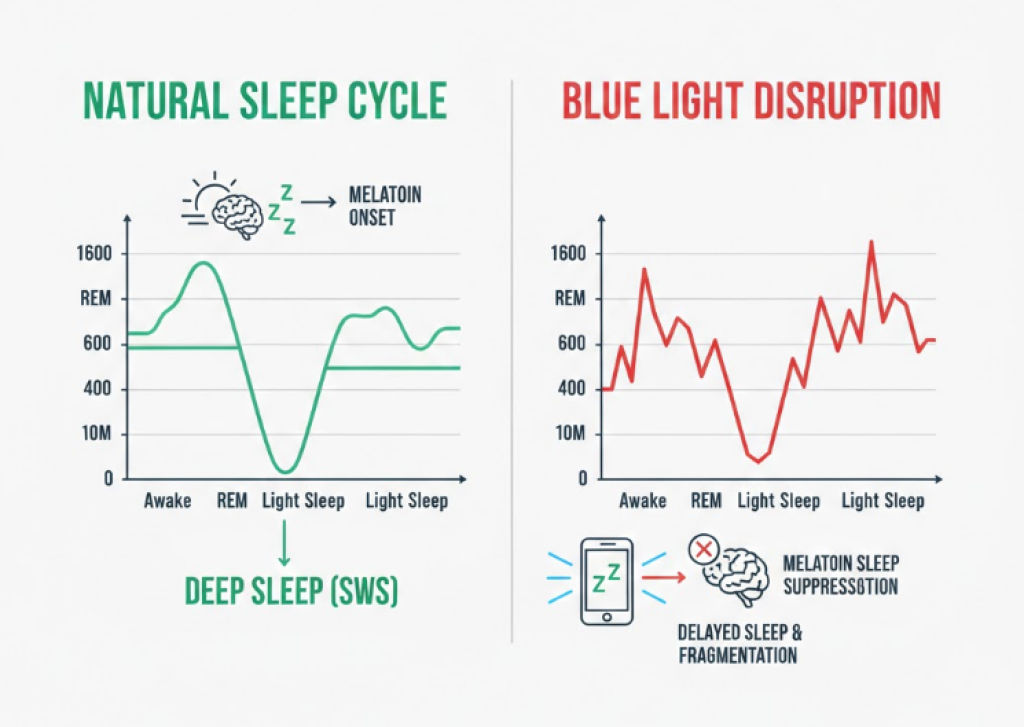
- The Result: The SCN immediately tells the pineal gland to halt the production of melatonin. Essentially, your phone “tricks” your brain into thinking it is 12:00 PM when it is actually 12:00 AM.
Dim Light Melatonin Onset (DLMO)
In a natural environment, your brain begins a process called Dim Light Melatonin Onset (DLMO) about two hours before your typical bedtime. This is the “sleep gate” opening. Screen use effectively “slams” this gate shut, delaying the onset of sleepiness and shifting your entire circadian rhythm forward.
Symptoms & Risks of Excessive Screen Exposure
The consequences of biological effects of screen time go far beyond feeling a little groggy.
Physiological Symptoms of Digital Eye Strain
We’ve all felt the “burn” of a long day at the computer. This is caused by high-energy visible (HEV) light scattering inside the eye, which reduces contrast and forces the eye muscles to work harder. Common symptoms include:
- Blurred vision and “dry eye” syndrome.
- Recurring tension headaches.
- Difficulty focusing on distant objects after screen use.
The Metabolic Trap: Weight Gain and Blue Light
Can blue light exposure cause weight gain? Recent 2026 clinical data suggests a strong link. When you suppress melatonin, you also disrupt leptin (the fullness hormone) and increase ghrelin (the hunger hormone). Furthermore, sleep deprivation caused by blue light induces temporary insulin resistance, making your body more likely to store fat from late-night snacks.
Digital Detox Strategies for 2026
A digital detox isn’t about giving up technology; it’s about practicing circadian light hygiene 2026—protecting your biology in a digital world.
The 90-Minute Digital Curfew
To master a 90-minute digital curfew, you must create a “buffer zone” for your brain.
- T-Minus 90 Minutes: Power down laptops and tablets.
- T-Minus 60 Minutes: Switch your phone to “Grayscale” mode and place it in a charging station outside the bedroom.
- The Goal: Allow your natural DLMO to occur without interference.
Blue Light vs. Red Light for Sleep
If you must have light in the evening, wavelength matters. While blue light (short-wave) is stimulating, red light (long-wave) has almost zero effect on melatonin suppression.
| Light Type | Wavelength | Brain Response | Recommendation |
| Blue Light | 450–490nm | Inhibits Melatonin / High Alert | Avoid after sunset |
| Warm/Amber | 590–620nm | Low Interference | OK for evening reading |
| Red Light | 620–750nm | Zero Interference | Best for night-lights |
Virtual Darkness
In 2026, the trend of “Virtual Darkness” has gained traction. This involves keeping environmental lights extremely low (below 40 lux) and using warm-spectrum lighting to mimic the campfire light our ancestors evolved with.
Lifestyle & Biological Enhancements
Dopamine Detox for Sleep Onset
The “scroll” is as much of a problem as the “glow.” Engaging with high-arousal content (news, social media fights, gaming) triggers dopamine, which acts as a chemical “wake-up call” to the brain. A dopamine detox in the evening—replacing apps with reading a physical book—lowers the brain’s baseline arousal, making it easier for melatonin to do its job.
The Gut Connection: SCFAs and Sleep
Your gut and your brain are in a constant 24-hour dialogue. Beneficial bacteria in your gut produce short-chain fatty acids (SCFAs) that have been shown to influence sleep architecture. A high-fiber diet during the day helps stabilize the internal environment that allows for deep, restorative REM sleep at night.
Tools to Support Your Detox
- Blue Light Blocking Glasses: Ensure they have a deep amber or red tint. Clear “computer glasses” often only block 10–20% of the harmful spectrum. Look for glasses with actigraphy results proving they improve sleep onset.
- Smart Lighting: Use smart bulbs that automatically shift from “Cool White” to “Sunset Orange” as the day progresses.
- Cortisol Awakening Response (CAR): To fix your nights, you must fix your mornings. Get 10 minutes of direct sunlight as soon as you wake up to “reset” the SCN and trigger the healthy release of morning cortisol.
FAQs: Digital Detox & Blue Light Effects on Melatonin
1. Does blue light actually stop melatonin production?
Exposure to blue light, particularly between 460–480 nm, suppresses melatonin secretion, delaying your body’s natural sleep signals. The intrinsically photosensitive retinal ganglion cells (ipRGCs) detect blue light and signal the suprachiasmatic nucleus (SCN), which in turn reduces melatonin release. This is why using devices before bedtime can make it harder to fall asleep.
2. How long does it take for melatonin to rise after a digital detox?
After eliminating screen exposure and practicing digital detox for sleep quality, melatonin levels can start to rise within 30–90 minutes, depending on your individual circadian rhythm and prior blue light exposure. Consistent evening habits like dimming lights or using virtual darkness can improve timing.
3. Are blue light blocking glasses effective in 2026?
Yes. Research shows that blue light blocking glasses can reduce melatonin suppression by filtering out the 460–480 nm wavelengths. For optimal results, wear them 2–3 hours before bedtime, especially during late-night screen use.
4. What is the best digital detox schedule for sleep?
Experts recommend a 90-minute digital curfew before bed. During this time:
- Turn off screens or switch to red-light modes
- Engage in low-stimulation activities (reading, meditation)
- Maintain circadian light hygiene 2026 by keeping ambient lights dim
5. Can blue light exposure cause weight gain?
Indirectly, yes. Disrupted melatonin can alter sleep architecture, appetite hormones, and insulin sensitivity. Poor sleep from blue light exposure is associated with higher cortisol levels and increased cravings, which may contribute to weight gain over time.
6. Does “Night Mode” on iPhones really protect your melatonin?
Night Mode reduces blue light but does not block all melatonin-suppressing wavelengths. Combining it with dim lighting or blue light blocking glasses is more effective for preserving natural melatonin production.
7. What color light is best for sleep?
Red or amber light is ideal. These longer wavelengths have minimal impact on melanopsin activation, allowing melatonin levels to rise naturally. Avoid bright white or blue-toned light in the hours before bedtime.
8. How does digital detox improve mental health and focus?
By reducing blue light exposure and supporting natural melatonin rhythms, a digital detox enhances sleep quality, restores cognitive clarity, and lowers stress. Improved sleep also supports hormonal balance, memory consolidation, and emotional resilience.
Finally – The Path to Mental Clarity
Implementing a digital detox isn’t just about avoiding a headache; it’s about aligning your 21st-century lifestyle with your ancient biological needs. By mastering your circadian light hygiene, you restore your sleep architecture, protect your metabolic health, and wake up with the mental clarity needed to tackle the digital world again tomorrow.
References
- Harvard Health Publishing – Blue light has a dark side
https://www.health.harvard.edu/staying-healthy/blue-light-has-a-dark-side - PubMed (NIH) – Blue light exposure suppresses melatonin in humans
https://pubmed.ncbi.nlm.nih.gov/21164152/ - PubMed (NIH) – Blue-light blocking improves sleep quality
https://pubmed.ncbi.nlm.nih.gov/30568927/ - NIH / NCBI Review – Light exposure and circadian rhythm disruption
https://www.ncbi.nlm.nih.gov/pmc/articles/PMC6751071/