When you look in the mirror and see thinning strands, a lackluster texture, or frustrating flakes, your first instinct is likely to buy a new “hair product”—a volumizing mousse, a strengthening conditioner, or a trendy mask. You might invest significant time and money managing the hair shaft itself, which is just a dead protein filament. This approach completely overlooks the most crucial biological reality of your hair: you cannot build a healthy house on a broken foundation – here comes the discussion on ‘scalp health’.
Your hair growth, texture, and ultimate density are determined entirely by what is happening below the surface of your skin. If you want stronger, denser, faster-growing hair, your priority must shift. You must prioritize scalp health above all else. This guide will show you exactly why and how to transform your approach.
What Is Scalp Health?
From a medical perspective, a healthy scalp is a balanced ecosystem. It is more than just “not having an itch” or seeing visible dandruff. Good scalp health means that several complex physiological systems are working harmoniously to support follicular function.
This balance involves four critical components:
- A strong barrier function: Your scalp’s protective moisture barrier must be intact to prevent irritation and moisture loss (this is vital for preventing the initial signs of dry scalp).
- Balanced sebaceous (oil) glands: These glands must produce just enough sebum to moisturize the skin and hair without causing an oily scalp, which can lead to specific conditions like seborrheic dermatitis.
- Proper immune signaling: Your immune system must effectively defend against pathogens (like certain fungi or molded exposure dandruff) without overreacting and causing chronic scalp inflammation, which can lead to hair thinning.
- Efficient follicular units: The millions of follicles on your head must receive adequate blood flow and nutrition, as this entire process is how to improve scalp health for hair growth at the cellular level.
The Scalp Microbiome: The Invisible Ecosystem
This is perhaps the most critical section for understanding why is scalp health important. Just like your gut, your scalp is home to a vast and complex invisible ecosystem of bacteria, yeast, and fungi known as the scalp microbiome. This microbiome plays a foundational role in both your skin’s defense and your follicles’ health.
When this ecosystem is in balance, your scalp is healthy. When it is disrupted (a state known as dysbiosis), problems emerge. The most common protagonist is a naturally occurring yeast called Malassezia. When Malassezia over-proliferates, it triggers an inflammation cascade, which is the direct cause of both classic dandruff flakes and the more severe condition, seborrheic dermatitis. Maintaining this microbiome is the absolute key to how to have good scalp health.
How to Check Scalp Health at Home
Now that you understand the biological foundation, how do you determine where you stand? How do you know if your scalp is healthy without visiting a dermatologist? While a professional scalp analysis is ideal, you can easily gather invaluable data with a simple, regular how to check scalp health routine at home.
Start by examining your scalp in good, natural light. What do you see? Healthy skin should look calm and be a similar color to the rest of your skin (or slightly pinkish). Check for signs of redness, specific dry patches, or any pustules. What does an unhealthy scalp feel like? Run your fingertips gently along your scalp. Feel for texture—it should be smooth. If you feel bumps, scabs, or rough patches, that is a sign of an underlying issue. You should also feel for sensitivity. A healthy scalp should have no pain or tenderness when gently pressed. If you experience these symptoms, or if your scalp feels chronically tight and dry, it is a sign that you need a specialized approach for how to improve dry scalp and restore balance.
Signs of an Unhealthy Scalp
It can be surprisingly easy to overlook the signs of an unhealthy scalp because we have become accustomed to viewing issues like itchy scalp or dandruff flakes as mere cosmetic inconveniences. However, these are often the first visible scalp problems signaling a deeper biological imbalance that can directly impact hair growth. Ignoring them allows the underlying issues to worsen, potentially leading to scalp inflammation causing hair thinning.
A compromised scalp frequently exhibits a pattern of symptoms:
- Constant Itching: A persistent, deep-seated urge to scratch your scalp is not normal and is one of the clearest signs of what does an unhealthy scalp feel like.
- Persistent Redness: If your scalp skin looks inflamed and visibly more red than the skin on your face or neck, this is a major indicator of chronic scalp inflammation.
- Excessive Oil Production: A chronic oily scalp that requires daily washing to avoid looking greasy is often a sign of seborrheic dermatitis, which must be addressed to restore scalp health.
- Noticeable Odor: A consistent, strong smell from the scalp (not from the hair itself) can indicate yeast overgrowth or a specific bacterial imbalance in the scalp microbiome.
- Hair Thinning or Fallout: A key indicator is seeing significantly more hair than usual in your brush or shower drain. This is the moment to investigate does poor scalp health cause hair loss? and prioritize scalp health for hair growth.
Dry Scalp vs. Dandruff
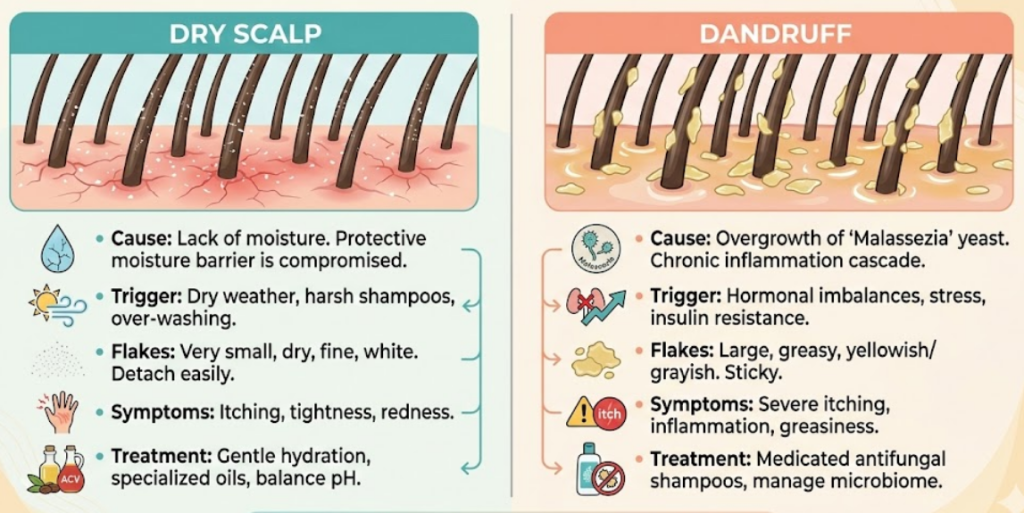
This is one of the most critical and frequently misunderstood distinctions in hair care. Mistaking a dry scalp for dandruff can lead to treating your scalp with the wrong products, often worsening the underlying issue. The difference between dry scalp and dandruff flakes is fundamental to both their cause and their correct treatment, which is essential for how to improve dry scalp effectively.
Dry Scalp:
- The Cause: Think of dry scalp as a form of xerosis (excessive skin dryness) for the scalp. It is fundamentally a moisture issue, where the skin’s natural barrier is compromised and cannot retain hydration. This is how you correctly diagnose the first signs of dry scalp.
- The Flakes: The flakes resulting from a dry scalp are typically very small, dry, and white. They often look like fine, powdery dust, and they detach easily from the skin.
Dandruff:
- The Cause: Dandruff is not a dry skin issue. It is typically caused by a complex interaction between excessive sebum (oily scalp) and an overproliferation of the yeast Malassezia within your scalp microbiome. This yeast triggers an immune response that causes skin cells to reproduce and shed prematurely, a key process in how seborrheic dermatitis develops.
- The Flakes: Dandruff flakes are significantly larger, often yellowish or grayish in color, and can have a slightly “greasy” texture. They tend to stick to the hair shaft and are harder to “shake loose.”
The Critical Difference: While both conditions can cause an itchy scalp, they require opposite treatments. A dry scalp needs intense hydration (e.g., specific oils for scalp health), whereas dandruff requires an antifungal treatment (e.g., a best shampoo for scalp health with zinc pyrithione) to address the yeast, as well as a strategy to balance the microbiome and how seborrheic dermatitis treatment works.
Does Poor Scalp Health Cause Hair Loss?
The concise medical answer is: yes. Chronic and untreated scalp problems can create an environment that directly disrupts the hair growth cycle and damages the follicles. If you are experiencing unexplained fallout, it is essential to ask, “does poor scalp health cause hair loss?“
This occurs through three primary mechanisms:
- Follicular Damage from Inflammation: The most significant link is scalp inflammation causing hair thinning. Inflammatory conditions like seborrheic dermatitis or severe scalp psoriasis can directly damage the hair follicles. Chronic, low-grade scalp inflammation triggers immune responses that can premature enter the hair follicle’s “shedding” phase (telogen), causing diffuse, noticeable thinning.
- Impaired Circulation: Healthy blood flow is essential for delivering oxygen and nutrients to the follicle, which is how to improve scalp health for hair growth. A compromised scalp, especially one with a dense layer of product buildup, dead skin cells, or persistent inflammation, has impaired microcirculation, starving the follicle.
- Physical Damage from Scratching: The constant itching associated with both dry scalp and dandruff can be so severe that you physically damage the scalp and the hair follicles through aggressive, habitual scratching. This can cause “traction alopecia” or create micro-wounds, making the scalp more vulnerable to infection and scalp acne causes.
Scalp Health for Hair Growth: What Actually Works
It is vital to filter through the marketing noise to identify truly evidence-based solutions. If your main concern is how to encourage hair growth, your entire focus must be on creating a healthy, optimized environment within the follicle, which is how to improve scalp health for hair growth from the root up.
Here is the scientific reality of scalp health for hair growth:
- Prioritize Deep Cleansing: A cornerstone of how to encourage hair growth is maintaining a clean, clear, and debris-free scalp. This prevents the accumulation of sweat, pollution, sebum, and product residue that can block the follicle. It is a critical step to ensure optimal conditions and prevent scalp acne.
- Scalp Massage for Thicker Hair: While “magic hair growth oils” are mostly marketing, scalp massage for thicker hair has actual, peer-reviewed evidence. Massaging your scalp for just 4 minutes a day can improve microcirculation. This increases the diameter of each hair strand, leading to noticeably thicker, denser hair over time and is a powerful way how to have a healthy scalp.
- Optimize the Scalp Microbiome: Addressing an itchy scalp, chronic dandruff, or signs of seborrheic dermatitis is non-negotiable for how to maintain scalp health for hair growth. A healthy scalp microbiome is the single best defense against the scalp inflammation that can cause hair thinning.
- How Can I Stimulate My Hair Follicles? To directly “stimulate” follicles at a cellular level, you need to increase blood flow (via massage) and provide essential nutrients (via a complete and balanced diet for scalp health).
How to Improve Scalp Health Naturally
Achieving optimal scalp health does not always require harsh chemical interventions. In fact, for many common scalp problems, a natural approach that focuses on restoring the body’s innate balance is often the most effective long-term strategy. The key to how to restore scalp health naturally is addressing the root causes of imbalance—inflammation, pH disruption, and microbiome dysbiosis—rather than just masking the symptoms.
Here is an evidence-based blueprint for a natural approach to how to have a good scalp health:
- Balance Your Scalp pH: Your scalp, like your skin, has a naturally acidic protective layer called the acid mantle (typically a pH of 4.5 to 5.5). Many commercial shampoos are too alkaline, which disrupts this barrier and makes the scalp vulnerable to fungus (like Malassezia) and dry scalp. A simple, natural remedy for how to balance scalp pH naturally is an apple cider vinegar (ACV) rinse. Mix one part raw ACV with three parts water and use it as a final rinse after shampooing once a week to seal the cuticle and restore acidity.
- Adopt an Anti-Inflammatory Diet: Since chronic scalp inflammation is a primary driver of hair thinning, your diet plays a crucial role. Prioritize foods for scalp health that are rich in Omega-3 fatty acids (like wild-caught salmon, chia seeds, and walnuts), antioxidants (berries, leafy greens), and zinc (oysters, pumpkin seeds). Minimizing processed sugars and refined carbohydrates is essential for how to improve scalp health naturally, as these foods trigger insulin spikes that can exacerbate inflammatory conditions like seborrheic dermatitis.
- Optimize Washing Frequency: There is no single “correct” answer for how often should I wash my hair for scalp health, but finding your ideal frequency is essential. Washing too often strips natural oils, leading to a dry scalp and paradoxically triggering reactive oil production. Washing too seldom allows sebum, sweat, and product buildup to accumulate, clogging follicles and disrupting the scalp microbiome. As a general rule, aim for 2-3 times a week, adjusting based on your hair type and lifestyle.
- Manage Stress: Chronic stress keeps cortisol levels elevated, which directly triggers inflammation throughout the body, including the scalp. This can worsen itchy scalp conditions and even accelerate hair loss. Incorporating stress-management techniques like meditation, deep breathing exercises, or regular yoga is a powerful, non-invasive way how to improve scalp health for hair growth from the inside out.

Best Oils for Scalp Health
The use of oils for hair care is ancient, but it is essential to distinguish between scientific evidence and marketing myth when selecting the best oil for scalp health. Not all oils serve the same purpose; some are best for moisturizing a dry scalp, while others have targeted therapeutic properties for conditions like dandruff or scalp fungal infection.
Here is a guide to the most effective, evidence-based oils for scalp health:
- For Targeted Treatment (Essential Oils):
- Tea Tree Oil for Scalp Infection: Tea tree oil is renowned for its powerful antifungal and antibacterial properties. It is scientifically proven to be effective against Malassezia, the yeast responsible for dandruff and seborrheic dermatitis. For an itchy scalp or active dandruff flakes, add 2-3 drops of tea tree oil to your shampoo, or create a targeted mask by diluting it in a carrier oil (like jojoba). It is a highly effective, natural folliculitis scalp treatment.
- Rosemary Oil for Hair Growth: Rosemary oil has compelling evidence suggesting it can be as effective as 2% minoxidil (a common hair loss treatment) for stimulating hair growth over a six-month period. It works by improving microcirculation to the scalp. It is one of the best essential oils for scalp health when your primary goal is how to encourage hair growth.
- Peppermint Oil for Stimulation: Peppermint oil provides a cooling sensation that can soothe an itchy scalp. More importantly, it acts as a vasodilator, increasing blood flow to the follicles, making it a powerful tool for how to stimulate my hair follicles.
- For Moisturization (Carrier Oils):
- Jojoba Oil for Sebum Balance: Jojoba oil is unique because its chemical structure closely mimics human sebum. This makes it the best oil for scalp health to balance oil production. It moisturizes a dry scalp without clogging follicles and can help ‘dissolve’ excessive oil on an oily scalp.
- Coconut Oil for Deep Hydration: Coconut oil is one of the few oils that can actually penetrate the hair shaft to reduce protein loss. It is excellent for deep moisturizing, but use it sparingly on the scalp itself if you are prone to scalp acne, as it can be comedogenic for some.
- A Critical Caveat: When using any essential oil (tea tree, rosemary, peppermint), always dilute it in a carrier oil (jojoba, coconut, almond) before applying it to your scalp. Applying undiluted essential oils can cause severe irritation and worsen scalp inflammation. This is a vital rule for how to have a healthy scalp.
Best Shampoo for Scalp Health: What Ingredients Matter
Your shampoo is the most important product in your scalp health routine. While many people choose a shampoo based on scent or marketing claims (“volumizing,” “strengthening”), a therapeutic approach requires you to focus solely on the active ingredients in the formula. Selecting the best shampoo for scalp health means identifying the specific ingredients that address your unique scalp issues, whether that is dandruff, seborrheic dermatitis, or chronic scalp inflammation.
Here are the key medicinal ingredients to look for in a specialized scalp health shampoo:
- For Dandruff and Seborrheic Dermatitis:
- Ketoconazole: This is a powerful, broad-spectrum antifungal medication. It is highly effective at reducing the population of Malassezia yeast. Ketoconazole is the gold standard ingredient for seborrheic dermatitis treatment and is excellent for eliminating stubborn dandruff flakes. It also has mild anti-androgen properties, which can be beneficial for those asking does ketoconazole help hair loss?.
- Zinc Pyrithione: A common and effective antifungal and antibacterial agent found in many OTC shampoos. It works by inhibiting the yeast that causes dandruff, making it a foundational ingredient for best shampoo for itchy scalp.
- Selenium Sulfide: Another potent antifungal that slows the turnover of skin cells on the scalp, effectively treating both dandruff and seborrheic dermatitis.
- For Buildup and Exfoliation:
- Salicylic Acid: This is a beta-hydroxy acid (BHA) that acts as a keratolytic agent, meaning it helps dissolve the “glue” that holds dead skin cells together. It is highly effective for removing product buildup, scaling from scalp psoriasis, and excess sebum. It is a critical component of how seborrheic dermatitis treatment functions to clear the scalp and is excellent for folliculitis scalp treatment.
- For Inflammation and Circulation:
- Caffeine: When applied topically, caffeine is scientifically proven to stimulate hair growth by counteracting the effects of DHT (the hormone responsible for male and female pattern baldness) and increasing blood flow to the follicle. It is a powerful ingredient for a hair growth shampoo and is essential for how to stimulate my hair follicles with topicals.
- Pirolone Olamine: A newer antifungal and antibacterial agent that is often less irritating than zinc pyrithione, making it a good choice for a best shampoo for sensitive scalp that still needs to address dandruff.
When using a therapeutic scalp health shampoo, the application is just as important as the ingredients. You must massage the shampoo directly into your scalp (not just your hair) and let it sit for 3-5 minutes before rinsing. This gives the active ingredients time to work, which is how to have a healthy scalp.
Scalp Detox: Does It Actually Work?
The term “scalp detox” is frequently used in marketing, often promising to “purify” your scalp of “toxins.” From a medical perspective, your liver and kidneys handle detoxification. However, a scalp detox treatment at home is highly effective when viewed as a deep-cleansing and exfoliating protocol to remove significant product buildup, pollution, sweat, and dead skin cells.
This buildup is not harmless; a dense layer of debris on your scalp can clog follicles, impair microcirculation, disrupt the scalp microbiome, and create an environment that encourages fungal overgrowth. This can lead to persistent itchy scalp and scalp acne, and ultimately, scalp inflammation causing hair thinning.
How to Do a Effective Scalp Detox Treatment at Home:
- Use a Scalp Scrub: A physical scalp scrub for product buildup uses gentle exfoliants (like sea salt, sugar, or biodegradable jojoba beads) to manually buff away dead skin cells and buildup. This immediately improves circulation and leaves the scalp feeling incredibly fresh. This is a vital component of how exfoliating scalp improves hair health.
- Employ a Clarifying Shampoo: Follow the scrub with a specialized clarifying shampoo. These shampoos are formulated with stronger surfactants (like alpha-olefin sulfonate) to strip away stubborn silicone buildup and hard water minerals that regular shampoos cannot remove.
- Frequency is Key: A scalp detox is not a daily routine. Over-exfoliating can damage the scalp’s delicate moisture barrier, leading to dry scalp and irritation. For most people, a scalp detox treatment at home is best performed once a week or every two weeks, depending on your product use and lifestyle. This is a crucial step for how to maintain scalp health for hair growth long-term.
Vitamins for Scalp Health
While topical treatments are crucial for managing the surface environment, optimal scalp health is fundamentally dependent on adequate nutrition. Your hair follicles are among the most metabolically active cells in your body, and a deficiency in key vitamins and minerals can directly impair their function, leading to hair thinning, a compromised scalp microbiome, and chronic scalp inflammation. If you are asking how can I stimulate my hair follicles effectively, you must ensure your nutritional foundation is secure.
Here are the most critical, evidence-based vitamins for scalp health and hair growth:
- Iron: Iron deficiency (ferritin) is one of the most common, yet overlooked, causes of hair loss, especially in women. Iron is essential for producing hemoglobin, which carries oxygen to your cells, including the hair follicle. Ensuring adequate iron intake is a powerful way how to improve scalp health for hair growth at the cellular level. Focus on foods for scalp health rich in iron, such as lean red meat, spinach, lentils, and fortified cereals.
- Vitamin D: Low levels of Vitamin D are strongly associated with alopecia areata and female pattern hair loss. Vitamin D plays a crucial role in hair follicle cycling and supporting a healthy scalp microbiome. Since it is difficult to get enough Vitamin D from food alone (fatty fish, fortified milk), supplementation under medical guidance is often necessary for how to encourage hair growth.
- Zinc: Zinc is a vital mineral for cell growth, immune function, and sebum production. A deficiency can lead to a severe oily scalp, persistent dandruff flakes, and hair shedding. Zinc is a key component of how seborrheic dermatitis treatment functions and is essential for vitamins for scalp health for hair growth. Rich sources include oysters, beef, pumpkin seeds, and lentils.
- Omega-3 Fatty Acids: These essential fatty acids are powerful anti-inflammatories. They help to lubricate the hair shaft, reduce scalp inflammation causing hair thinning, and maintain a healthy moisture barrier, which is key for how to improve dry scalp. The best food for scalp health to get Omega-3s is wild-caught salmon, but you can also find them in chia seeds, flaxseeds, and walnuts.
How Often Should You Wash Your Hair?
One of the most frequent questions regarding scalp health is also one of the most misunderstood: how often should I wash my hair for scalp health? There is no universal “correct” frequency. The ideal washing schedule depends entirely on your scalp’s sebum production, hair type, lifestyle (sweat, pollution exposure), and product usage.
Finding your ideal frequency is essential for how to have a good scalp health:
- Washing Too Often: If you wash your hair daily without a medical need (like severe seborrheic dermatitis), you can strip away the scalp’s natural oils. This disrupts the protective acid mantle, compromises the scalp microbiome, and often triggers reactive oil production, leading to a frustrating cycle of an oily scalp and a persistent itchy scalp. This is a major factor that can worsen dry scalp vs dandruff.
- Washing Not Enough: On the other hand, allowing sebum, sweat, pollution, and product residue to accumulate on your scalp for more than a few days can be equally damaging. This buildup clogs follicles, impairing circulation and how to encourage hair growth. It also creates a “feast” for Malassezia yeast, directly contributing to dandruff flakes and inflammation, which is why seborrheic dermatitis treatment usually requires frequent washing with therapeutic shampoos.
Finding Your Frequency Blueprint:
- Oily Scalp / Fine Hair: You may need to wash daily or every other day with a best shampoo for oily scalp to manage sebum and prevent buildup.
- Normal Scalp / Medium-Textured Hair: Washing every 2-3 days is often optimal for how to maintain scalp health and preserve natural moisture.
- Dry Scalp / Coarse or Curly Hair: Washing once or twice a week is usually sufficient, as your scalp produces less sebum. You can focus on co-washing or using a moisturizing best shampoo for dry scalp.
- Active Lifestyle (Sweating): Sweat contains salts that can be incredibly irritating and drying to the scalp. If you sweat heavily, a quick rinse with water or using a gentle, sulfate-free shampoo is often the best way to cleanse scalp after workout.
Special Conditions Section
While this guide provides a foundation for general scalp care, some individuals will experience persistent scalp problems that require specific, targeted interventions. Identifying these common conditions is the first step in creating an effective scalp health routine and knowing when to seek professional medical advice. This section addresses the most frequent pathological issues that can compromise scalp microbiome and follicle function.
1. Seborrheic Dermatitis:
- What It Is: A chronic, recurring inflammatory condition that affects oil-rich areas like the scalp. It is characterized by severe itchy scalp, significant redness, and large, “greasy” yellowish or grayish dandruff flakes. It is deeply linked to an overgrowth of Malassezia yeast.
- The Treatment: Successful seborrheic dermatitis treatment requires a consistent regimen using a specialized scalp health shampoo with active ingredients like ketoconazole, zinc pyrithione, or selenium sulfide. Managing oily scalp through frequent washing is also critical for how seborrheic dermatitis treatment works.
2. Folliculitis:
- What It Is: Inflammation or infection of the hair follicles. It often presents as small, red, painful bumps or pustules (often mistaken for scalp acne causes) that are incredibly tender and sometimes intensely itchy.
- The Treatment: Mild cases can often be managed with antibacterials like tea tree oil or a salicylic acid-based shampoo to clear debris. However, chronic or severe cases may be caused by specific bacteria or fungi and require a medical prescription. Knowing folliculitis scalp treatment options is crucial if you suffer from these painful bumps.
3. Eczema (Atopic Dermatitis) on the Scalp:
- What It Is: A state of chronic dry scalp and inflammation where the skin barrier is severely compromised. It causes persistent, red, incredibly itchy, and sometimes weeping or scabby patches on the scalp. Unlike dandruff, it is not linked to yeast overgrowth.
- The Treatment: The focus here is on repair and extreme moisturization. A gentle, sulfate-free best shampoo for sensitive scalp is non-negotiable. Using specific oils for scalp health (like jojoba) can soothe the flare-up and help manage eczema on scalp flare up remedies without irritation. Avoid over-washing and excessive heat.
4. Mold-Exposure Dandruff:
- What It Is: An emerging area of interest in dermatological research suggest that chronic exposure to environmental mold can trigger an immune-mediated dandruff-like condition in susceptible individuals. It may present as persistent scalp itching and flaking that doesn’t respond to typical best dandruff treatment and can be part of systemic symptoms.
- The Treatment: This requires addressing the environmental source of mold first. Clinically, it may require antifungals, but confirming the link and finding targeted mold exposure dandruff scalp treatment requires a specialized medical evaluation.
Lifestyle & Hormonal Influences
This is where the direct connection between scalp health and systemic medical health becomes undeniable. Your body is interconnected, and systemic metabolic and hormonal issues will manifest on your scalp long before they become visible elsewhere. Addressing these systemic factors is the key to how to improve scalp health for hair growth long-term.
1. Chronic Stress & Cortisol:
- Chronic stress keeps your body in a persistent “fight-or-flight” state, maintaining elevated levels of the stress hormone cortisol. Cortisol is inherently pro-inflammatory. Elevated cortisol directly triggers scalp inflammation causing hair thinning and exacerbates almost every pre-existing scalp problem, from dandruff to scalp psoriasis. It also disrupts follicular function and is a primary driver of stress-induced hair shedding. This is a powerful, non-invasive way how to improve scalp health for hair growth from the inside out.
2. Insulin Resistance & PCOS Link:
- Insulin resistance is a common metabolic issue where your cells cannot effectively use glucose, leading to high levels of insulin in the blood. This condition is the hallmark of conditions like PCOS (Polycystic Ovary Syndrome). High insulin levels trigger the ovaries to produce excess androgens (testosterone). Topically, this excess androgen is converted to DHT on the scalp, which is the direct cause of androgenetic alopecia (female pattern hair loss). Managing insulin resistance through an anti-inflammatory diet for PCOS and lifestyle is essential for controlling topical symptoms. This metabolic dysfunction can also worsen a chronic oily scalp and seborrheic dermatitis, which is a powerful way to links the guide back to environmental lifestyle triggers of PCOS.
Professional Treatments
While a consistent at-home scalp health routine is the foundation of care, some persistent scalp problems and advanced hair loss concerns benefit significantly from professional medical interventions. Dermatologists and trichologists possess diagnostic tools and treatments that can address issues at a deeper, follicular level. Knowing when to seek professional help is a critical component of how to improve scalp health for hair growth effectively.
Here are the most common and evidence-based professional treatments available:
- Platelet-Rich Plasma (PRP) Therapy: PRP involves drawing a small amount of your own blood, processing it to concentrate the platelets (which are rich in growth factors), and injecting it into target areas of the scalp. This treatment is scientifically proven to stimulate inactive hair follicles, increase blood flow, and reduce scalp inflammation, making it a powerful option for medical follicle stimulation.
- Medical-Grade Microneedling: This procedure uses tiny, sterile needles to create controlled micro-injuries in the skin. This triggers the body’s wound-healing response, which stimulates collagen production, improves microcirculation, and releases growth factors. Microneedling can also enhance the absorption of topical treatments (like minoxidil). It is an effective professional method for how to stimulate my hair follicles.
- Prescription Antifungal & Steroid Solutions: For severe, resistant cases of seborrheic dermatitis, folliculitis, or scalp psoriasis, OTC products are often insufficient. A dermatologist can prescribe high-potency topical corticosteroids to rapidly reduce scalp inflammation or stronger prescription antifungals (like ciclopirox) to eliminate persistent yeast or fungal overgrowth.
- Low-Level Laser Therapy (LLLT): This non-invasive treatment uses medical-grade lasers or LEDs to deliver red light (around 650nm) to the scalp. This light energy stimulates cellular activity (photobiomodulation) within the hair follicle, increasing ATP production and blood flow. It is an FDA-cleared, evidence-based professional approach to hair growth stimulation.
FAQ Section
1. What does your scalp says about your health?
Your scalp is often a window into your systemic health. A chronic oily scalp and stubborn dandruff can signal insulin resistance or PCOS. Persistent scalp inflammation can be linked to autoimmune issues, high stress (cortisol), or a poor, inflammatory diet. Hair thinning is often one of the first visible signs of iron deficiency, thyroid dysfunction, or extreme hormonal shifts (postpartum, menopause). Addressing scalp issues frequently requires investigating your internal metabolic and hormonal balance, which is why is scalp health important for overall wellness.
2. Why is my scalp sore when I move my hair?
This specific type of pain, known as trichodynia, can be incredibly distressing. It is almost always a sign of chronic, underlying scalp inflammation. The pain comes from the nerves surrounding the inflamed hair follicles, which are sensitized by inflammatory chemicals. It is frequently associated with telogen effluvium (reactive hair shedding), severe seborrheic dermatitis, or high emotional stress, which keeps cortisol levels elevated and can trigger a sore scalp. It is a major indicator of what your scalp says about your health.
3. Does caffeine improve scalp health?
Yes, there is compelling evidence. When applied topically, caffeine is scientifically proven to be a powerful stimulator. It counteracts the suppressive effects of DHT (the hormone responsible for pattern hair loss), improves microcirculation to the follicle, and prolongs the hair’s “growth” phase (anagen). This makes it a highly effective active ingredient for a dedicated best shampoo for hair growth and a powerful tool for how to stimulate my hair follicles with topicals.
4. Is scalp exfoliation safe for everyone?
While beneficial for most, scalp exfoliation is not universally safe. If you have an actively inflamed scalp condition, such as weeping eczema on scalp, raw psoriasis plaques, or painful folliculitis, physical exfoliation can cause micro-tears, severe irritation, and even infection. Always allow active flare-ups to calm down before incorporating a physical scalp scrub or a химический (chemical) exfoliant (like a high-strength BHA) into your routine. This is a crucial rule for how to maintain scalp health safely.
Scalp Health Routine Blueprint
Transforming your scalp requires a consistent, strategic approach. This is not a “one-and-done” treatment; it is a dedicated, long-term commitment. This blueprint provides a structured, actionable checklist for creating your ultimate scalp health routine.
Daily:
- Scalp Massage: Commit to 4 minutes of a firm, circular, fingertip massage daily to improve microcirculation and is a key method for how to have a good scalp health.
- Stress Management: Incorporate 5-10 minutes of deep breathing, meditation, or light stretching to help manage cortisol, which is foundational for controlling scalp inflammation.
Weekly / Bi-Weekly (Wash Day):
- 1. Pre-Wash Treatment (Optional): If you have a severe dry scalp, apply a moisturizing carrier oil (like jojoba) for 30 minutes before washing. For an oily scalp or dandruff, consider a targeted treatment using diluted tea tree oil for scalp infection or a specific pre-wash clarifying formula.
- 2. Exfoliation (Once a Week): Use a dedicated, gentle scalp scrub or a silicone-free brush to physical remove buildup and dead skin cells. This is a key step for how exfoliating scalp improves hair health.
- 3. Therapeutic Cleansing: Use your chosen best shampoo for scalp health (e.g., with ketoconazole or zinc pyrithione). Massage it into your scalp and let it sit for a full 3-5 minutes before rinsing. This is essential for how seborrheic dermatitis treatment functions.
- 4. Condition (Ends Only): Use conditioner only on the mid-lengths and ends of your hair to avoid clogging follicles on your scalp.
- 5. Post-Wash Rinse (Optional): Consider an apple cider vinegar (ACV) rinse once a week to seal the cuticle and help with how to balance scalp pH naturally.
Monthly:
- Scalp Detox: If you use significant styling products or have hard water, incorporate a powerful physical scrub and a professional-strength clarifying shampoo once a month for a best scalp detox at home.
- Nutrition Check: Review your diet. Are you consistently getting enough iron, zinc, Vitamin D, and Omega-3s? This is vital for maintaining vitamins for scalp health over time.
Conclusion: Treat Your Scalp Like Skin
The single most impactful mindset shift you can make for the future of your hair is this: Treat your scalp with the same level of care, sophistication, and respect that you treat the skin on your face.
For too long, we have treated the scalp as an afterthought—something to be scrubbed aggressively or, more commonly, ignored entirely. The scientific reality is that your scalp is a delicate, complex, and vital ecosystem. It is the foundation of your hair growth, the regulator of your hair’s texture and shine, and the first line of defense against frustrating scalp problems like dandruff and chronic inflammation.
By prioritizing scalp health, you are not just making a cosmetic change; you are investing in the long-term vitality of your hair from its core. This comprehensive guide has provided you with the evidence-based knowledge to diagnose imbalances, select targeted treatments, and build a definitive scalp health routine. It is time to stop buying products for the hair you have and start nourishing the environment for the hair you want. Treat your scalp like skin, and it will reward you with stronger, denser, faster-growing hair for a lifetime.
📚 References
- Mayo Clinic – Dandruff: Symptoms & Causes
Provides a medically reviewed overview of dandruff and factors affecting scalp health, including dry skin and fungal involvement.
https://www.mayoclinic.org/diseases-conditions/dandruff/symptoms-causes/syc-20353850 - PubMed – Scalp Microbiome and Its Role in Scalp Health
A scientific study comparing healthy and dandruff scalp microbiomes, highlighting how microbial balance affects scalp condition.
https://pubmed.ncbi.nlm.nih.gov/30338244/ - PubMed – The Role of the Microbiome in Scalp Hair Follicle Biology and Disease
A clinical review explaining how microbiota interact with hair follicles and immune responses, contributing to scalp health and disorders.
https://pubmed.ncbi.nlm.nih.gov/30974503/ - MedlinePlus – Dandruff, Cradle Cap, and Other Scalp Conditions
Official NIH resource explaining dandruff, seborrheic dermatitis, and common scalp conditions.
https://medlineplus.gov/dandruffcradlecapandotherscalpconditions.html - Cleveland Clinic – Dry Scalp: Causes, Treatment & Prevention
Evidence-based summary of dry scalp causes and when to seek medical care.
https://my.clevelandclinic.org/health/symptoms/23326-dry-scalp