By Wholesome Alive News
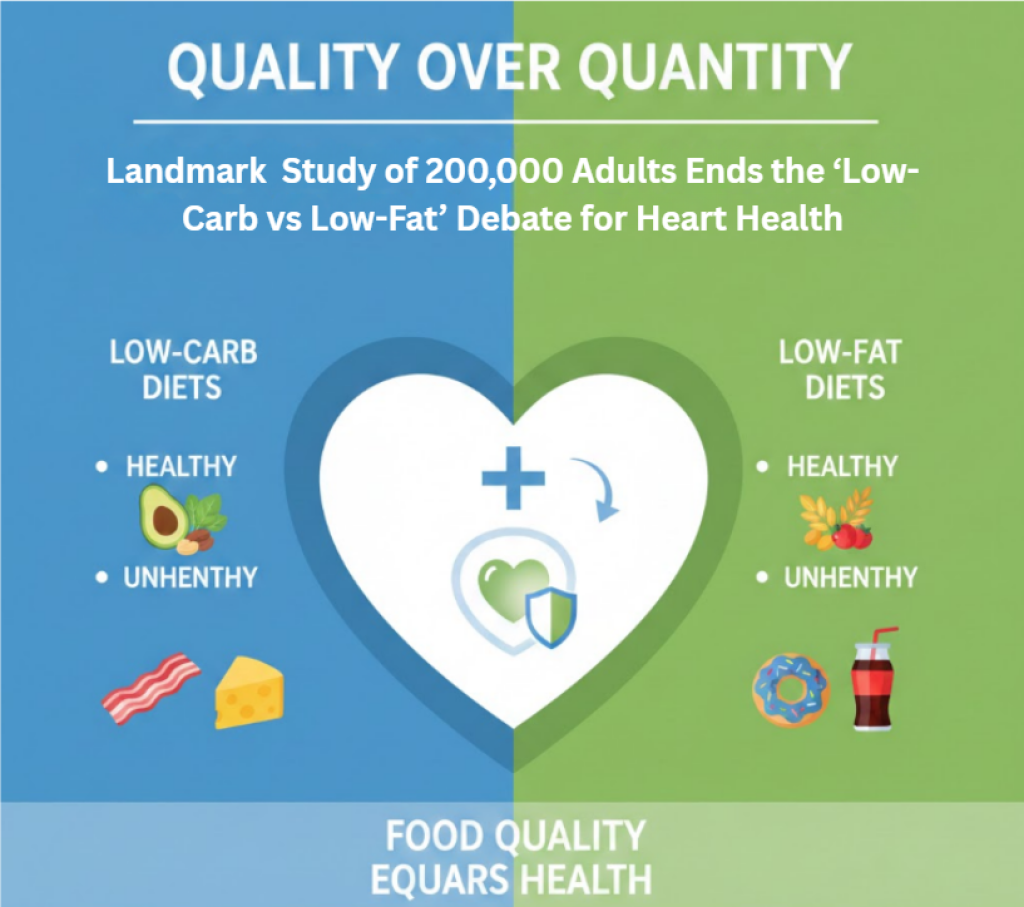
A landmark nutrition study involving nearly 200,000 adults over more than three decades has delivered a clear message for heart disease prevention: the quality of foods you eat may matter more than whether your diet is low in carbohydrates or low in fat.
Published on February 17, 2026, in Journal of the American College of Cardiology (JACC), the research challenges decades of debate over macronutrient-focused diets, such as “low-carb” versus “low-fat,” by showing that both diet types can be beneficial if they emphasize nutrient-dense, wholesome foods.
Study Breaks New Ground in Heart Disease Understanding
For years, diets have been categorized primarily by macronutrient content — how many grams of carbohydrates, fats, or proteins a person consumes. This has fueled competing diet trends worldwide, from Atkins-style low-carbohydrate plans to traditional low-fat regimens. However, scientists have long questioned whether simply cutting carbs or fats is enough to protect heart health.
In the largest study of its kind, researchers from multiple U.S. institutions analyzed the diets and health outcomes of 198,473 participants from three major long-standing cohort studies: the Nurses’ Health Study (NHS), NHS II and the Health Professionals Follow-Up Study. These participants were tracked for more than 5.2 million person-years, during which 20,033 cases of coronary heart disease (CHD) were documented.
Rather than focusing solely on macronutrient percentages, the team developed scoring systems that distinguished “healthy” versus “unhealthy” versions of both low-carbohydrate and low-fat diets based on food quality — for example, emphasizing whole grains, vegetables, legumes, nuts, seeds, and unsaturated fats versus refined grains, processed foods, and saturated animal fats.
Quality Foods Linked to Lower Heart Disease Risk
The results were striking:
- Healthy low-carbohydrate and healthy low-fat diets were both associated with a significantly lower risk of CHD.
- In contrast, versions of these diets high in refined carbohydrates and animal-based fats were linked to a higher risk of coronary disease.
- Participants consuming higher-quality diets also showed lower triglyceride levels, higher “good” HDL cholesterol, and markers of reduced inflammation — all favorable indicators for long-term heart health.
- In a subgroup analysis involving metabolomic testing (biochemical profiling of blood samples), individuals eating higher-quality diets had biomarker patterns associated with healthier metabolic regulation.
These outcomes suggest that heart health benefits are not tied exclusively to cutting carbs or fats, but rather to choosing nutrient-rich foods that provide vitamins, minerals, fiber, and unsaturated fats that support cardiovascular function.
Expert Insights — Beyond the Diet Wars
“Our findings highlighted that it’s not simply about cutting carbs or fat, but it’s about the quality of foods people choose to construct those diets,” said Zhiyuan Wu, lead author and postdoctoral research fellow at the Harvard T.H. Chan School of Public Health. Wu noted that earlier studies may have produced mixed or confusing results because they did not separate healthy from unhealthy versions of the same diet type.
The study’s editor-in-chief, Harlan M. Krumholz, MD, added that the research helps shift the conversation from macronutrient battles to what truly matters for cardiovascular health. “The findings show that what matters most for heart health is the quality of the foods people eat. Whether a diet is lower in carbohydrates or fat, emphasizing plant-based foods, whole grains, and healthy fats is associated with better cardiovascular outcomes.”
Why This Changes How We Think About Diet
This research is among the most comprehensive to date on diet quality and heart disease risk. Its sheer size — almost 200,000 participants followed for decades — gives it substantial statistical power and relevance to public health. It suggests that dietary debates should move beyond simplistic “low-X versus low-Y” questions and toward recommendations that reflect real eating patterns and quality.
Importantly, the study also more closely mirrors how people actually eat. Real-world diets seldom match textbook descriptions of “low carb” or “low fat”; individuals often combine elements of various eating patterns. By segmenting based on quality, the researchers captured nuances that older studies missed, showing that nutrient quality may be the driving factor behind many of the perceived benefits of popular diets.
Important Limitations
While the study is one of the largest ever conducted, researchers did offer some caveats. The data was based on self-reported food frequency questionnaires, which can sometimes lead to inaccuracies. Furthermore, the study focused on health professionals, a group that generally has better access to healthcare and higher health literacy than the general population.
Additionally, the researchers warned that these findings might not apply to “extreme” diets, such as the ketogenic diet (very low carb) or ultra-low-fat diets, which fall outside the standard ranges observed in this study.
The Takeaway for Consumers
For the average person looking to protect their heart, the message from the American College of Cardiology is clear: stop counting grams of fat and carbs, and start looking at the ingredients.
A “low-carb” lunch consisting of processed deli meats and cheese may be technically low in sugar, but it lacks the heart-protective qualities of a “high-carb” lunch consisting of quinoa, black beans, and avocado. Conversely, a “low-fat” snack of fat-free cookies is far more damaging than a “high-fat” snack of walnuts and seeds.
As the medical community digests this massive three-decade study, the “Quality First” movement is likely to become the new gold standard in nutritional guidance.
Source: ScienceDaily, 17 February 2026. “Nearly 200,000 people reveal the real key to heart health.”