
Have you ever finished a “healthy” snack only to realize it was packed with more sugar than a glazed donut? It is a common trap. We all know that excessive sugar is linked to weight gain, energy crashes, and long-term health hurdles like diabetes. But when you start looking for alternatives, the sheer number of options can feel overwhelming. You want something natural, but you also want it to actually taste good. This brings us to the ultimate debate: is stevia healthier than sugar, or is it just another overhyped “diet” fad? 🌿
Stevia has exploded in popularity, moving from niche health food stores to the mainstream coffee aisle. It promises the sweetness we crave without the caloric baggage that comes with traditional white sugar. However, “natural” doesn’t always mean “perfect.” To decide if you should make the permanent switch, you need to look past the marketing. In this guide, we will break down the science of how these two stack up, from blood sugar impact to gut health, so you can choose the best fuel for your body.
What Is Stevia? The Plant-Based Sweetener Explained
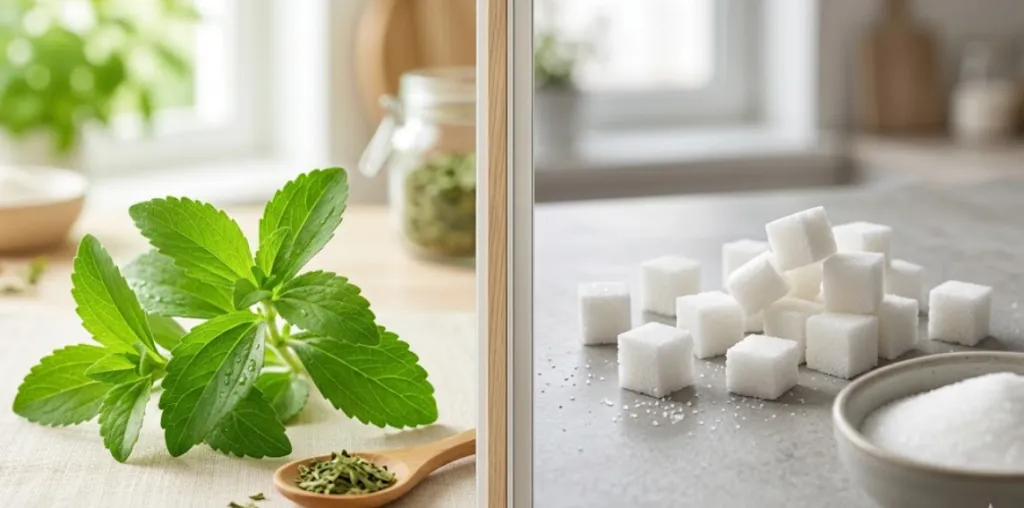
Before we can answer if stevia is better than sugar, we have to understand what it actually is. Unlike artificial sweeteners like aspartame or sucralose, which are birthed in a lab, stevia comes from the Stevia rebaudiana plant. This bushy herb is native to South America, where people have used its leaves to sweeten teas for centuries. 🍃
- Steviol Glycosides: The magic happens in the leaves. They contain compounds called steviol glycosides—most notably Rebaudioside A (Reb A) and Stevioside. These are the parts extracted to create the powder or liquid you buy.
- The Sweetness Scale: These glycosides are incredibly potent. Stevia is roughly 200 to 300 times sweeter than table sugar. This means you only need a tiny “pinch” to achieve the same sweetness as a full spoonful of sugar.
- The Processing Reality: It is important to note that the white powder in your pantry is highly refined. While it starts as a leaf, it undergoes a multi-step extraction process to remove the bitter aftertaste and concentrate the sweetness.
What Is Sugar (And Why It’s a Growing Problem)?
We all know what sugar is, but we often underestimate its biological cost. Most “table sugar” is sucrose, a disaccharide harvested from sugar cane or sugar beets. While it provides a quick burst of energy, it comes with a high metabolic price tag. 🍬
- Calorie Density: Sugar is “empty calories.” It provides energy but zero vitamins, minerals, or fiber. When you consume it in excess, your body has no choice but to store that surplus as fat.
- The Insulin Rollercoaster: When you eat refined sugar, your blood glucose levels spike almost instantly. Your pancreas then pumps out insulin to manage the surge. Over time, these constant “spikes and crashes” can lead to insulin resistance, a precursor to Type 2 diabetes.
- The Cravings Cycle: Sugar triggers a massive dopamine release in the brain’s reward center. This is why it’s so hard to stop at just one cookie; your brain is literally wired to seek out that “high” again and again.
Stevia vs Sugar: A Quick Comparison 📊
If you are looking for a fast answer on whether stevia is healthier than sugar, this comparison table breaks down the essential metrics.
| Feature | Table Sugar (Sucrose) | Stevia (Purified Extract) |
| Source | Sugar Cane / Beets | Stevia Plant Leaves 🌿 |
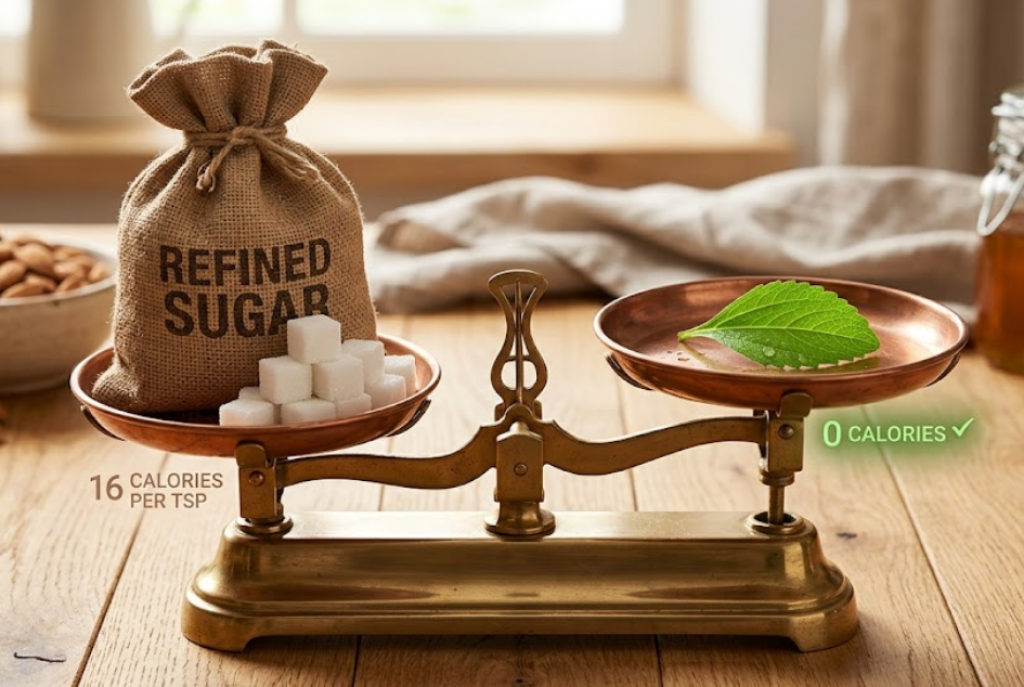
| Calories per tsp | 16 Calories | 0 Calories |
| Sweetness Level | Baseline (1x) | 200x – 300x Stronger |
| Blood Sugar Impact | High (High Glycemic Index) | None (Zero Glycemic Index) |
| Insulin Response | Significant Spike | Minimal to None |
| Tooth Decay | Promotes Cavities 🦷 | Non-Cariogenic (Safe for teeth) |
As the table shows, the immediate physiological impact of stevia is far lower than sugar. But calories aren’t the only part of the story. To truly understand the long-term effects on your weight and wellness, we need to dive into the “Honest Facts” of how your body processes these sweeteners.
Is Stevia Healthier Than Sugar? ⚖️
If you are looking for a simple “yes” or “no,” the answer is yes—with a few important caveats. In terms of immediate metabolic load, stevia is significantly healthier than sugar. It doesn’t rot your teeth, it doesn’t spike your insulin, and it doesn’t add a single calorie to your daily total. For someone struggling with obesity or Type 2 diabetes, switching to stevia can be a literal lifesaver.
However, being “healthier” doesn’t mean it is a “superfood.” While stevia is better for your blood glucose, it is still a highly refined extract. To get the most benefit, you have to look at your overall relationship with sweetness. If you use stevia to “justify” eating more processed keto cookies, you aren’t actually improving your health. The goal is to use stevia as a bridge to help you lower your overall sugar cravings, rather than just swapping one addiction for another. 🌉
Calories: Zero vs. High-Calorie Sweeteners 📉
The most obvious reason people ask is stevia healthier than sugar is the calorie count. On paper, it’s a total blowout.
- The Sugar Math: One teaspoon of white sugar contains about 16 calories. That doesn’t sound like much until you realize the average American consumes about 17 teaspoons of added sugar per day. That is an extra 272 calories daily, or roughly 28 pounds of potential weight gain per year just from sweetener alone! 🍬
- The Zero-Calorie Miracle: Stevia contains zero calories because your body doesn’t actually “digest” the steviol glycosides. They pass through your upper gastrointestinal tract and are broken down by bacteria in your colon, but they never enter your bloodstream as fuel.
- Impact on Weight Management: By replacing sugar with stevia, you create a “passive” calorie deficit. If you drink three cups of coffee a day with two teaspoons of sugar each, switching to stevia saves you nearly 100 calories a day without changing a single other habit.
Blood Sugar Impact: Why It Matters for Your Energy 🩸
Beyond the scale, the biggest reason to consider stevia vs sugar is your blood sugar stability. Have you ever felt that “afternoon slump” where you can barely keep your eyes open? That is usually a “sugar crash.”
- The Sugar Spike: When you eat sucrose, your blood sugar levels shoot up. Your pancreas panics and releases a flood of insulin to shove that sugar into your cells. This rapid drop in blood sugar is what causes the brain fog, shakiness, and intense hunger pangs that drive you back to the vending machine.
- Does Stevia Raise Blood Sugar? The short answer is no. Stevia has a Glycemic Index (GI) of 0. This means it has no measurable effect on your blood glucose levels. Studies have even shown that consuming stevia before a meal can help keep post-meal glucose levels lower than if you had used sugar or even some artificial sweeteners.
- The Diabetes Advantage: For those managing diabetes, stevia benefits are clear. It allows for the enjoyment of sweet flavors without the dangerous glucose volatility that leads to long-term complications. It provides a way to satisfy a “sweet tooth” while keeping your A1C levels in a healthy range.
Is Stevia Safe for Daily Use? (The Science of Safety) 🛡️
When people ask is stevia healthier than sugar, they often follow up with: “Is it actually safe?” It is a fair question. We have seen plenty of “wonder sweeteners” over the decades that were later linked to health concerns. However, stevia has undergone some of the most rigorous testing in the supplement world.
- The FDA Stance: The U.S. Food and Drug Administration (FDA) has granted “High-Purity Steviol Glycosides” a status known as GRAS (Generally Recognized as Safe). This applies specifically to the purified extracts like Reb A, not the crude whole-leaf stevia or “green” stevia extracts.
- The 95% Rule: For a stevia product to be considered safe for daily use, it must be at least 95% pure glycosides. This purity ensures that the “bitter” or potentially bioactive compounds found in the raw leaf are removed, leaving only the sweet, inert molecules behind. ✅
- Decades of Data: Unlike newer synthetic chemicals, stevia has a long history of human consumption in Japan and South America. Large-scale reviews have consistently found no link between purified stevia and cancer, birth defects, or organ damage when used in moderation.

How Much Stevia Is Safe Per Day? ⚖️
While it is safe, there is still an “upper limit” for everything—even water! The World Health Organization (WHO) and the FDA have established an Acceptable Daily Intake (ADI) for stevia to ensure you aren’t overtaxing your system.
- The Magic Number: The ADI for steviol glycosides is 4 milligrams per kilogram of body weight. 📊
- The “27 Packets” Rule: To put that into perspective, an average 150-pound adult would need to consume about 27 to 30 packets of stevia sweetener every single day to hit that limit. Most people use maybe two or three packets in their morning coffee or tea.
- Why Limits Matter: Staying within these guidelines ensures that your body can process and excrete the steviol components through your urine without any buildup. Unless you are baking an entire bakery’s worth of treats and eating them yourself, you are likely well within the safety zone.
Does Stevia Help With Weight Loss? 🏃♀️
The number one reason people switch to stevia for weight loss is the hope that “zero calories” equals “zero fat.” While the math seems simple, human biology is a bit more complex.
- The Calorie Swap: If you currently drink two sodas a day (about 300 calories) and switch to stevia-sweetened sparkling water, you are cutting 2,100 calories a week. That is nearly a pound of fat lost every two weeks just from one swap. 📉
- The “Compensation” Trap: Here is the catch: some studies suggest that when we taste “sweet” but get no calories, our brain feels “cheated.” This can lead to increased hunger later in the day. To make stevia benefits work for weight loss, you must pair the switch with a diet rich in protein and fiber to keep your satiety levels high.
- Appetite Regulation: On the positive side, stevia does not trigger the massive insulin spike that sugar does. Since insulin is your “fat-storage hormone,” keeping it low makes it much easier for your body to access and burn its own fat stores for energy.
Stevia and Diabetes: Is It a Better Choice? 🩺
For the millions living with pre-diabetes or Type 2 diabetes, the question of is stevia healthier than sugar isn’t just about weight—it’s about survival.
- Glycemic Control: Because stevia has a Glycemic Index of 0, it allows diabetics to enjoy sweet flavors without the dangerous glucose “spikes” that damage blood vessels and nerves over time.
- Post-Prandial Benefits: Some fascinating research suggests that stevia might actually improve how your body handles a meal. In one study, participants who took stevia before a meal had significantly lower blood sugar and insulin levels after eating compared to those who used sugar or aspartame. 🧪
- The Insulin Sensitivity Factor: By reducing the total “sugar load” on your pancreas, you give your body a chance to regain its sensitivity to insulin. While it isn’t a “cure” for diabetes, it is one of the most powerful tools in a diabetic-friendly pantry.
Potential Side Effects of Stevia 🤢
Is stevia healthier than sugar? Usually, yes. But it isn’t perfect for everyone. To maintain a truly honest perspective, we have to talk about the “dark side” of this green leaf. While it won’t spike your blood sugar, it can cause some localized “turbulence” in your body.
- Digestive Disruption: Some people report bloating, gas, or even nausea after consuming stevia. This is often because the body isn’t used to processing high concentrations of glycosides. If you have a “sensitive” stomach, you might want to start with a very small dose. 🚽
- The “Bitter” Aftertaste: This is the most common complaint. Because stevia is so potent, it can trigger the bitter taste receptors on the back of your tongue. Many people describe it as a “metallic” or “licorice” lingering flavor. 👅
- Blood Pressure and Blood Sugar: Because stevia can naturally lower blood pressure and glucose, people already taking medication for these conditions should be cautious. You don’t want your levels to dip too low (hypoglycemia or hypotension) by doubling up on the “lowering” effect.
Stevia and Gut Health: What We Know (And What We Don’t) 🦠
This is one of the most debated topics in the stevia vs sugar world. Our gut microbiome—the trillions of bacteria living in our intestines—dictates everything from our mood to our immune system. How does stevia affect them?
- The Sugar Damage: We know for a fact that refined sugar feeds “bad” bacteria and yeast (like Candida), leading to inflammation and a leaky gut. 🛡️
- The Stevia Study: Early research on stevia and the microbiome is a bit of a “mixed bag.” Some studies suggest that stevia is “neutral”—meaning the bacteria ignore it. Other emerging research suggests it might slightly alter the communication between certain bacterial species.
- The Verdict: Compared to artificial sweeteners like saccharin (which has been shown to negatively alter gut bacteria), stevia appears to be much safer for your “inner garden.” However, if you notice increased bloating, your specific microbiome might not be a fan of the extract. 🧪
Stevia vs Artificial Sweeteners: Which Is the Winner? 🏆
When people ask is stevia healthier than sugar, they are often also comparing it to the “blue” and “pink” packets at the diner.
- Stevia vs Aspartame: Aspartame is synthetic and has been linked (controversially) to everything from headaches to mood swings. Stevia is plant-derived and generally considered more “bio-compatible” by functional medicine experts.
- Stevia vs Sucralose: Sucralose (Splenda) is a chlorinated sugar molecule. While it tastes more like “real” sugar than stevia, some studies suggest it can reduce beneficial gut bacteria by up to 50%. 📉
- The Natural Advantage: Because stevia is a botanical extract, it doesn’t carry the “chemical” stigma of laboratory sweeteners. For those seeking a “clean label” lifestyle, stevia is almost always the preferred choice over synthetic alternatives.
Pure Stevia vs Stevia Blends: Read the Label! 🔍
This is the biggest “gotcha” in the sweetener aisle. Most products labeled “Stevia” are actually 99% something else.
- The Erythritol Blend: Many brands blend stevia with erythritol (a sugar alcohol) to bulk it up so it measures 1:1 like sugar. While erythritol is generally safe, it can cause significant bloating in high doses. 💨
- The Dextrose/Maltodextrin Trap: Some “budget” stevia packets use dextrose (which is literally sugar!) as a filler. If you are a diabetic using these, you might see a blood sugar spike despite the “Stevia” label.
- How to Choose: Look for “Pure Stevia Extract” or “Organic Stevia.” If the first ingredient isn’t stevia, you are buying a blend. For the best health results, the shorter the ingredient list, the better.
Can You Use Stevia for Cooking and Baking? 🧁
If you have decided that is stevia healthier than sugar for your lifestyle, the next hurdle is the kitchen. Sugar does more than just sweeten; it provides bulk, browning (caramelization), and moisture to your favorite treats. Stevia is a different beast entirely.
- The Heat Stability Factor: Good news! Purified stevia is heat-stable up to 392°F (200°C). This means it won’t lose its sweetness or turn toxic in the oven like some artificial sweeteners. 🔥
- The “Bulk” Challenge: Because stevia is so concentrated, you cannot simply swap one cup of sugar for one cup of stevia. If you do, your cake will be a tiny, bitter puck. You need “bulking agents” like applesauce, yogurt, or almond flour to make up the missing volume.
- Conversion Tips: As a general rule, 1 teaspoon of liquid or powdered stevia equals about 1 cup of sugar. Always check the specific brand’s conversion chart, as many “baking blends” are pre-mixed to measure 1:1.
- No Browning: Stevia does not caramelize. If you are making a crème brûlée or looking for that golden-brown cookie edge, stevia won’t give it to you. You might need to add a teaspoon of molasses or honey if the “look” of the bake is critical. 🍪
Who Should Avoid Stevia? 🚫
While the FDA considers it “Generally Recognized as Safe,” certain individuals should exercise caution. Even the best natural sugar alternatives can interact with specific health profiles.
- Low Blood Pressure Patients: Because stevia can act as a natural vasodilator, it may further lower blood pressure. If you are already on antihypertensive meds, monitor for dizziness.
- Diabetics on Insulin: While stevia is great for blood sugar, it can be too effective. If you use it heavily while on insulin, you may need to adjust your dosage to avoid hypoglycemia (low blood sugar). 📉
- The “Ragweed” Allergy Connection: Stevia is part of the Asteraceae family. If you are highly allergic to ragweed, marigolds, or daisies, you might experience a cross-reactive allergic response to stevia.
- Severe Digestive Issues: Those with IBD or severe IBS may find that the glycosides—or common fillers like erythritol—trigger a flare-up. 🏥
FAQs: Your Stevia Questions Answered 💡
Is stevia better than sugar for weight loss?
Yes. By eliminating 16 calories per teaspoon, stevia helps create a calorie deficit. However, it only works if you don’t “compensate” by eating more calories elsewhere.
Can stevia spike insulin?
Most studies show that pure stevia has zero impact on insulin. However, some “stevia blends” containing maltodextrin or dextrose can cause a minor insulin response. Always read the label! 🔍
Is stevia safe for kids?
Yes, in moderation. It can be a great way to reduce a child’s total sugar intake, which helps prevent childhood obesity and cavities.
Can you use stevia daily?
Absolutely. As long as you stay under the ADI (about 27-30 packets for an adult), daily use is considered safe by the FDA and WHO. ✅
Does stevia cause bloating?
For some, yes. This is usually due to the high concentration of glycosides or the presence of “sugar alcohol” fillers like erythritol in the blend.
Final Verdict: Should You Replace Sugar With Stevia? 🏁
So, the big question: is stevia healthier than sugar?
The evidence is clear. If your goal is to lose weight, stabilize your blood sugar, protect your teeth, and reduce systemic inflammation, stevia is the superior choice. It offers a plant-based way to satisfy your cravings without the metabolic “tax” that refined sugar imposes on your liver and pancreas. 🌿
However, remember that balance is the ultimate health hack. Don’t view stevia as a license to eat unlimited processed “sugar-free” snacks. Instead, use it to sweeten your whole foods—like plain Greek yogurt, homemade oatmeal, or herbal tea. By making the switch, you aren’t just cutting calories; you are taking control of your energy and your long-term wellness.
Reference
- Additional Information about High-Intensity Sweeteners
- Non-Nutritive Sweeteners (Artificial Sweeteners)
- Stevia: Can It Help With Weight Loss?
- Stevia Leaf to Stevia Sweetener
- Effect of Stevia on Glycemic and Insulinemic Responses