Imagine if you could turn down the volume on the constant “mental chatter” about food—the cravings for late-night snacks or the urge to finish a plate even when you’re full. For millions of Americans, a new class of medications called GLP-1s is doing exactly that.
GLP-1 is a naturally occurring hormone in the body that plays a key role in regulating appetite, blood sugar, and digestion. In recent years, GLP-1 has become a household term thanks to its use in medications for type 2 diabetes and weight management. But what exactly is GLP-1, and why is it generating so much attention in the health and wellness world?
For beginners, understanding GLP-1 can feel overwhelming, with terms like Ozempic, Wegovy, and Mounjaro being thrown around alongside discussions of microdosing and weight-loss patches. This guide is designed to break it all down in simple, easy-to-understand language.
You’ll learn how GLP-1 works in the body, the medications that mimic its effects, their potential benefits, and what to consider before starting therapy. By the end, you’ll have a clear understanding of GLP-1 and how it fits into modern approaches to health, weight, and metabolic wellness.
What Is GLP-1? (The Gut-Brain Connection)
Glucagon-like peptide-1 (GLP-1) is a hormone naturally produced in your small intestine. In the medical world, we call it an “incretin.” Its job is simple: it tells your body that food has arrived and it’s time to manage it.
Natural GLP-1 vs. GLP-1 Medications
Your body’s natural GLP-1 is a “short-order cook”—it arrives quickly but disappears in minutes. GLP-1 medications (receptor agonists) are engineered to be “marathon runners.” They mimic the natural hormone but stay active in your system for a week (in the case of injections) or 24 hours (for daily pills).
GLP-1 is a hormone released by the gut after eating that regulate blood sugar, appetite, digestion, and insulin release. GLP-1 medications are synthetic versions that last longer in the body to help manage weight and diabetes.
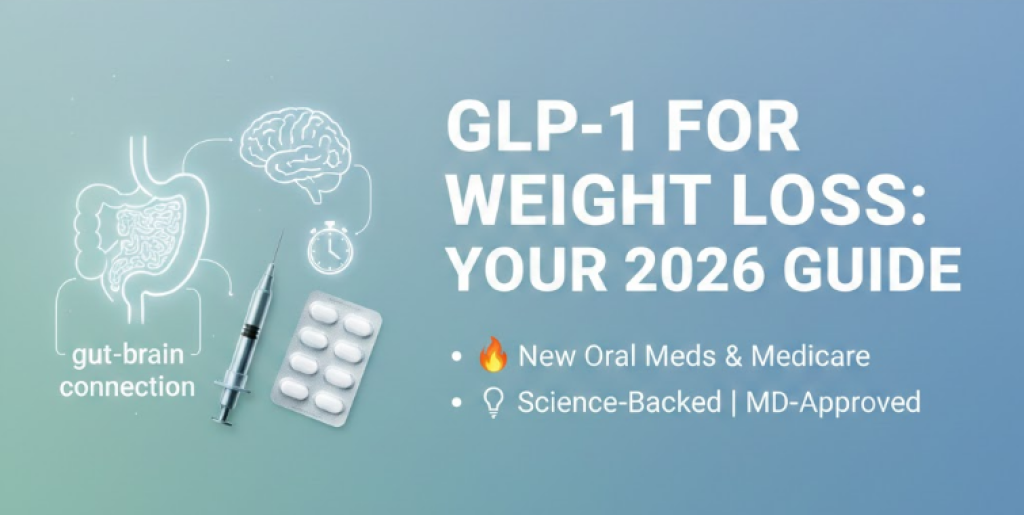
How Does GLP-1 Work in the Body?
As an MD, I often explain GLP-1 as a “triple-threat” for metabolic health. It doesn’t just work in one place; it coordinates a full-body response.
- The Brain (The Hunger Switch): GLP-1 targets the hypothalamus to increase feelings of fullness and decrease “food noise”—those intrusive, constant thoughts about eating.
- The Stomach (The Slow-Down): It induces delayed gastric emptying. This means food stays in your stomach longer, physically keeping you satisfied for hours after a meal.
- The Pancreas (The Sugar Manager): It prompts the release of insulin when blood sugar rises and prevents the liver from dumping extra sugar into the blood.
What Are GLP-1 Medications?
The term “GLP-1” is often used as a catch-all, but there are several distinct medications approved by the FDA for different uses.
FDA-Approved GLP-1 and Dual-Agonists
- Semaglutide (Ozempic/Wegovy): The most famous GLP-1. Wegovy is now available in both weekly injections and a new once-daily tablet (25mg and 50mg) as of 2026.
- Tirzepatide (Mounjaro/Zepbound): This is a dual-agonist. It mimics GLP-1 and GIP (another gut hormone), which often leads to even greater weight loss results.
- Liraglutide (Saxenda/Victoza): An older, daily injection. While less potent than semaglutide, it is a reliable option for those who prefer a shorter-acting medication.
- Dulaglutide (Trulicity): Primarily used for Type 2 Diabetes management.
What They Are Prescribed For
- Type 2 Diabetes: To lower A1c and protect heart health.
- Chronic Weight Management: For adults with a BMI $\ge$ 30, or $\ge$ 27 with a condition like high blood pressure or sleep apnea.
- Cardiometabolic Risk: Wegovy is specifically approved to reduce the risk of heart attack and stroke.
Is Ozempic, Wegovy, or Mounjaro a GLP-1?
This is the “People Also Ask” (PAA) question I hear daily. The answer is yes—but they are categorized differently.
| Medication | Active Ingredient | GLP-1? | FDA Use | Weekly? | Weight Loss Power |
| Ozempic | Semaglutide | Yes | Diabetes | Yes | Moderate-High |
| Wegovy | Semaglutide | Yes | Weight Loss | Yes/Oral | High |
| Mounjaro | Tirzepatide | Yes + GIP | Diabetes | Yes | Very High |
| Zepbound | Tirzepatide | Yes + GIP | Weight Loss | Yes | Very High |
Medical Distinction: Using Ozempic for weight loss is considered “off-label” use because it is technically approved for diabetes, even though it contains the same ingredient as Wegovy.
Which GLP-1 Is Best for Weight Loss?
In 2026, the “best” medication depends on your individual biology and goals.
- The Power Leader: Clinical trials (like SURMOUNT-5) show that Tirzepatide (Zepbound) consistently leads to the highest percentage of weight loss, often reaching 21–25% of total body weight.
- The Convenience Leader: Oral Wegovy is the 2026 favorite for those who want to avoid needles.
- The Heart Health Leader: Semaglutide has the most robust data for preventing cardiovascular events in patients with obesity.
What Is Microdosing GLP-1? Is It Safe?
A growing 2026 trend involves “microdosing”—taking a tiny fraction (e.g., 0.1mg) of a GLP-1 to minimize side effects while trying to maintain weight.
Clinical Warning: Microdosing is not FDA-approved. Taking sub-therapeutic doses can be dangerous because it may suppress your appetite enough to cause muscle loss without actually fixing your metabolic health. It can lead to a “skinny fat” phenotype where you lose strength but keep visceral fat. Always follow the titration schedule set by your clinician.
Is Metformin a GLP-1?
No. This is a common misconception.
- Metformin is an oral medication that makes your body more sensitive to insulin and reduces sugar production in the liver.
- GLP-1s are hormones that slow digestion and signal the brain.
Doctors often prescribe them together because they work through completely different pathways to provide a “one-two punch” for weight loss.
Do GLP-1 Patches Work?
If you see an ad for a “GLP-1 Weight Loss Patch” in 2026, be extremely cautious.
- The Science: GLP-1 molecules are “large peptides.” They are too big to be absorbed through the skin via a simple adhesive patch.
- The Truth: Most of these patches are unregulated supplements containing green tea or berberine. They do not contain semaglutide or tirzepatide.
- FDA Status: There are zero FDA-approved GLP-1 patches.
What Insurance Covers GLP-1 for Weight Loss?
Access changed dramatically in early 2026.
- Medicare (2026 BALANCE Pilot): For the first time, Medicare Part D plans may cover weight loss drugs for “high metabolic risk” patients (BMI >27 with heart disease or BMI >35). Copays are capped at $50/month.
- Commercial Insurance: Most employers now require “Prior Authorization.” You must show you’ve tried lifestyle changes for at least 3-6 months.
- Cash-Pay (TrumpRx): New 2026 direct-to-consumer platforms have lowered out-of-pocket costs to approximately $245 – $350 per month for brand-name injections.
Side Effects, Risks, and Safety
The most common side effects are gastrointestinal (Nausea, Vomiting, Constipation). However, 2026 research highlights two specific risks:
- Sarcopenia (Muscle Loss): Because you eat so much less, your body may burn muscle for fuel. A high-protein diet (1.2g/kg of body weight) is non-negotiable.
- Gallbladder Issues: Rapid weight loss increases the risk of gallstones.
Contraindications: You should not use GLP-1s if you have a personal or family history of Medullary Thyroid Cancer or MEN 2 syndrome.
Important Safety Warnings
These are powerful medical tools, not “magic shots.”
- Muscle Loss: Because you eat less, you risk losing muscle. You must prioritize protein and do some light strength training (even just walking) to keep your metabolism strong.
- Who should avoid it? If you or your family have a history of a rare type of thyroid cancer (Medullary Thyroid Carcinoma) or pancreatitis, these meds are usually not recommended.
Natural GLP-1 Boosters
While the headlines are dominated by prescription “weight loss shots,” your body is a naturally built laboratory capable of producing its own GLP-1. You don’t always need a needle to influence your hunger hormones; you can use your fork and your habits.
Can You Boost GLP-1 Naturally? (Quick Answer)
Yes, you can support and increase your body’s natural GLP-1 production through specific food choices, lifestyle changes, and gut-friendly habits.
Natural GLP-1 boosters work by stimulating the L-cells in your gut to release more satiety hormones. While these strategies are highly effective for metabolic health, they provide a gentler, more physiologic “boost” compared to the high-potency pharmacological levels found in medications like Ozempic or Wegovy.
How Natural GLP-1 Boosting Works
Boosting GLP-1 naturally is all about “nutrient sensing.” When you eat, specialized cells in your small intestine (called L-cells) act like sensors. When they detect certain nutrients—specifically soluble fiber, amino acids from protein, and healthy fats—they trigger the release of GLP-1 into your bloodstream.
Additionally, a huge portion of your GLP-1 production happens in the colon. When you eat fiber, your gut bacteria ferment it into Short-Chain Fatty Acids (SCFAs) like butyrate. These SCFAs are like “fuel” for your GLP-1 production, signaling your brain that you are satisfied long after you’ve finished eating.
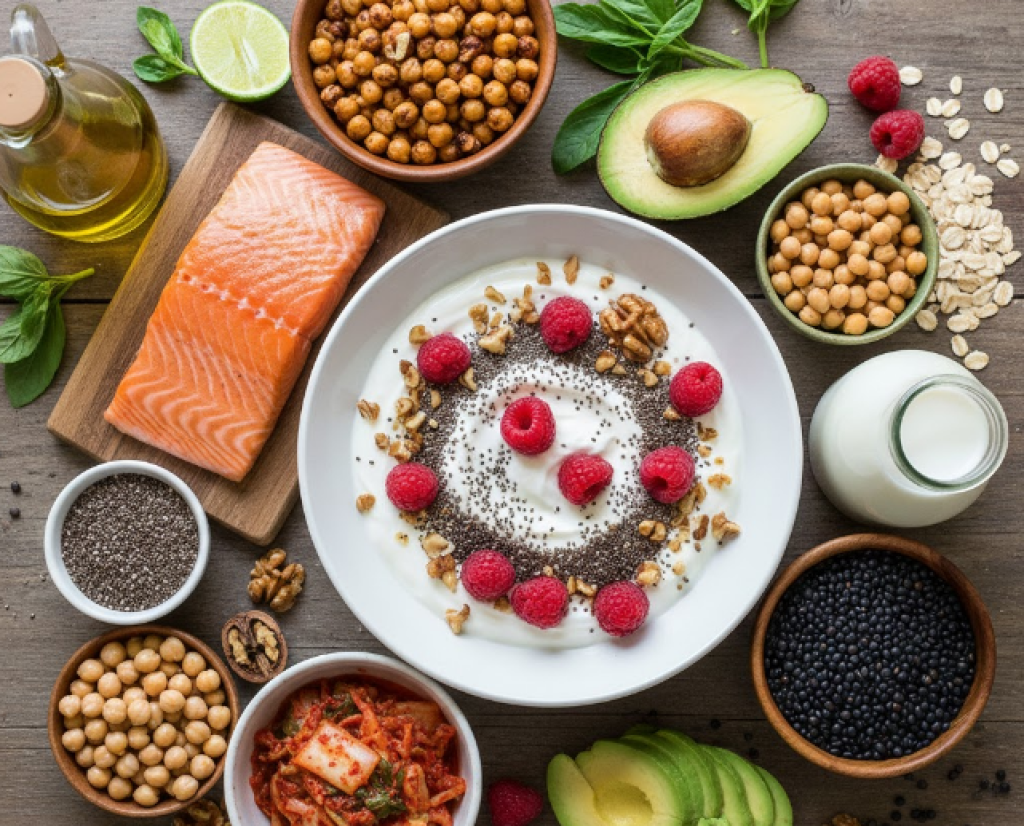
Foods That May Help Stimulate GLP-1 Naturally
🍽️ 1. High-Protein Foods
Protein is one of the strongest triggers for GLP-1. Research shows that lean proteins—especially when paired with calcium—significantly enhance hormone release.
- Best sources: Eggs (especially egg whites), Greek yogurt, chicken, turkey, and tofu.
🥑 2. Healthy Fats
Monounsaturated fats and Omega-3s slow down “gastric emptying” (how fast food leaves your stomach), which keeps GLP-1 levels elevated for a longer duration.
- Best sources: Avocado, extra virgin olive oil, walnuts, and wild-caught salmon.
🥦 3. Soluble Fiber & Resistant Starch
Soluble fiber dissolves into a gel-like substance that slows sugar absorption and triggers GLP-1. Resistant starch (found in cooled potatoes or legumes) is even more powerful, as it ferments in the gut to produce those all-important SCFAs.
- Best sources: Oats, barley, lentils, chia seeds, and raspberries.
🧑🌾 4. Fermented Foods
A healthy gut microbiome is essential for GLP-1 signaling. Fermented foods introduce beneficial bacteria that help maintain the “environment” needed for your L-cells to work properly.
- Best sources: Kefir, kimchi, sauerkraut, and kombucha.
Example Foods & GLP-1 Support
| Food Type | Examples | How It May Help GLP-1 |
| High Protein | Eggs, Greek yogurt, Lean turkey | Directly triggers L-cell secretion |
| Fiber/Starch | Oats, Lentils, Chickpeas | Produces SCFAs via gut fermentation |
| Healthy Fats | Avocado, Olive oil, Salmon | Slows digestion & sustains hormone levels |
| Fermented | Kefir, Kimchi, Miso | Improves gut microbiome signaling |
Lifestyle Habits That Influence GLP-1
It’s not just what you eat, but how you live that determines your hormone balance.
- Regular Exercise: Both aerobic (walking, swimming) and resistance training (weight lifting) have been shown to improve the body’s sensitivity to GLP-1.
- Prioritize Sleep: Sleep deprivation increases ghrelin (the hunger hormone) and crashes your GLP-1 levels. Aim for 7–9 hours to keep your “fullness” signals sharp.
- Manage Stress: Chronic cortisol (stress hormone) can actually blunt your gut’s ability to release GLP-1, leading to “stress eating.”
- Sequential Eating: Try eating your vegetables and protein first, and your carbohydrates last. This simple “food hack” can lead to a higher GLP-1 response compared to eating carbs first.
What This Means for You
Natural GLP-1 boosters are a fantastic way to regain control over your appetite and improve your metabolic health. However, it is important to manage expectations: natural methods provide a background support system, whereas medications provide a system-wide override.
If you are already on a prescription GLP-1, these natural strategies are even more vital—they help you maintain muscle mass and ensure that your gut health stays optimal during your weight loss journey.
Supplements That May Support Metabolic Health Alongside GLP-1 Therapy
While GLP-1 medications like Ozempic, Wegovy, and Mounjaro are prescription treatments for type 2 diabetes and weight management, some people explore supplements that support metabolic health, appetite regulation, and blood sugar management. It’s important to note that these products are not GLP-1 medications and cannot replace prescription therapy. They may, however, complement a healthy diet, exercise, and prescribed GLP-1 therapy. Always consult your healthcare provider before adding supplements.
Popular Metabolic and Blood Sugar Support Supplements
| Product | Purpose | Key Benefit | Disclaimer |
| GLPro Blood Sugar & Metabolic Support Supplement | Blood sugar & metabolism | Supports healthy glucose levels and energy balance | Not a GLP-1 medication |
| CelluCare Blood Sugar Support Supplement | Blood sugar regulation | Helps maintain balanced glucose metabolism | Not a GLP-1 medication |
| Glucoberry Blood Sugar Support | Metabolic wellness | Promotes glucose and appetite support | Not a GLP-1 medication |
| SugarMUTE Blood Sugar Control Supplement | Blood sugar support | Supports healthy sugar metabolism | Not a GLP-1 medication |
| GlycoMute Blood Sugar Management Supplement | Glucose metabolism | May help regulate appetite and energy | Not a GLP-1 medication |
| Gluco Extend Blood Sugar Support | Blood sugar & energy | Supports overall metabolic health | Not a GLP-1 medication |
| Plantsulin Diabetes Support Supplement | Glucose metabolism | Aims to support healthy blood sugar levels | Not a GLP-1 medication |
| Sugar Defender Blood Sugar Support | Blood sugar support | Helps maintain healthy glucose ranges | Not a GLP-1 medication |
These supplements often contain natural ingredients like berberine, cinnamon extract, chromium, green tea extract, and other botanicals traditionally associated with blood sugar and metabolic support. While scientific evidence varies, many users report better appetite control, energy levels, and glucose management when these supplements are used alongside lifestyle strategies such as balanced meals, regular exercise, and adequate sleep.
FAQ: Common Beginner Questions
“Will I gain the weight back if I stop?”
Research suggests that obesity is a chronic condition. If you stop the “messenger” (the drug), the food noise often returns. Most doctors now view these as long-term support tools, similar to blood pressure medication.
“Can I get them from a ‘Peptide’ website or a Patch?”
No. Beware of 2026 internet scams. “GLP-1 Patches” do not work, and “Research Chemicals” from online shops can be dangerous. Always get your prescription from a licensed pharmacy.
References
- Healthline – Foods That Increase GLP‑1
https://www.healthline.com/health/foods-that-increase-glp-1 - Ohio State Health – Boosting GLP‑1 Naturally
https://health.osu.edu/wellness/exercise-and-nutrition/activiating-glp-1-naturally - PubMed – Nutritional Modulation of GLP‑1 Secretion
https://pubmed.ncbi.nlm.nih.gov/27990172/ - WebMD – Natural GLP‑1 Boosters
https://www.webmd.com/obesity/features/natural-glp1-boosters - Diabetes.co.uk – How to Increase GLP‑1 Levels Naturally
https://www.diabetes.co.uk/diet/boosting-glp-1-how-to-increase-glp-1-levels-naturally.html