- What is it? Doxycycline is a powerful tetracycline antibiotic used to treat a wide array of bacterial infections.
- What it treats: Commonly prescribed for acne, Lyme disease, Chlamydia, and respiratory infections.
- The Mechanism: It is bacteriostatic, meaning it stops bacteria from reproducing rather than killing them instantly.
- Key Distinction: It is not a penicillin, making it a vital alternative for patients with penicillin allergies.
- Pro-Tip: Always complete the full course to prevent antibiotic resistance.
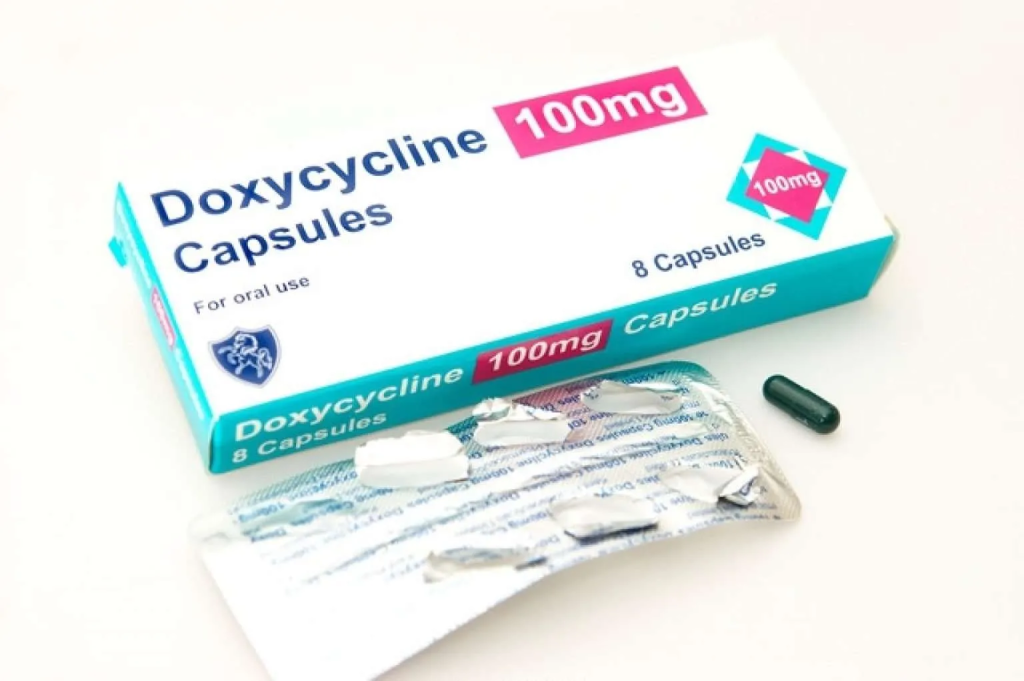
What Is Doxycycline?
What is the drug doxycycline? In the medical world, Doxycycline is a versatile, broad-spectrum antibiotic belonging to the tetracycline class. First patented in 1957, it has remained a “gold standard” in 2026 due to its ability to penetrate tissues and treat bacteria that live inside human cells.
Doxycycline is a prescription tetracycline antibiotic used to treat bacterial infections including acne, respiratory infections, sexually transmitted infections, and tick-borne diseases. It works by stopping bacteria from multiplying rather than directly killing them.
Is Doxycycline an Antibiotic?
Yes. Doxycycline is a bacteriostatic antibiotic. Unlike bactericidal antibiotics (like penicillin or amoxicillin) that puncture bacterial cell walls to kill them, Doxycycline acts like a “brake pedal.” It halts the growth of the bacterial population, allowing your body’s own immune system to finish the job.
Bacteriostatic vs. Bactericidal
| Type | How It Works | Common Example |
| Bacteriostatic | Inhibits growth/replication | Doxycycline |
| Bactericidal | Kills bacteria directly | Amoxicillin |
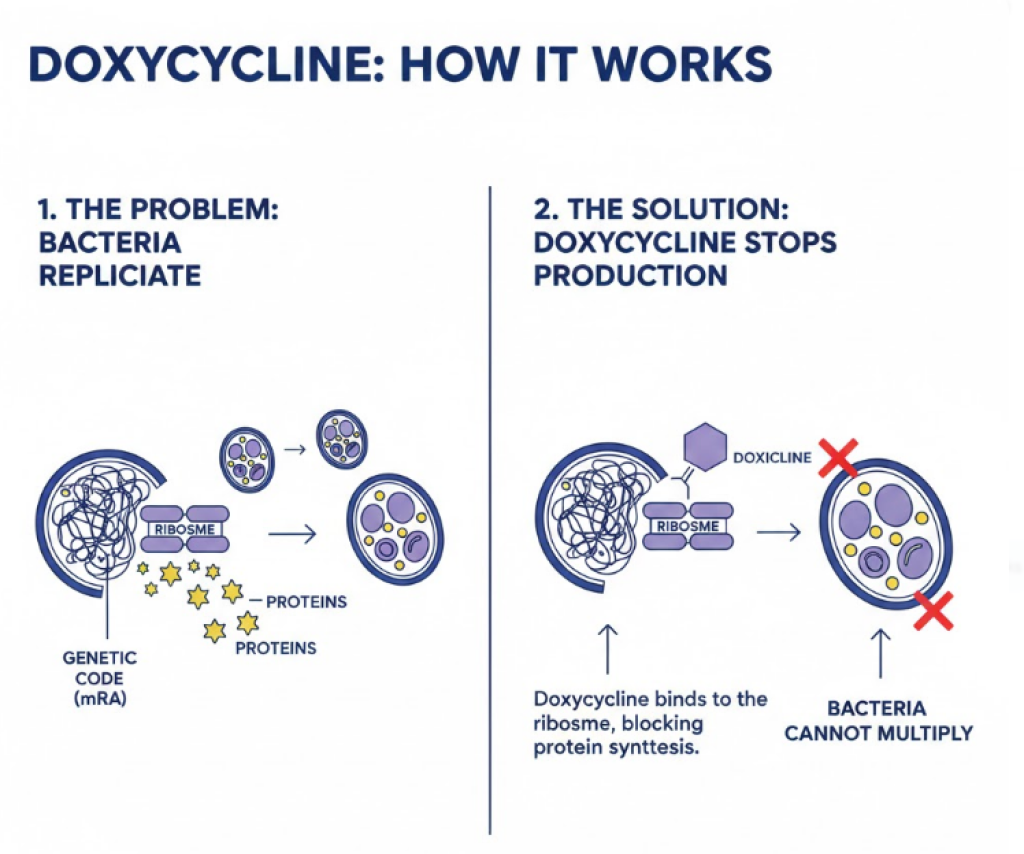
How Doxycycline Works (Mechanism of Action)
To understand how doxycycline works, you have to look at the “protein factories” inside bacteria, called ribosomes.
Bacteria need proteins to survive and multiply. Doxycycline enters the bacterial cell and binds to the 30S ribosomal subunit. By doing this, it physically blocks the bacteria from reading their own genetic code to create proteins. Without these proteins, the bacteria cannot replicate.
The Anti-Inflammatory Bonus
Unique to Doxycycline is its anti-inflammatory properties. In 2026, it is frequently used at “sub-antimicrobial” doses (low doses that don’t kill bacteria) to treat skin conditions like Rosacea because it reduces the body’s inflammatory response.
What Does Doxycycline Treat?
Because Doxycycline can reach deep into the skin, lungs, and reproductive system, its uses are incredibly diverse.
- Moderate to Severe Acne: It reduces the P. acnes bacteria and calms the redness of cystic acne.
- Sexually Transmitted Infections (STIs): It is a first-line treatment for Chlamydia and Syphilis (for those allergic to penicillin).
- Tick-Borne Illnesses: Doxycycline is the “drug of choice” for Lyme Disease, Rocky Mountain Spotted Fever, and Ehrlichiosis.
- Respiratory Infections: It treats “atypical” pneumonia and chronic bronchitis flare-ups.
- Malaria Prevention: Travelers often take it daily to prevent malaria in high-risk zones.
Is Doxycycline a Penicillin?
No. This is a critical distinction for patient safety. Doxycycline belongs to the tetracycline class, which has a completely different chemical structure than the beta-lactam class (penicillins).
If you have a penicillin allergy, Doxycycline is often one of the first alternatives your doctor will consider. However, if you are allergic to other tetracyclines (like Minocycline), you must avoid Doxycycline as well.
Is Doxycycline a “Strong” Antibiotic?
Patients often ask if Doxycycline is “strong.” In medicine, we don’t use the word “strong”—we use “spectrum.” Doxycycline is a broad-spectrum antibiotic, meaning it works against a wide variety of “Gram-positive” and “Gram-negative” bacteria. It is particularly “strong” against unusual bacteria that other antibiotics can’t touch, such as those that cause Lyme disease or Chlamydia.
Read more: Is Doxycycline a Powerful Antibiotic? All That You Need to Know
Doxycycline Forms: Hyclate vs. Monohydrate
You may see two different names on your pill bottle:
- Doxycycline Hyclate: Typically cheaper and dissolves faster in the stomach.
- Doxycycline Monohydrate: Usually slightly more expensive but is often gentler on the stomach, leading to less nausea.
Side Effects of Doxycycline: What’s Normal and What’s Not
Understanding the side effect profile of your medication is the best way to ensure you complete your treatment safely. While most people tolerate the drug well, there are specific “quirks” to Doxycycline that every patient should know.
What Are the Most Common Side Effects of Doxycycline?
Most people will experience only mild symptoms. These usually occur because the medication is quite acidic and can be harsh on the lining of the digestive tract.
Common Side Effects (Usually Mild):
- Nausea and Upset Stomach: The most frequent complaint.
- Mild Diarrhea: A result of the shift in gut bacteria.
- Loss of Appetite: Often linked to the slight nausea and weight loss.
- Photosensitivity: An increased risk of sunburn.
- Headache: Usually mild and manageable.
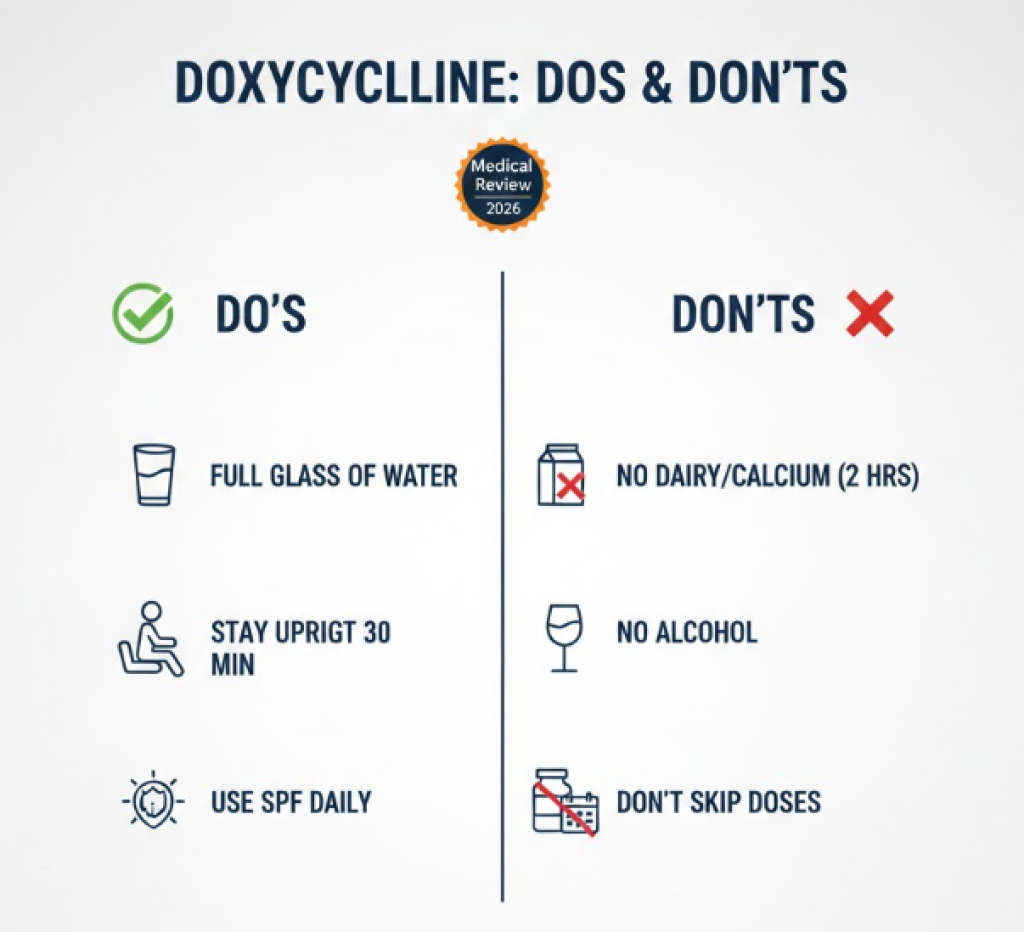
Pro-Tip: If you experience stomach upset, ask your doctor if you can take your dose with a small, non-dairy snack (like a piece of toast). Taking it with a full glass of water is non-negotiable for preventing throat irritation.
Does Doxycycline Make You Tired?
A common question among patients is: Does doxycycline make you tired? Technically, Doxycycline is not a sedative and does not cross the blood-brain barrier in a way that causes drowsiness. However, feeling “wiped out” while on the drug is common for two reasons:
- The Infection Factor: Your immune system is working overtime to fight the bacteria, which consumes a massive amount of metabolic energy.
- Nutrient Absorption: If the drug is causing mild nausea or loss of appetite, your calorie intake might drop, leading to lower energy levels.
Photosensitivity: Why You Sunburn More Easily
Doxycycline is “photo-reactive.” When the drug is in your system, it absorbs UV light and can cause a chemical reaction in your skin cells.
- The Risk: You can get a severe sunburn in as little as 15 minutes, even on a cloudy day.
- The Solution: Wear broad-spectrum SPF 30+ daily and avoid tanning beds entirely while on the medication. This sensitivity typically disappears a few days after your last dose.
Read more: Doxycycline & Sunburn: All You Need to Know
Can Doxycycline Cause a Yeast Infection?
Yes—this is a common secondary effect. Because Doxycycline is a broad-spectrum antibiotic, it doesn’t just target the “bad” bacteria; it can also reduce the “good” bacteria (Lactobacillus) that keep yeast in check.
Signs to watch for:
- Vaginal itching or unusual discharge.
- Oral Thrush: White patches on the tongue or inner cheeks.
- Increased discomfort in moist areas of the skin.
If you are prone to yeast infections, your doctor may suggest taking a probiotic or prescribe a one-time antifungal pill like Fluconazole.
Gastrointestinal Irritation & Esophagitis Risk
Doxycycline is highly erosive to delicate tissue. If a pill gets “stuck” in your esophagus and begins to dissolve there, it can cause Esophagitis (painful inflammation or ulcers).
The “30-Minute Rule”: * Always take your pill with at least 8 ounces of water.
- Remain upright (standing or sitting) for at least 30 minutes after taking it.
- Never take Doxycycline immediately before lying down for sleep or a nap.
Serious (But Rare) Side Effects
Seek immediate medical care if you experience:
- Intracranial Hypertension: A severe headache accompanied by blurred vision or “whooshing” sounds in the ears.
- Liver Issues: Yellowing of the skin or eyes (Jaundice).
- Severe Allergic Reaction: Hives, swelling of the face/throat, or difficulty breathing.
Read more: Doxycycline Ruined My Life: Could this Prescription Antibiotic be a Silent Killer?
How Long Do Doxycycline Side Effects Last?
If you’re wondering how long do doxycycline side effects last, the good news is that most are temporary.
- Digestive issues: Usually stop within 24–48 hours of your final dose.
- Sun sensitivity: Can last for 5–7 days after the last pill as the drug clears your skin tissues.
- Gut balance: It may take 2–4 weeks for your natural microbiome to fully recover. Eating fermented foods like yogurt (after you finish the course) can help speed this up.
When to Call Your Doctor
Contact your healthcare provider if you develop severe, watery diarrhea or stomach cramping. This could be a sign of C. difficile, a serious overgrowth of bacteria that requires separate treatment.
Remember: Never stop your antibiotic early without speaking to a professional, as this is the primary cause of antibiotic resistance.
Read more: Doxycycline Long Term Side Effects: 8 Possible Consequences
Who Should NOT Take Doxycycline?
Doxycycline is powerful, but it isn’t for everyone:
- Pregnant or Nursing Women: Doxycycline can cross the placenta and may cause permanent tooth discoloration (yellow-gray-brown) and bone growth issues in the developing fetus or infant.
- Children Under 8: Generally avoided for the same tooth-staining reasons, unless treating a life-threatening condition like Rocky Mountain Spotted Fever.
- People on Isotretinoin (Accutane): Taking these together can cause dangerous pressure in the brain (pseudotumor cerebri).
Safety & FDA Warning (YMYL Compliance)
Do not stop taking Doxycycline just because you feel better. If you stop early, the weakest bacteria die, but the strongest survive and learn how to fight the drug. This leads to Antibiotic Resistance, making future infections much harder to treat. Always take the full course as prescribed by your healthcare professional.
Additional Frequently Asked Questions
1. Why can’t you lie down after taking doxycycline?
You should not lie down for at least 30 minutes after taking doxycycline because it can irritate the esophagus and cause severe heartburn or chest pain. Staying upright and taking it with a full glass of water reduces this risk.
2. Can you take ibuprofen or Tylenol with doxycycline?
Yes. Most people can take ibuprofen (Advil) or acetaminophen (Tylenol) with doxycycline. There is no major interaction between these medications. However, avoid combining multiple NSAIDs and consult your healthcare provider if you have kidney, liver, or stomach conditions.
3. Does doxycycline affect birth control?
Doxycycline does not significantly reduce the effectiveness of hormonal birth control pills in most cases. However, if doxycycline causes vomiting or severe diarrhea, absorption of birth control pills may be reduced. Using backup contraception during illness is a cautious approach.
4. Why does doxycycline cause nausea or heartburn?
Doxycycline can irritate the stomach lining and esophagus. This is why many patients report nausea, acid reflux, or heartburn. Taking doxycycline with food (but not dairy) and remaining upright after dosing helps reduce these symptoms.
5. Is doxycycline safe during pregnancy?
Doxycycline is generally not recommended during pregnancy, especially in the second and third trimesters. It can affect fetal bone and tooth development. Pregnant individuals should consult their healthcare provider for safer antibiotic alternatives.
6. Does doxycycline expire, and can you take expired doxycycline?
Yes, doxycycline expires. Expired tetracycline-class antibiotics should not be taken, as degraded compounds may increase the risk of toxicity. Always check the expiration date and properly dispose of unused medication.
7. Where can I buy doxycycline? Is it over the counter?
Doxycycline is a prescription-only antibiotic in the United States and most countries. It cannot legally be purchased over the counter. Obtaining antibiotics without a prescription increases the risk of misuse and antibiotic resistance.
References
- CDC STI Treatment Guidelines (Chlamydia, Gonorrhea, etc.)
Centers for Disease Control and Prevention. Sexually Transmitted Infections Treatment Guidelines (2021, updated online).
https://www.cdc.gov/std/treatment-guidelines/default.htm - FDA Official Drug Label – Doxycycline Hyclate
U.S. Food & Drug Administration. Doxycycline Hyclate Prescribing Information (DailyMed).
https://dailymed.nlm.nih.gov/dailymed/search.cfm?query=doxycycline%20hyclate - NIH MedlinePlus – Doxycycline Drug Information
National Library of Medicine. Doxycycline: MedlinePlus Drug Information.
https://medlineplus.gov/druginfo/meds/a682063.html - PubMed – Mechanism of Action (Protein Synthesis Inhibition, Tetracyclines)
Chopra I, Roberts M. Tetracycline antibiotics: mode of action, applications, molecular biology, and epidemiology of bacterial resistance.
https://pubmed.ncbi.nlm.nih.gov/10515936/ - IDSA Clinical Practice Guidelines
Infectious Diseases Society of America. Practice Guidelines (searchable database including doxycycline-relevant infections).
https://www.idsociety.org/practice-guideline/