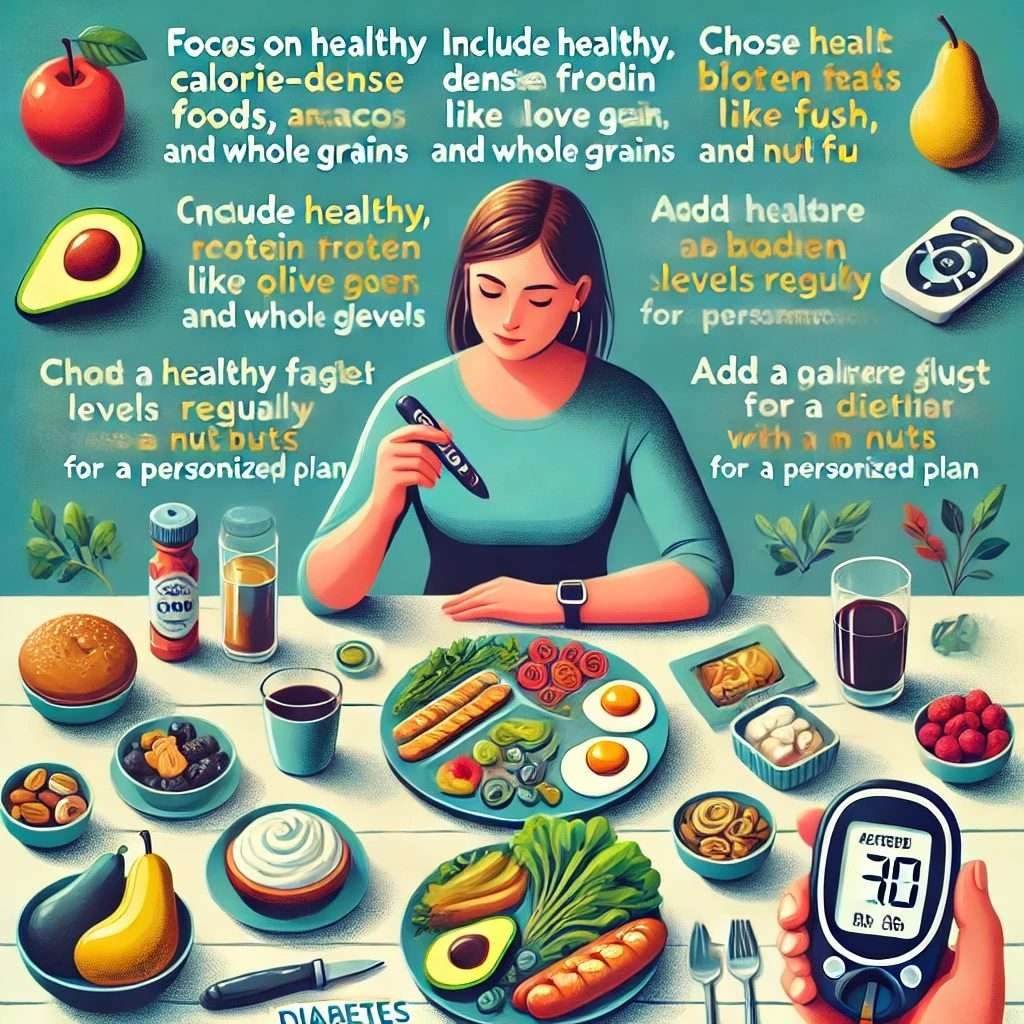
How to gain weight with diabetes? Gaining weight can be a challenge for people with diabetes, especially when balancing blood sugar control and preventing other health complications like high cholesterol. Whether you have Type 1 or Type 2 diabetes, achieving a healthy weight requires careful planning, focusing on nutrient-dense foods, and maintaining stable blood glucose levels.
In this guide, you’ll learn how to gain weight safely, stop diabetes-related weight loss, build muscle, and manage blood sugar effectively. We’ll also provide a 7-day meal plan tailored for diabetics seeking to gain weight.
What Causes Weight Loss in Diabetes?
Gaining or loosing weight with diabetes can be challenging, but it’s essential to approach it in a way that supports overall physiological conditions of the body.Below, we’ll explore the common causes of weight loss in diabetes :
1. Insulin Deficiency (Type 1 Diabetes)
In Type 1 diabetes, the body doesn’t produce enough insulin. Without insulin, glucose cannot enter cells to provide energy, leading to weight loss as the body burns fat and muscle for fuel.
2. Insulin Resistance (Type 2 Diabetes)
In Type 2 diabetes, cells resist insulin’s effects, preventing glucose from entering cells. This can lead to muscle breakdown and unintentional weight loss.
3. High Blood Sugar (Hyperglycaemia)
Excess glucose in the bloodstream can lead to frequent urination and dehydration, causing weight loss over time.
How To Gain Weight With Diabetes?

Gaining weight with diabetes can be challenging, but it is achievable through scientifically supported strategies that promote healthy weight gain without compromising blood sugar control.
Below are evidence-based approaches backed by research to help individuals with Type 1 and Type 2 diabetes gain weight safely and effectively.
1. Optimize Caloric Intake for Gradual Weight Gain
If you want to gain weight, you should consume more calories than they expend. For diabetics, it’s essential to achieve a caloric surplus without causing blood sugar spikes.
Evidence:
A study published in the Journal of Clinical Endocrinology & Metabolism highlights the importance of increasing caloric intake through complex carbohydrates, healthy fats, and proteins to promote weight gain in diabetes patients while maintaining glycemic control.
Recommendation:
- Increase daily caloric intake by 300–500 calories for gradual weight gain.
- Focus on nutrient-dense, calorie-rich foods like nuts, seeds, avocados, and whole grains.
2. Prioritize Protein Intake for Muscle Gain
Protein is crucial for muscle synthesis, which is essential for healthy weight gain. Consuming high-quality protein helps prevent muscle loss associated with diabetes-related weight loss.
Evidence:
According to a study in the American Journal of Clinical Nutrition, higher protein intake improves muscle mass and helps regulate blood glucose levels by enhancing insulin sensitivity.
Recommendation:
- You should aim for 1.2–1.6 grams of protein per kilogram of body weight per day.
- Your menu should Include the following items like lean meats, fish, eggs, dairy, legumes, and plant-based proteins.
3. Choose Low-Glycemic, Complex Carbohydrates
Carbohydrates provide essential energy for weight gain, but diabetics must choose carbs that won’t cause rapid blood sugar fluctuations.
Evidence:
The Diabetes Care journal emphasizes the role of low-glycemic-index (GI) foods in maintaining stable blood sugar while promoting gradual weight gain.
Recommendation:
- Incorporate whole grains (brown rice, quinoa), legumes (lentils, beans), and non-starchy vegetables.
- Avoid refined sugars and simple carbs that cause blood sugar spikes.
4. Include Healthy Fats for Caloric Density
Healthy fats are calorie-dense and provide a stable energy source, which is essential for weight gain without negatively affecting blood sugar.
Evidence:
A study in Nutrition Reviews found that monounsaturated and polyunsaturated fats improve cardiovascular health and help increase body weight in underweight individuals with diabetes.
Recommendation:
- Add sources of healthy fats like avocados, olive oil, nuts, seeds, and fatty fish.
- Limit saturated fats and avoid trans fats.
5. Utilize Resistance Training to Build Muscle
Exercise, especially resistance training, helps build muscle mass, which is a healthier form of weight gain. Doing regular exercises will improve the insulin sensitivity, which benefits blood sugar management.
Evidence:
A study published in Diabetes journal shows that resistance training increases lean body mass and improves glycemic control in people with diabetes.
Recommendation:
- Incorporate strength training exercises (e.g., weightlifting, resistance bands) 2–3 times per week.
- You can focus on compound movements like squats, deadlifts, and push-ups.
6. Consider Weight Gain Supplements (Under Medical Guidance)
Certain protein powders and supplements can support weight gain, provided they are sugar-free and approved for diabetic use.
Evidence:
Research in The Journal of the International Society of Sports Nutrition supports the use of whey protein and other protein supplements for muscle gain in individuals with metabolic disorders.
Recommendation:
- Use sugar-free protein powders, such as whey protein isolate or plant-based options.
- Consult with a healthcare provider before adding supplements like creatine or branched-chain amino acids (BCAAs).
7. Ensure Adequate Sleep and Stress Management
Sleep and stress have a significant impact on metabolism, appetite regulation, and blood sugar control.
Evidence:
Studies in Sleep Medicine Reviews show that poor sleep and chronic stress can lead to muscle loss and impaired glucose metabolism.
Recommendation:
- You should aim for 7–9 hours of quality sleep per night.
- Also doing meditation, yoga, or deep breathing will help you to ensure adequate sleep and stress management.
7-Day Weight Gain Meal Plan for Diabetics
| Day | Breakfast | Snack | Lunch | Snack | Dinner | Snack |
| Monday | Oatmeal with nuts and berries | Greek yogurt, almonds | Grilled chicken, quinoa, veggies | Peanut butter on whole-grain toast | Salmon, sweet potato, spinach | Cottage cheese, walnuts |
| Tuesday | Scrambled eggs, avocado toast | Protein shake (sugar-free) | Turkey sandwich, whole grain bread | Hummus and veggie sticks | Grilled tofu, brown rice, broccoli | Hard-boiled eggs |
| Wednesday | Whole-grain pancakes, peanut butter | Handful of mixed nuts | Grilled fish, lentil salad | Cheese and whole-grain crackers | Chicken stir-fry, quinoa, bell peppers | Protein bar (low sugar) |
| Thursday | Smoothie (spinach, berries, protein) | Greek yogurt, chia seeds | Chicken salad, whole grain bread | Nut butter and apple slices | Baked salmon, roasted vegetables | Avocado on toast |
| Friday | Eggs, whole-grain toast, avocado | Cottage cheese, nuts | Tuna salad, whole grain crackers | Trail mix (no added sugar) | Grilled chicken, brown rice, veggies | Unsweetened yogurt |
| Saturday | Oatmeal with chia seeds, fruit | Protein smoothie | Turkey and avocado wrap | Boiled eggs | Grilled fish, sweet potato, salad | Nuts and cheese |
| Sunday | Omelette with veggies, whole-grain toast | Almond butter, banana | Lentil stew, whole-grain bread | Greek yogurt, berries | Baked tofu, quinoa, roasted veggies | Cottage cheese, walnuts |
FAQs: How to Gain Weight with Diabetes
1. What is the fastest way for a diabetic to gain weight?
The fastest way is to consume calorie-dense, nutrient-rich foods, eat frequent meals, and incorporate healthy fats and proteins while maintaining stable blood sugar levels.
2. How can I gain 2 kg in a week?
To gain 2 kg in a week, increase daily calorie intake by 500–1000 calories through healthy fats, proteins, and complex carbs. Focus on resistance training to build muscle.
3. How can I stop weight loss from diabetes?
Manage blood sugar levels effectively, eat calorie-dense foods, and focus on building muscle through strength training to prevent further weight loss.
4. How can a diabetic gain weight and muscle?
Consume high-protein foods, use sugar-free protein supplements, and engage in regular resistance training to promote muscle growth and weight gain.
5. What foods can help a diabetic gain weight?
Healthy fats (avocados, nuts), lean proteins (chicken, fish), and complex carbs (whole grains, legumes) are ideal for gaining weight.
6. Can undiagnosed diabetes cause weight gain?
Undiagnosed diabetes typically causes weight loss rather than gain. However, insulin resistance in Type 2 diabetes can lead to weight gain in some cases.
Conclusion: Gaining Weight with Diabetes Safely
Gaining weight with diabetes requires a balanced approach that prioritizes nutrient-dense foods, regular meals, and controlled blood sugar levels. By following this guide, incorporating the 7-day meal plan, and working closely with your healthcare provider, you can achieve a healthy weight while managing diabetes effectively.